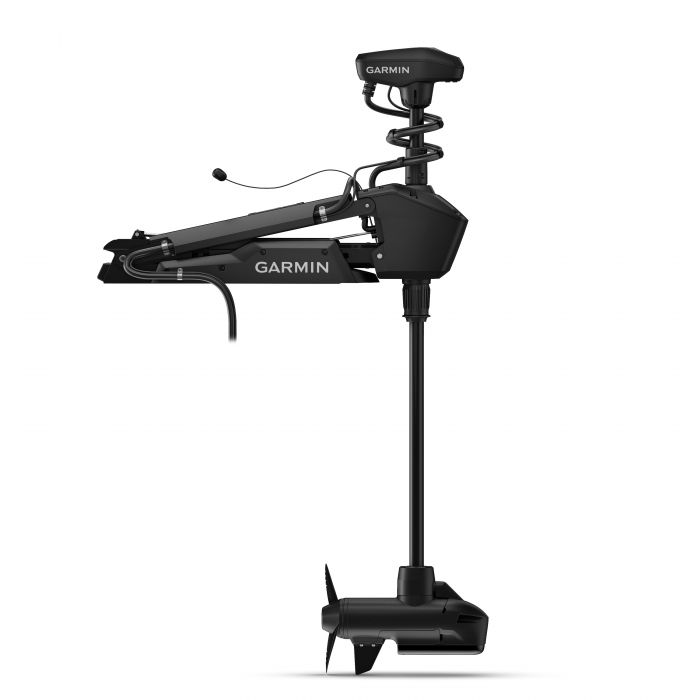
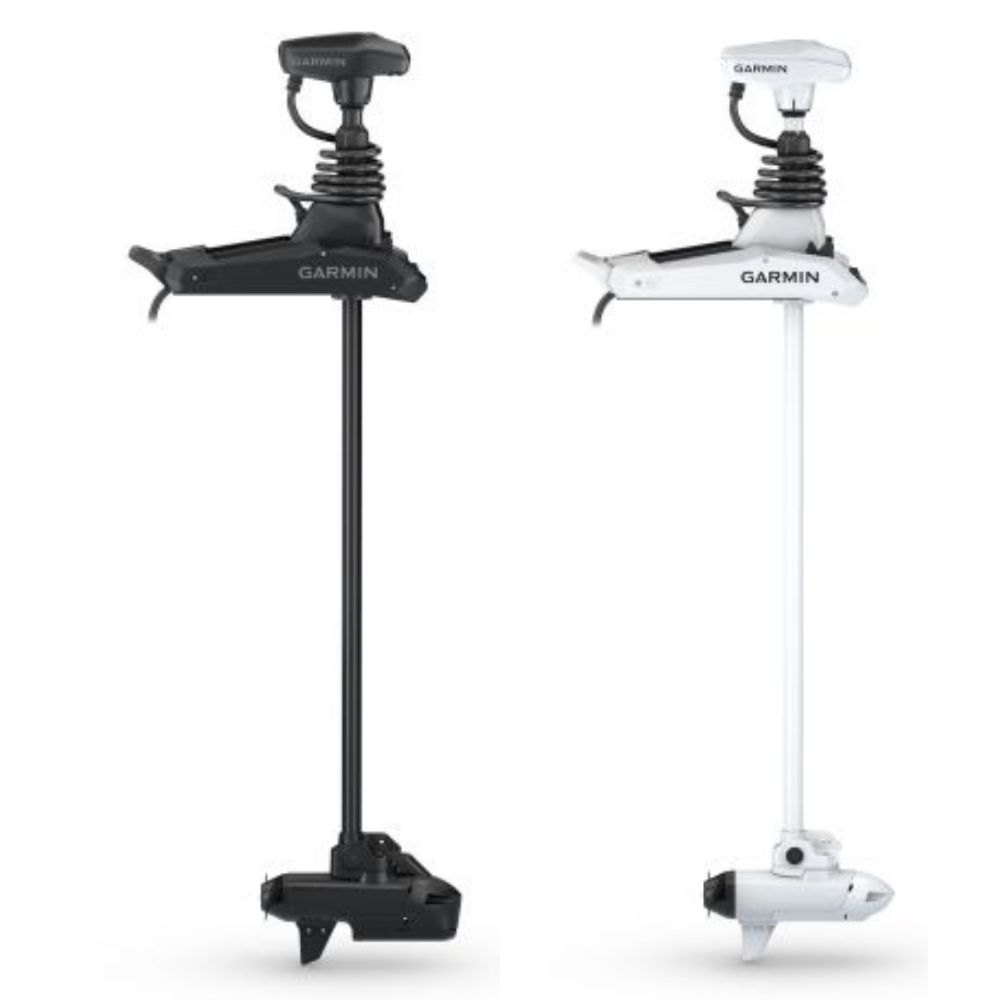
For a fishing boat, a Garmin trolling motor today means one of two bow-mount models: the Force Pro for bass boats and other low-bow freshwater boats, or the Force Kraken for bay boats, center consoles and anything with a taller bow or salt in the water. Both are brushless, both run on 24 or 36 volts, and both talk wirelessly to Garmin chartplotters. The original Force came first. We sell the Force Pro ($4,199.99) and the Force Kraken ($3,999.99).
The Garmin trolling motor lineup at a glance
Garmin entered the freshwater trolling motor market with the original Force. The Force Kraken followed in 2023 with a pivot mount and longer shafts, and the Force Pro arrived in March 2025. Garmin also makes the Force Current, a kayak motor. We don’t sell kayak motors, so it’s not covered here.
| Model | Shaft lengths | Thrust (24V / 36V) | Built-in sonar | Water |
|---|---|---|---|---|
| Force (original) | 50 or 57 in | 80 lb / 100 lb | Built-in transducer (CHIRP, ClearVu, SideVu) | Freshwater only |
| Force Pro | 50 or 57 in | 80 lb / 100 lb | GT56UHD-TR on every unit | Freshwater boats; Garmin cites corrosion and saltwater protection |
| Force Kraken | 48, 63, 75, 90 or 110 in | 80 lb / 100 lb | GT56UHD-TR on select models | Saltwater, brackish and freshwater |
The thrust numbers are the same for every Garmin trolling motor in the table. What changes is the mount, the shaft length, the sonar and the kind of water Garmin built each one for.
The original Garmin Force trolling motor
The first Garmin Force trolling motor came in 50 and 57 inch shafts. Garmin’s manual lists 80 lb of thrust at 24 volts and 100 lb at 36 volts, drawing 57 A and 54 A at full throttle. It weighs about 66 lb with the 50 inch shaft and 70 lb with the 57.
It shipped with a wireless remote and a wireless foot pedal. Dealer listings show a built-in transducer for CHIRP plus ClearVu and SideVu, and mark the trolling motor for freshwater use only.
Some dealers now list the original Force as discontinued, and we don’t stock it. If you own one and need parts, email us your model before you order, since electronics are final sale.
Garmin Force Pro: the bass boat motor
Garmin announced the Force Pro on March 5, 2025. It keeps the 50 and 57 inch shaft lengths and adds a few things the original didn’t have.
- Built-in GT56UHD-TR: Every Force Pro has the transducer built in, with Ultra High-Definition ClearVu and SideVu plus CHIRP traditional sonar.
- Multi-band GPS: Garmin pairs multi-band GPS with a built-in heading sensor for anchor lock, heading hold and route following.
- Scissor-style mount: It folds with gas-spring lift assist and comes with a stabilizer.
- Two props: Garmin includes a high-efficiency prop and a weedless prop.
- Reverse thrust: The trolling motor can back the boat up without spinning the lower unit around. Garmin says reverse is less efficient than forward and should be used sparingly to limit wear.
- Lighted shaft cap: A light on the cap shows direction so you can see where the motor points.
- Remote and pedal: The Force Pro comes with the wireless remote and the wireless foot pedal.
It’s sold in one black finish. The 50 inch version weighs 66.7 lb and the 57 inch is 70.7 lb, motor, mount and cables included. Garmin lists a LiveScope transducer as an optional add-on, and our Garmin LiveScope post covers which one fits.

Garmin Force Kraken trolling motor: longer shafts and a pivot mount
The Garmin Force Kraken trolling motor launched in 2023 in 63, 75 and 90 inch shafts. Garmin added a 48 inch shaft in July 2024 for boats with less freeboard and a 110 inch shaft in July 2025 for large center consoles. That makes five lengths.
The Kraken uses a pivot-style mount instead of a scissor mount. Garmin designed it for boats where bow space is limited, which describes a lot of bay boats, skiffs and center consoles. It has multi-band GPS, a built-in AHRS heading sensor, and an illuminated arrow on the head that shows your heading at a glance.
It comes in black and white. Some Kraken models have the GT56UHD-TR transducer built in and some don’t, so check which version you’re ordering. A LiveScope cable management system routes the transducer cable inside the shaft, and Garmin sells a separate Kraken LiveScope mounting bracket.
The Kraken comes with the wireless remote. The foot pedal is sold separately. Garmin describes the shaft and parts as having advanced corrosion and saltwater protection, and the Kraken is the Garmin motor we’d pick for salt. Our saltwater trolling motor guide covers the care routine.
How the Force Pro and Force Kraken compare
On paper the two motors make the same thrust and run on the same voltages. The differences are about the boat they go on.
| Feature | Force Pro | Force Kraken |
|---|---|---|
| Our price | $4,199.99 | $3,999.99 |
| Mount | Scissor-style with gas-spring lift assist | Pivot-style for limited bow space |
| Shaft lengths | 50, 57 in | 48, 63, 75, 90, 110 in |
| Heading sensor | Built-in heading sensor, multi-band GPS | Built-in AHRS, multi-band GPS |
| Built-in sonar | GT56UHD-TR on every unit | GT56UHD-TR on select models |
| Colors | Black | Black or white |
| Controls in the box | Remote and wireless pedal | Remote |
| Where it fits best | Bass boats and low-bow freshwater boats | Bay boats, skiffs, center consoles, multispecies boats |
Garmin’s warranty on both is 3 years limited, with a lifetime limited warranty on the composite shaft.
The overlap is a boat with a moderate bow, like a multispecies boat or a smaller bay boat. On those boats, measure carefully, since either the 57 inch Force Pro or the 63 inch Kraken may be the right length. Pick the Force Pro if you want the transducer on every unit and the pedal in the box. Pick the Kraken if you fish salt, want a white motor, or need the pivot mount.
Built-in sonar on a Garmin trolling motor
The GT56UHD-TR is the transducer Garmin builds into the Force Pro and into select Kraken models. It sits in the nose cone at the bottom of the trolling motor, so there’s no transducer strapped to the lower unit and no cable zip-tied down the outside of the shaft.
- Traditional sonar: CHIRP at 150 to 240 kHz.
- ClearVu and SideVu: 455, 800 and 1,000 kHz.
- Depth in fresh water: Dealer specs list up to 800 ft for CHIRP, 400 ft for ClearVu and 500 ft for SideVu.
- Also: Water temperature, and a 12-pin Garmin connector.
Garmin chartplotters with sv or xsv in the model name have built-in ClearVu and SideVu. If yours doesn’t, check with Garmin or email us before counting on side imaging from the motor.
For live sonar, Garmin lists LiveScope as an add-on for the Force Pro, and the Kraken routes a LiveScope cable inside its shaft with a separate mounting bracket. Our forward-facing sonar guide compares the options, and the transducers are in our transducer section.
Voltage, thrust claims and wiring a Garmin trolling motor
Both current models accept 20 to 45 volts DC, so they run on a 24 V or 36 V battery bank. Neither runs on 12 V. Garmin rates both at up to 100 lb of thrust on 36 V, tested to ISO 13342 for forward thrust. The Kraken is rated 80 lb on 24 V.
The thrust table in Garmin’s manuals goes a little further. At 38.4 volts, which is the nominal voltage of three 12.8 V lithium batteries, the top setting makes 114.7 lb at 55.9 A. That’s a test bench number with Garmin’s high-efficiency prop in calm water. Lead-acid batteries sag under load, so plan on the rated 100 lb.
How much boat a Garmin trolling motor can push
The usual guide is about 2 lb of thrust per 100 lb of loaded boat. By that math, 100 lb on 36 V suits a boat up to roughly 5,000 lb with fuel, gear and people, and 80 lb on 24 V suits about 4,000 lb. Wind, current and a high bow cut into that. A heavy boat that sits in current all day is the case for 36 V.
Breaker, plug and cable
- Current: Garmin rates the Force Pro and Kraken at 60 A continuous.
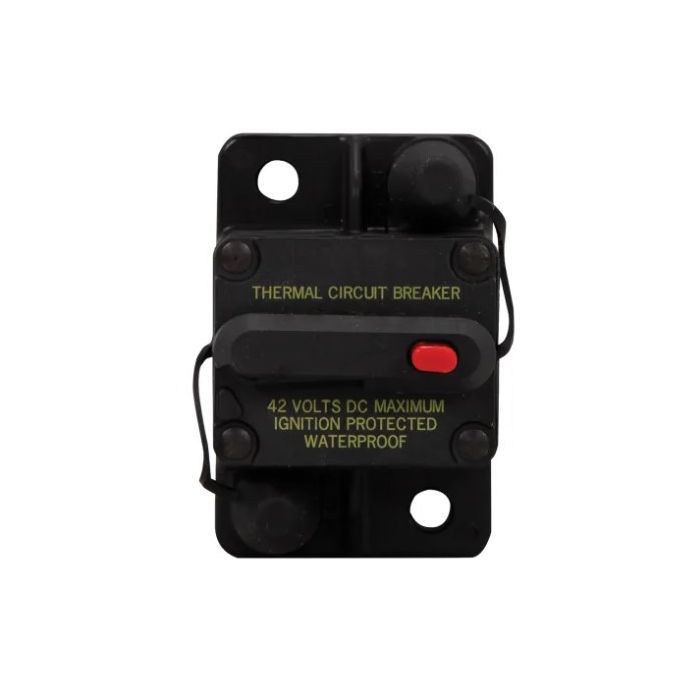
- Breaker: Not included. Garmin calls for one rated 42 V DC or higher and suitable for 60 A continuous. A larger breaker up to 90 A is allowed in high heat or on a shared circuit, after you check your boat’s wiring. We sell the Garmin 60A circuit breaker for $89.99.
- Plug: The Garmin 70A power plug and matching receptacle are $49.99 each if you want to unplug the motor at the bow.
- Power cable: On the Force Pro it’s 4 ft on the 50 inch model and 3.5 ft on the 57, so the batteries or a plug need to be close.
- Terminals: Garmin says to tighten the terminal nuts to 4 N-m (36 lbf-in), clean any corrosion with a wire brush, and coat the connections with dielectric grease.
Our 24 volt trolling motor post covers the 24 V versus 36 V decision in more detail.
Chartplotter, remote and pedal control
Chartplotter, app and watch
A Garmin trolling motor connects to a Garmin chartplotter over a wireless link. The chartplotter hosts the network, and it needs the latest software before it will connect. Garmin keeps a compatibility list for each motor, at garmin.com/force_pro/compatible and garmin.com/force_kraken/compatible.
Once connected, you can run the trolling motor from the chartplotter screen. Garmin says you can create routes, patterns and tracks on the chartplotter for the Kraken to follow. The four number keys on the remote can be set to jump to chartplotter screens, which is handy when you’re standing at the bow with the remote in your hand.
- ActiveCaptain app: Connects to the motor’s own Wi-Fi access point and handles software updates.
- Garmin watch: A compatible Garmin watch pairs with the motor once you’re within about 3 m (10 ft) and can control it from your wrist.
- Without a Garmin graph: The trolling motor still does anchor lock, heading hold and cruise control from the remote and pedal. The chartplotter adds the map side.
We sell the ECHOMAP and GPSMAP lines in our fish finder section. Check Garmin’s list for your exact model before you buy, especially if your unit is a few years old. Our Garmin fish finder guide covers the screens.
Garmin remotes and foot pedals
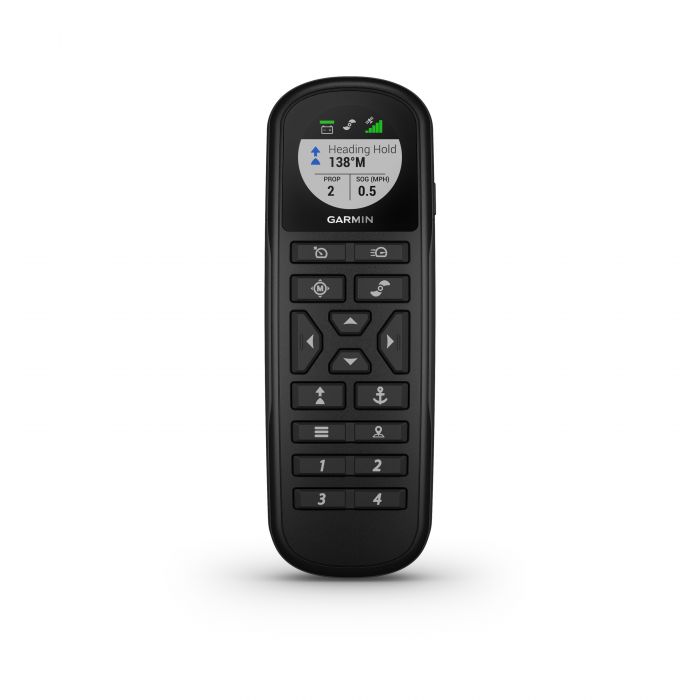
The handheld remote is the same idea on both motors. It has a small color screen, runs on two AA batteries (Garmin recommends lithium and lists about 240 hours of typical use), and does gesture steering: hold a button and point the remote where you want the motor to go. Both the motor and the remote need a compass calibration first.
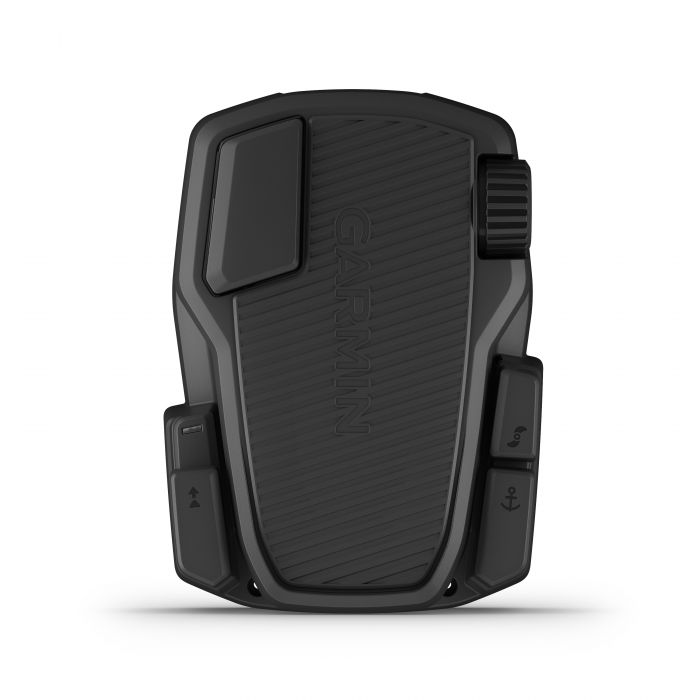
The wireless foot pedal runs on two AA batteries for at least a year, or off a power cable rated for 12, 24 or 36 V with a 2 A fuse. It has a momentary prop button, a speed wheel, heel and toe steering, and buttons for heading hold and anchor lock. The details of those modes are in our spot lock trolling motor post.
- Force Pro: Remote and pedal both come in the box.
- Force Kraken: The remote comes in the box. The Garmin foot pedal is $449.99.
- Spare remote: The Garmin handheld remote is $329.99.
Setting up a new Garmin trolling motor
Garmin’s manuals list a handful of setup steps. Do them in this order before the first trip.
- Mount and wire it: Bolt the mount down, run the power leads through a 60 A breaker, and torque the terminal nuts to 4 N-m (36 lbf-in).
- Set the battery type: Garmin’s battery indicators are tuned for lead-acid and can read wrong on lithium. Battery Setup tells the trolling motor what you run, and the readout can show as an icon or a voltage.
- Calibrate the motor compass: Do it on calm, open water with room to turn the boat in a full circle. Garmin warns that calibrating in wind and rough water can hurt autopilot performance.
- Calibrate and pair the remote: Do it outdoors, away from vehicles, buildings and power lines. Gesture steering depends on it.
- Set the bow offset: If the trolling motor doesn’t sit on the boat’s centerline, set the offset from the remote under Calibrate.
- Connect your chartplotter and watch: Update the chartplotter software first, then connect. Pair a watch within about 3 m (10 ft) of the motor.
- Update the motor: The ActiveCaptain app connects to the motor’s Wi-Fi and prompts you to install updates.
- Check the gains on the water: Anchor Gain and Navigation Gain set how hard the motor reacts. Bigger, heavier boats usually need higher values.
The full steps are in the Force Pro owner’s manual and the Force Kraken owner’s manual. The Force Pro also turns itself off after two hours in the stowed position.
Garmin trolling motor parts and accessories we carry
These are the Garmin parts we stock. Names follow Garmin’s own listings, so check that the part says Force, Force Pro or Kraken before you order. Our trolling motor accessories page has them all in one place.
| Part | Our price | Notes |
|---|---|---|
| High-efficiency prop | $99.99 | The prop Garmin uses for its thrust ratings |
| Weedless prop | $99.99 | For grass and pads |
| Skeg (Force motors) | $29.99 | Replacement skeg |
| Stabilizer for Force | $119.99 | Keeps the stowed motor from bouncing |
| Deck mount stabilizer for Kraken | $109.99 | Steadies the stowed Kraken |
| GT transducer nose cone | $99.99 | Nose cone for a GT transducer |
| Black round nose cone / white round nose cone | $89.99 / $119.99 | Round nose cones in black or white |
| GT56UHD-TR transducer | $474.99 | Trolling motor mount version |
We also carry the Garmin transducer replacements for Force ($39.99) and Kraken ($49.99) motors. For Humminbird MEGA 360 owners, we carry MEGA 360 mounting hardware for the Garmin Force ($297) and a MEGA 360 mount for the Kraken ($589).
When you swap a prop, check the anode behind it. Garmin says to replace an anode once it has worn to less than half its original size, and to torque the prop nut to 16.27 N-m (12 lbf-ft). Disconnect the battery before you work on the prop.
Gear in this guide
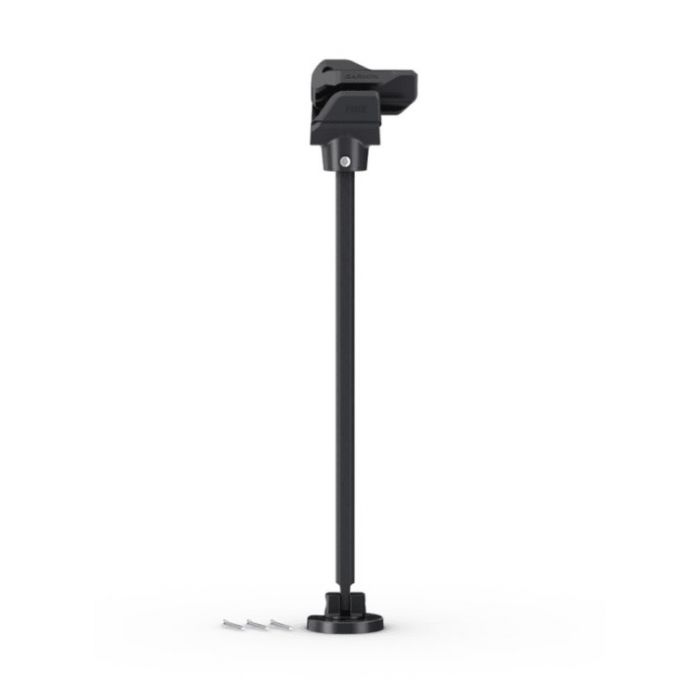
Which Garmin trolling motor to buy
The boat decides most of this. Measure from where the mount will sit down to the waterline before you choose a shaft, and keep in mind the prop needs to stay under the surface when the bow rises in a chop.
- Bass boat or low-bow freshwater boat: The Garmin Force Pro ($4,199.99). The scissor mount suits a flat front deck, the transducer is built in, and the remote and pedal both come in the box.
- Bay boat, skiff or center console: The Garmin Force Kraken ($3,999.99). Pick the 75, 90 or 110 inch shaft for a tall bow and the 48 or 63 for lower boats. Add the pedal if you fish from the front deck.
- Multispecies boat that also sees salt: The Kraken again. Garmin built the Kraken for salt, and the longer shafts fit taller bows.
- Running a Lowrance graph: Look at the Lowrance Recon instead. A Garmin trolling motor’s chartplotter link is Garmin only.
Electronics are final sale here, so confirm the shaft length, the version with or without the built-in transducer, and your chartplotter’s compatibility before you order. You can see both Garmin motors with the Lowrance options on our shop page.
Questions about Garmin trolling motors
Is the original Garmin Force trolling motor still made?
Some dealers now list it as discontinued, and we don’t stock it. The Force Pro covers the same 50 and 57 inch sizes with a built-in GT56UHD-TR transducer and multi-band GPS.
Does the Garmin Force Kraken trolling motor have built-in sonar?
Select models do, with the GT56UHD-TR built in. Others ship without a transducer. Check the version before you order, or email us and we’ll confirm which one you’re looking at.
Can a Garmin trolling motor run on 12 volts?
No. The Force Pro and Kraken take 20 to 45 volts DC, so you need a 24 V or 36 V bank. Expect 80 lb of thrust on 24 V and 100 lb on 36 V.
Will a Garmin trolling motor work with a Lowrance or Humminbird graph?
The trolling motor works on its own from the remote and pedal, but the wireless chartplotter link only works with compatible Garmin chartplotters. The built-in GT56UHD-TR is a Garmin transducer meant for Garmin units.
What size breaker does a Garmin trolling motor need?
Garmin calls for a breaker rated 42 V DC or higher that handles 60 A continuous. The Garmin 60A breaker is made for these motors.
Not sure which one fits your boat?
Email sales@trollingmotorsdirect.org with your boat make, length, bow height and chartplotter model. We reply Monday to Friday, 9am to 6pm.