A Torqeedo trolling motor is really an electric outboard. Torqeedo builds lithium-powered motors rated in watts, and the two lines anglers look at are the Travel Ultralight for kayaks and the Travel series for tenders, dinghies and small boats. Torqeedo itself describes the Travel Ultralight as a trolling motor for kayaks, canoes and very light boats.
We don’t sell Torqeedo. We sell bow-mount trolling motors, graphs, live sonar and transducer mounts. A common question about a Torqeedo trolling motor is whether you need an outboard-style motor or a trolling motor at all.
Specs and prices below come from Torqeedo’s US site in October 2026 unless we say otherwise.
Torqeedo trolling motor or electric outboard: what’s the difference
Both run on batteries and both push a boat quietly. They’re built for different jobs. An electric outboard like a Torqeedo is built to get a small boat from one place to another. A bow-mount trolling motor is built to put a fishing boat where you want it and keep it there while you cast.
| Feature | Torqeedo Travel and Travel Ultralight | Bow-mount trolling motor |
|---|---|---|
| Rated by | Input power in watts, compared to a gas outboard in HP | Pounds of thrust |
| Battery | Torqeedo lithium pack, 648 to 1,512 Wh | 12, 24 or 36 V battery bank you choose and wire |
| Where it mounts | Transom or kayak mount | Bow deck |
| Steering | Tiller, or the kayak’s foot-control steering | Foot pedal or remote, motor turns itself |
| Holds position | No anchor mode listed | GPS anchor on GPS models |
| Sonar | None | Built into the nose on some models |
Watts vs pounds of thrust
Torqeedo rates its motors by input power in watts and compares them to gas outboards. The Travel Ultralight is 1,100 W, which Torqeedo calls 3 HP-equivalent. The Travel XP is 1,600 W, which Torqeedo says gives the thrust of a 5 HP outboard.
A trolling motor is rated in pounds of static thrust, like 55 lb or 80 lb. There’s no clean conversion between the two, because thrust also depends on the prop. For scale, watts are volts times amps, so a 12 V motor pulling 50 A is using 600 W. Torqeedo doesn’t list pounds of thrust for its current models, and we won’t guess one.
Battery on the motor vs a battery bank
The Travel motors use a Torqeedo lithium battery that clips onto the motor, which Torqeedo calls Click & Play. The Travel Ultralight uses a separate 1,080 Wh lithium battery. In both cases Torqeedo sells the battery to match, and the Travel, Travel XP and Travel Ultralight packages come with a 180 W charger.
A trolling motor runs off deep-cycle batteries you pick and wire yourself: one 12 V battery for a 12 V motor, two in series for 24 V, three for 36 V, or a single lithium pack at that voltage. Our trolling motor battery guide covers that side.
Torqeedo sizes its batteries in watt-hours. To compare, multiply amp hours by volts: a 12 V, 100 Ah battery holds about 1,200 Wh. So the Ultralight’s 1,080 Wh pack stores a little less than one 100 Ah, 12 V battery.
Speed and range vs boat control
Each model has published speed and range figures, and the Travel Ultralight’s remote throttle shows speed, consumption, charge and remaining range, with a GPS-based range calculation. That’s outboard thinking: how far and how fast. Trolling motor makers talk about thrust, speed steps and how well the motor holds a spot or a heading.
Slow speed isn’t the problem. Torqeedo’s throttle is stepless in forward and reverse, and its test of the Travel Ultralight on an ATAK 140 kayak lists 3.2 km/h (about 2 mph) at the slow setting. The difference is in steering and holding.
Steering and GPS anchoring
The Travel and Travel XS steer by tiller, and the Travel XP comes with a tiller or a remote throttle. The Travel Ultralight’s Adventure Package connects to your kayak’s foot-control steering. In every case you steer the boat yourself.
Torqeedo’s motors have GPS, but it’s for speed, range and trip logging in the TorqView app. Torqeedo doesn’t list an anchor or position-hold mode on any Travel or Travel Ultralight page. A GPS trolling motor uses its GPS to steer itself back to a saved spot, and our spot lock trolling motor guide explains how that works.
The Torqeedo Ultralight for kayaks
On Torqeedo’s US site, the kayak motor is the Travel Ultralight. Torqeedo’s menu still files it under Ultralight, so you’ll see it called the Torqeedo Ultralight, which was also the name of the older Ultralight 403 models. Torqeedo’s Ultralight category no longer shows those, though some retailers still list the 403.
The Travel Ultralight is 1,100 W, 3 HP-equivalent, at 48 V nominal. The motor weighs 9.8 kg (21.6 lb) including the mounting system, cables and remote throttle. The 1,080 Wh lithium battery adds 8.3 kg (18.3 lb).
In the Adventure Package you get the motor, battery, charger, a remote throttle with a backlit color display, a kayak mount and a magnetic emergency stop key. In October 2026 it’s $3,398.00 on Torqeedo’s site: $1,799.00 for the motor and $1,599.00 for the battery.
Torqeedo doesn’t list a shaft length for the Ultralight. Before ordering, ask a dealer whether the mount suits your kayak. Torqeedo lists the warranty as 2 years for non-commercial use.
For kayak anglers, the Torqeedo Ultralight comes down to weight and range. Motor and battery together are 39.9 lb by Torqeedo’s figures, and its half-throttle test on a kayak ran for almost 10 hours.
The Travel series for tenders and small boats
The Travel motors are tiller outboards with the battery clipped onto the motor. Torqeedo lists three in October 2026.
- Travel XS: 700 W, which Torqeedo compares to the thrust of a 2 HP outboard. 648 Wh battery, 24.6 inch shaft. The motor is 11.6 kg (25.6 lb) and the battery 6.8 kg (15 lb). Torqeedo pitches it at small to medium boats and running a dinghy out to a sailboat.
- Travel: 1,100 W and 3 HP-equivalent, for tenders, dinghies and daysailers up to 1.5 tons. The Essential Package has a 1,080 Wh battery. Short (24.6 in) or long (29.5 in) shaft. The motor is 11.6 kg (25.5 lb) and the battery 8.3 kg (18.3 lb).
- Travel XP: 1,600 W and 5 HP-equivalent, for boats up to 2 tons. The 1,512 Wh battery weighs 9.6 kg (21.2 lb) and the motor 12.6 kg (27.8 lb). Short or long shaft, tiller or remote throttle.
All three have stepless forward and reverse, tilt up to 90 degrees, a 4-step manual trim, an onboard computer with a color display, and built-in GPS, Bluetooth and Wi-Fi for the TorqView app. Torqeedo also sells the Travel as a Range Package with a bigger battery, which it says adds up to 32% range.
Torqeedo trolling motor specs and range
Here are the Ultralight and Travel models side by side, using the figures from each model page. Weights are Torqeedo’s, with the Ultralight motor weight including its mount, cables and throttle.
| Model | Input power | Battery | Weight (motor / battery) | Shaft |
|---|---|---|---|---|
| Travel Ultralight | 1,100 W (3 HP-equivalent) | 1,080 Wh lithium, separate | 21.6 lb / 18.3 lb | Not listed (kayak mount) |
| Travel XS | 700 W (2 HP-equivalent) | 648 Wh lithium | 25.6 lb / 15 lb | 24.6 in |
| Travel | 1,100 W (3 HP-equivalent) | 1,080 Wh lithium (Essential Package) | 25.5 lb / 18.3 lb | 24.6 or 29.5 in |
| Travel XP | 1,600 W (5 HP-equivalent) | 1,512 Wh lithium | 27.8 lb / 21.2 lb | 24.6 or 29.5 in |
Prices on Torqeedo’s US site in October 2026: Travel XS motor $1,399.00, or $2,598.00 with battery. Travel motor $1,799.00, or $3,398.00 as the Essential Package. Travel XP motor $2,499.00, or $4,498.00 as the Power Package.
How far and how fast
Torqeedo publishes test results for each model on a named boat. We’ve converted them to mph and miles. Torqeedo says the figures are indicative only and change with the boat, load, prop and conditions.
| Model and test boat | Slow | Half throttle | Full throttle |
|---|---|---|---|
| Travel Ultralight, ATAK 140 kayak | 2.0 mph, 106 mi, 53 h 40 min | 4.0 mph, 39 mi, 9 h 48 min | 7.4 mph, 7.3 mi, 59 min |
| Travel XS, YAM 275 Air | 2.7 mph, 18 mi, 6 h 30 min | 3.7 mph, 8.1 mi, 2 h 12 min | 4.7 mph, 4.3 mi, 54 min |
| Travel (Essential), 3.8 m inflatable dinghy | 3.5 mph, 13.7 mi, 3 h 56 min | 4.7 mph, 9.3 mi, 1 h 58 min | 5.3 mph, 5.3 mi, 47 min |
| Travel XP, 3.8 m inflatable dinghy | 4.0 mph, 12.7 mi, 3 h 8 min | 4.8 mph, 7.6 mi, 1 h 34 min | 6.2 mph, 4.8 mi, 47 min |
The pattern is the same as any battery motor. Full throttle empties the pack in under an hour, and backing off stretches the day a long way. A narrow kayak takes less power to push than an inflatable dinghy, which is a big part of why the Ultralight numbers look so different.
Who a Torqeedo trolling motor suits
A Torqeedo makes the most sense where the job is getting a light boat from one place to another, quietly, on one battery.
- Kayak anglers: the Travel Ultralight is the one made for this, with the kayak mount and foot-control steering.
- Sailboat tenders and dinghies: Torqeedo pitches the Travel and Travel XS at exactly this.
- Daysailers: the Travel for boats up to 1.5 tons, the Travel XP up to 2 tons.
- Small boats where you’d rather not carry gas: as long as they’re inside Torqeedo’s weight limits.
- Anyone who has to carry the motor: the heaviest motor in the lineup, the Travel XP, is 12.6 kg (27.8 lb) without its battery in short-shaft tiller form.
Torqeedo trolling motor vs a basic 12 V transom motor
The cheaper way to put a motor on a small boat is a 12 V transom trolling motor and a deep-cycle battery. Those motors cost a few hundred dollars, and our electric trolling motor guide covers them.
A Torqeedo trolling motor costs more because the lithium battery, charger and onboard computer are part of the package, and Torqeedo rates and tests it for range at speed. If you mostly creep along a bank at trolling speed, a basic transom motor does that job for far less. If you have to cover miles of water to reach the fishing, that’s the job Torqeedo builds for.
Weight is the other difference. A Travel Ultralight motor and battery come to 39.9 lb together by Torqeedo’s figures. If you go the 12 V route on a small boat, battery weight adds up quickly, and our lithium trolling motor battery guide compares lead-acid and lithium weights.
When a bow-mount trolling motor makes more sense
A Torqeedo trolling motor pushes from the stern and you steer it with a tiller or the kayak’s pedals. That’s fine for getting around. It’s less suited to holding a boat in place while you fish, because one hand or both feet are busy with the motor.
Pulling from the front, a bow-mount trolling motor handles wind better, and you steer it with a foot pedal or a remote while you cast. Our bow-mount trolling motor guide covers how they work and how to size one. You’d want a bow mount instead if:
- You fish from a bass boat, jon boat or bay boat with a casting deck.
- You want GPS anchoring to hold you on a brush pile, a dock or a reef.
- You want sonar built into the motor, or the motor run from your graph.
- Your boat is heavier than the 2 tons Torqeedo lists for the Travel XP.
The four bow mounts we sell are the Garmin Force Pro, Garmin Force Kraken, Lowrance Ghost and Lowrance Recon, from $3,199.00 to $4,199.99. They’re 24 V or 36 V motors with GPS anchoring, built for boats with a bow deck. They aren’t made for kayaks or tenders.
Adding sonar to a kayak or small boat
A Torqeedo trolling motor has no sonar, and Torqeedo doesn’t list a transducer mount for its motors. So sonar goes on separately, and the right mount depends on the hull more than the motor.
On a small boat or pontoon
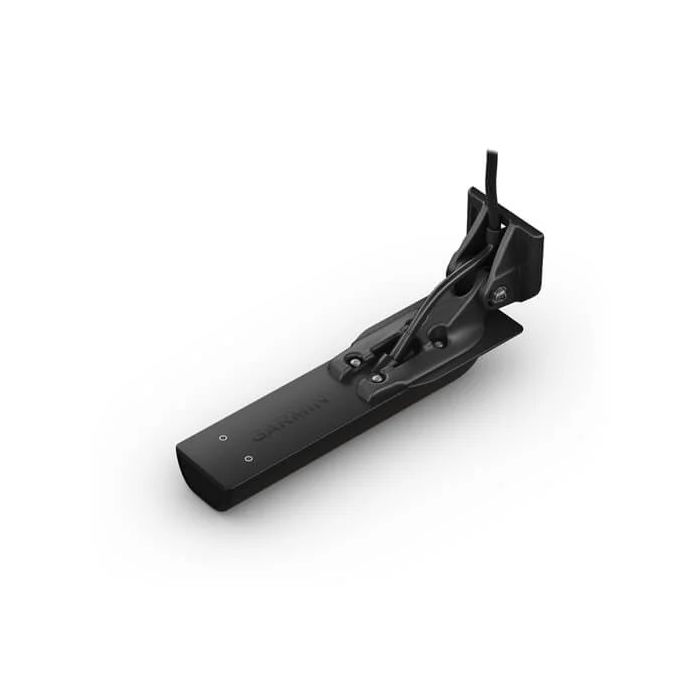
On a jon boat, small aluminum boat or pontoon, start with a graph and a transom transducer. The Garmin GT56UHD-TM ($599.99) does CHIRP traditional sonar, ClearVü and SideVü through one 12-pin plug and a 25 ft cable, and Garmin lists it for transom angles from 0 to 70 degrees.
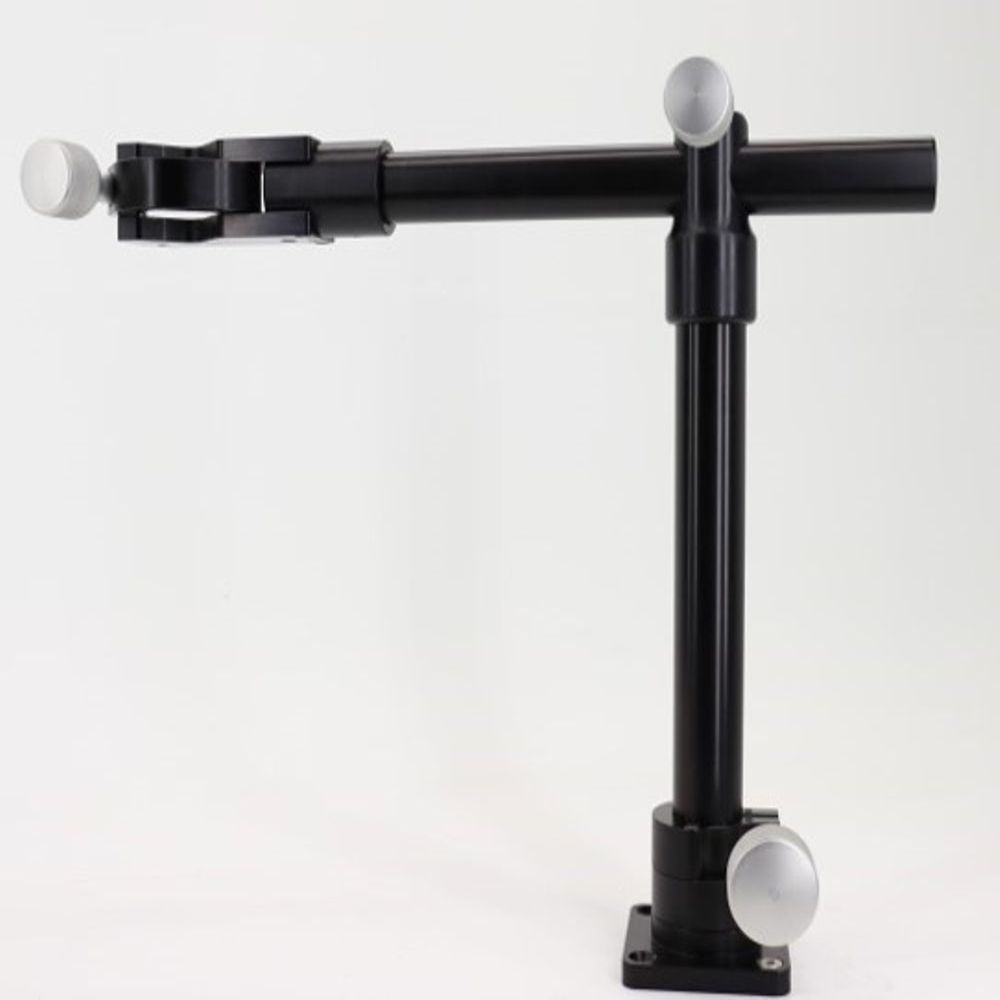
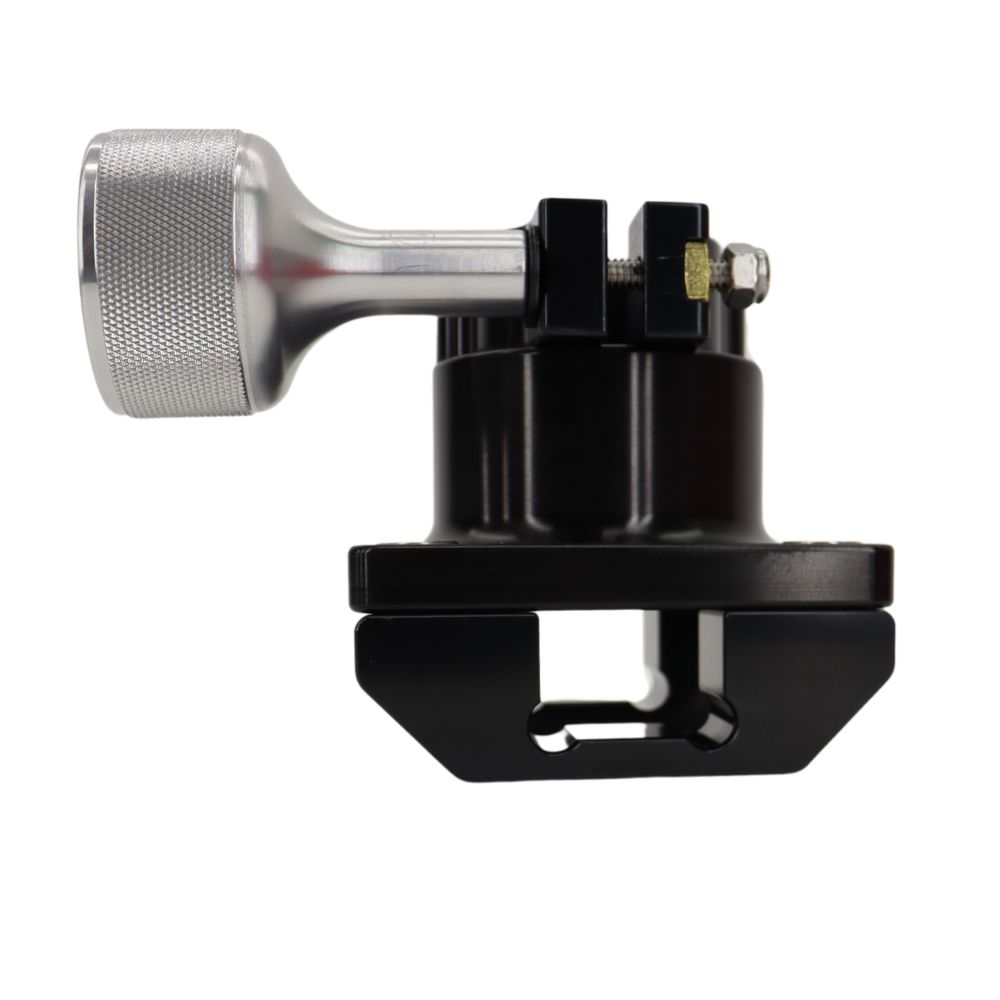
For live sonar, a pole on an over-the-side mount keeps the transducer off the motor entirely. The Over the Side Mount ($389) holds our Handscope pole or a Live Sweep. Its base can bolt straight to the deck or sit on one of our adapters:
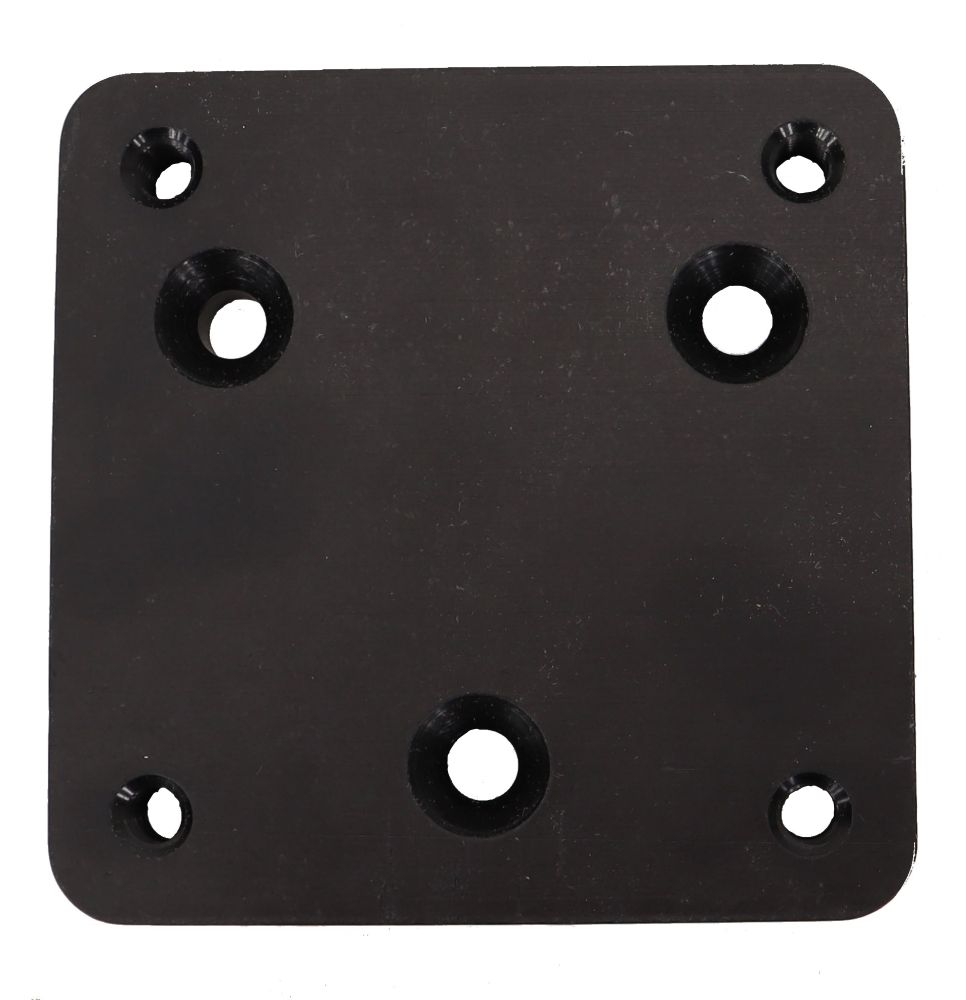
- Deck plate ($51): a 4 x 4 inch, 1/2 inch thick threaded plate, so the mount lifts off and only the plate stays on deck.
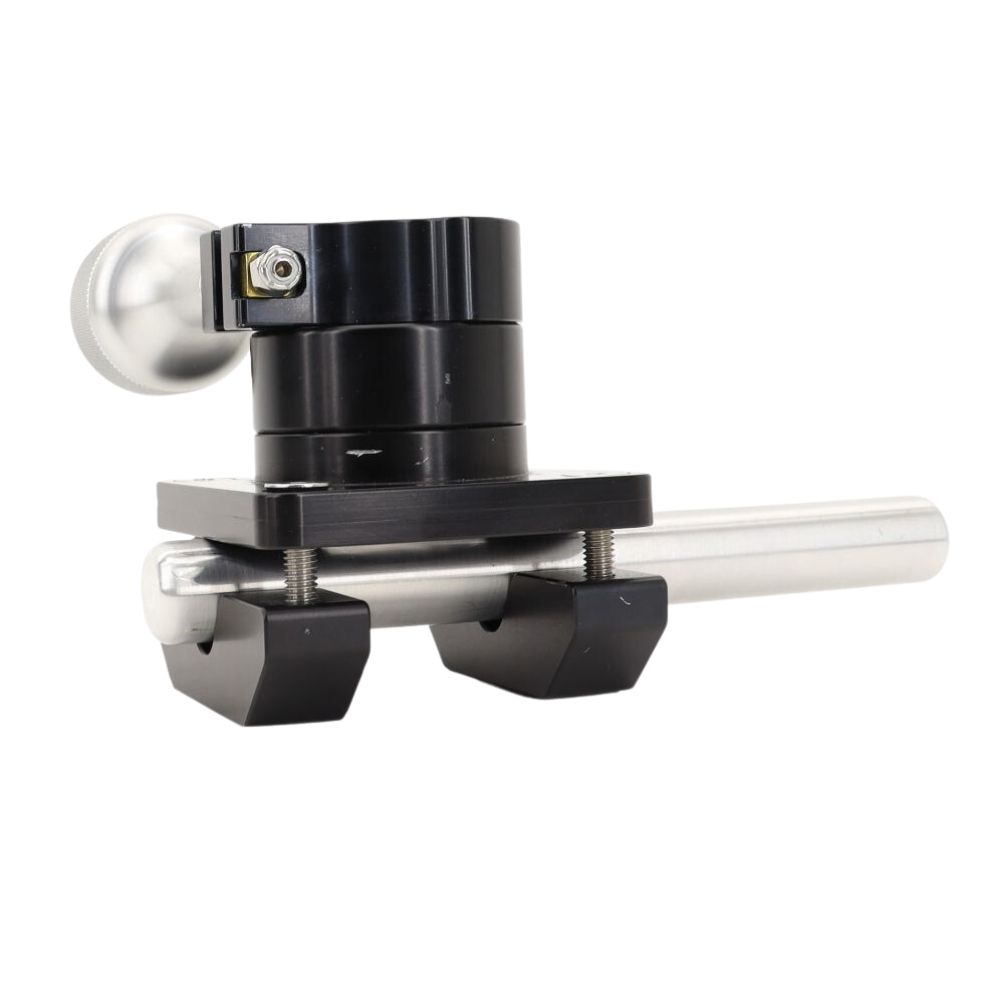
- Round rail mount ($75): for 3/4 to 1 inch round rail.
- Pontoon rail clamp ($75): for 1 1/4 inch square pontoon rail.
- Gunnel rail plate ($40): for 1/4 inch track on a gunnel rail.
On a kayak
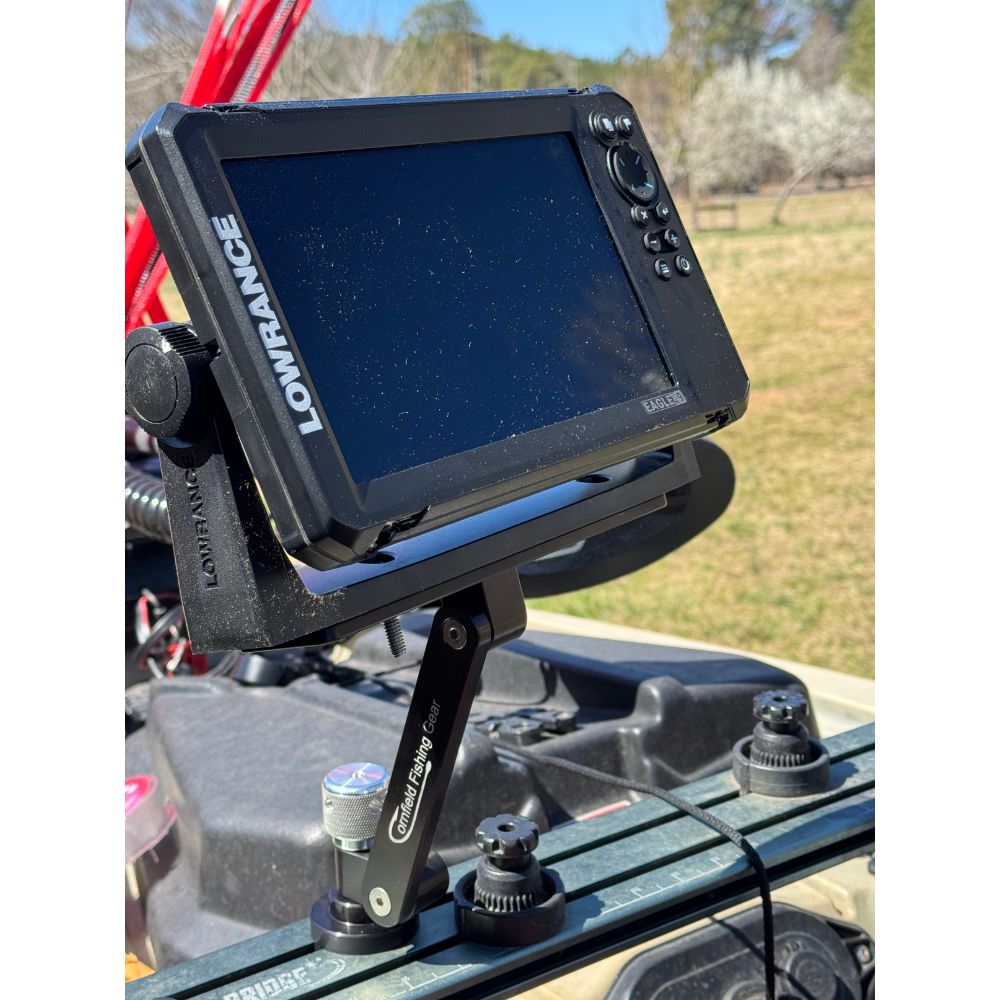
None of our transducer mounts are made or listed for kayaks. They’re machined aluminum mounts sized for boat decks and rails. On a kayak, use the transducer mount your kayak maker offers, or one made for your hull’s track or scupper holes. For the screen, our machined Kayak Single Mount ($351.00) holds one graph and locks into standard kayak track or Yak Attack GridLock track with a knob.
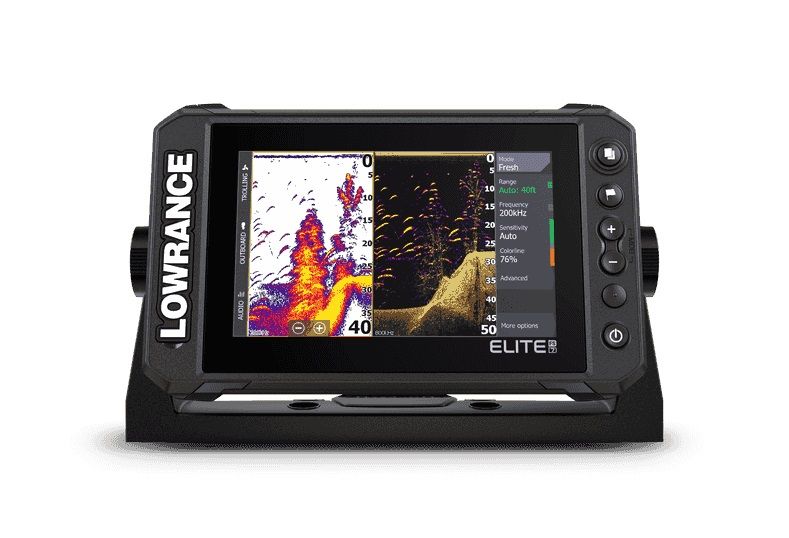
The graph is where we can help. The Lowrance Elite FS 7 ($764.99 without transducer) is a 7-inch unit that draws 28 W at most (2 A at 13.8 V) by Lowrance’s figures. At the full 2 A, eight hours uses 16 Ah, so a small 12 V battery covers a day. The version with an HDI transducer is $864.99.
Powering the graph
Give the graph its own small 12 V battery. Torqeedo lists the Travel Ultralight at 48 V nominal, while the Elite FS 7 is rated for 10 to 17 V DC, so the motor’s pack isn’t a 12 V source.
What we’d pick
For a Torqeedo trolling motor, we’d go by the boat:
- Fishing kayak: the Travel Ultralight, after a dealer confirms the kayak mount suits your hull.
- Light inflatable or tender: the Travel XS if weight matters most, or the Travel if you want 3 HP-equivalent power and the long shaft option.
- Heavier tender or daysailer up to 2 tons: the Travel XP.
- A fishing boat with a casting deck: a bow-mount trolling motor instead. Ours are on the trolling motors page.
On a small boat, we’d start sonar with a graph and a transom transducer, then add a Handscope on an Over the Side Mount when you want live sonar. On a kayak, a 7-inch graph and the kayak maker’s transducer mount is the simple route. Our fish finder guide helps with the choice of graph, and the over-the-side mounts are under Handscope mounts.
Gear in this guide
Questions about Torqeedo trolling motors
Is a Torqeedo a trolling motor?
Torqeedo builds electric outboards, though it does describe the Travel Ultralight as a trolling motor for kayaks, canoes and very light boats. None of the current models steer themselves or hold position with GPS, which all four bow mounts we sell do.
How much thrust does a Torqeedo Ultralight have?
There’s no pounds-of-thrust figure on the Travel Ultralight page. Torqeedo lists 1,100 W of input power and calls it 3 HP-equivalent.
Does a Torqeedo have spot lock?
Not that Torqeedo lists. The motors have GPS for speed, range and trip logging, but the model pages don’t mention an anchor or position-hold mode. For that you need a GPS trolling motor.
How long does a Torqeedo battery last?
It depends on speed. Torqeedo’s test of the Travel Ultralight on an ATAK 140 kayak lists 59 minutes at full throttle and 9 hours 48 minutes at half throttle. The Travel on a 3.8 m dinghy lists 47 minutes at full throttle and 3 hours 56 minutes at slow speed.
Can I run a fish finder off a Torqeedo trolling motor battery?
We wouldn’t plan on it. Torqeedo lists the Travel Ultralight at 48 V nominal, and its model pages don’t mention a 12 V accessory output, while fish finders like the Elite FS 7 run on 10 to 17 V. A small separate 12 V battery is the simple answer.
Can a Torqeedo Ultralight go on any kayak?
The Adventure Package comes with a kayak mount and connects to a kayak’s foot-control steering. Torqeedo doesn’t publish a list of kayaks on the product page, so check fit with a dealer before you buy.
Where can I buy a Torqeedo in the US?
Torqeedo sells direct on its US site, with prices plus shipping, and has a dealer locator for local stores.
Help with sonar and mounts
If you want help picking sonar or a mount for your kayak or boat, email sales@trollingmotorsdirect.org with the boat’s make and length and where you’d like the transducer. We’re around Monday to Friday, 9am to 6pm.