GPS anchor lock drifting or swinging can look like a trolling motor failure, but the underlying cause may be normal stern pivoting, overly aggressive steering corrections, or genuine loss of position.
A bass boat settles over a brush pile. The GPS anchor engages, the trolling motor steers sharply, and the stern sweeps across the casting lane. A minute later, the motor surges again. Is the position-hold system failing—or are you watching a perfectly functional controller compensate for wind, current, and a boat that pivots around its bow?
The first repair is not necessarily a repair. It is identifying what moved. A motor can hold a reference point reasonably well while the stern swings. It can also hunt back and forth because its corrections are too aggressive, or slowly lose position because it lacks thrust, stable power, or a reliable GPS/compass reference. Those three situations feel similar from the deck but call for different checks.
This guide develops a repeatable diagnosis for Garmin Anchor Lock, Lowrance Anchor Lock, and Minn Kota Spot-Lock. Names and menus vary, so follow the manual for your exact model and generation. No brand’s advertised positioning figure is a guarantee in every wind, current, or satellite condition.
GPS Anchor Lock Drifting: Is the Bow Moving, the Stern Swinging, or the Whole Boat Overshooting?
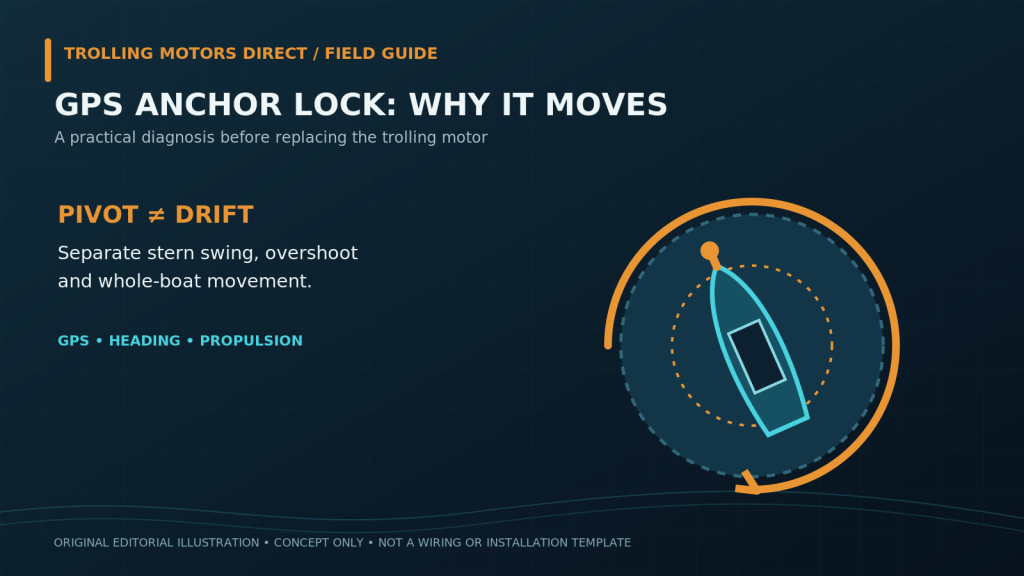
A GPS-anchored trolling motor principally controls the motor’s position near the bow, not an invisible pin through the entire hull. Wind can rotate the boat around that point. This is why an angler at the stern might travel noticeably even though the trolling motor stays close to the recorded spot. Minn Kota explains that Spot-Lock records the GPS position of the motor and works within an arrival circle; it adjusts speed and direction as the motor moves relative to that circle. Minn Kota’s explanation is model/generation-specific, not a universal tolerance for Garmin or Lowrance.
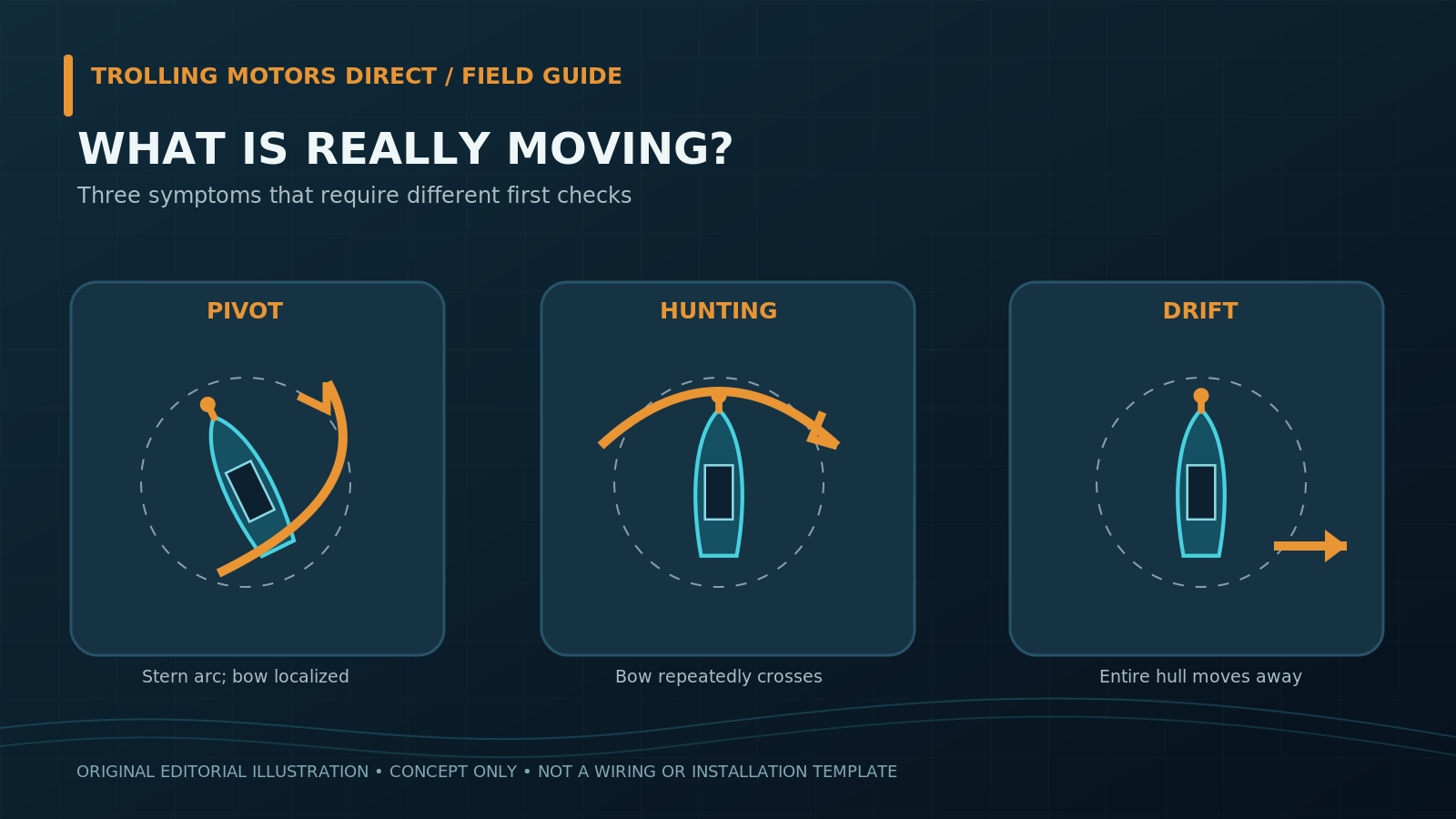
Picture three different tracks on a chart:
- Pivot: The bow stays near one reference position while the stern sweeps an arc. Look first at wind and current direction, hull windage, and the difference between bow position and the point where you are fishing.
- Hunting: The bow repeatedly crosses the intended point, reverses, and crosses again. Look for response settings (where available), inappropriate thrust-to-boat match, or inconsistent feedback.
- Drift: Both bow and stern slide away and do not recover. Look for propeller depth, obstructions, inadequate battery power or thrust, and GPS status before adjusting gain.
These are diagnostic patterns, not mutually exclusive diagnoses. A boat can rotate and drift while hunting. The drawing below is conceptual, not a scale drawing of any manufacturer’s proprietary anchor algorithm.
The 60-second observation that prevents the wrong purchase
With a lookout and the boat in open, sheltered water, select a safe position away from shallow hazards and traffic. Note the wind, current, water depth, location of the propeller, battery indicator, and GPS status. Engage the maker’s position-hold mode using the approved procedure. Rather than watching only the console chart, watch the bow relative to a fixed, distant shoreline feature, then the stern. Record a short video from a secure position; do not lean over the bow or approach a moving propeller.
Ask: Does the bow remain relatively localized? Does the stern describe a smooth arc? Does the motor repeatedly accelerate then reverse? Is the propeller ventilating or gathering weeds? This observation is more useful than saying, “Spot-Lock is all over the place.”
A symptom-to-first-check table for GPS anchor lock
| What you see | What may be happening | First controlled check | Do not assume |
|---|---|---|---|
| Stern sweeps while bow stays localized | Hull pivots around bow reference | Compare wind/current direction with boat heading | GPS has failed |
| Bow repeatedly crosses same spot | Overcorrection or feedback problem | Note gain/boat-scale setting where the model supports it | More thrust fixes everything |
| Bow gradually slides off and never returns | Thrust, propeller, depth, voltage, GPS or mode issue | Confirm GPS status, prop depth and power under load | The display needs replacement |
| Mode works calmly but struggles in gusts | Changing external force exceeds steady corrections | Repeat in calmer safe conditions | Advertised radius applies in a gale |
| Steering changed after remount or travel | Compass/bow offset needs model-specific review | Check calibration requirements | A factory reset is harmless |
| Motor runs erratically and battery warning appears | Low supply voltage or poor connections | Record warning and have power path tested | GPS antenna is defective |
The table is a triage tool; it cannot prove a component failure without a model-specific test.
Step 1: Build a two-condition baseline rather than chasing a perfect radius
Start with a calm-water baseline and compare it with one controlled test in the conditions that caused the complaint. Use the same location, approximate load, and the same mode whenever safe. Record whether a person moved to the bow, whether fuel or batteries shifted, whether a livewell was full, and whether the outboard was down. These details alter how the hull responds to small thrust commands.
For a useful log, record five observations: environment, reference behavior, motor response, power status, and change made. For example: “Sheltered cove, light crosswind; bow stays localized; stern swings; short steering bursts; no warning; nothing changed.” That line is far more actionable than a screenshot of the chart’s boat icon.
Do not judge performance by a homemade tape-measure radius. GPS error, boat geometry, current, and receiver behavior make that an unreliable comparison across brands. Lowrance markets Recon’s high-precision anchoring, but a published claim is not a substitute for an observed test under your conditions. Read Lowrance’s Recon specifications and the relevant owner’s documentation before comparing the motor to another system.
Use two reference points, not one
Mark the approximate bow position and the boat’s heading. A stern moving ten feet around a stable bow is fundamentally different from the entire boat sliding ten feet downstream. If you can safely capture a short time sequence from a secure fixed camera, annotate the relative motion later. Do not place a person or unattended camera where it may fall into the water.
Step 2: Verify GPS and compass calibration before tuning response
Position control is a combination of satellite positioning, heading/steering information, and propulsion. Calibration errors can make a well-powered motor steer in unexpected directions. Garmin states that the Force, Force Pro, and Force Kraken compass calibration procedure is required for autopilot and Anchor Lock. Garmin recommends calm water and little wind for the procedure; this is not a calibration to improvise at the ramp. See Garmin’s calibration instructions.
The Lowrance Recon has an internal compass. Its operator documentation calls for compass calibration at initial installation and after certain changes, and a bow-offset calibration when the mount orientation changes. Recon’s official specifications confirm its internal compass and Anchor Lock functionality; consult the owner’s manual for the exact sequence, not a menu demonstrated on a different Lowrance motor.
For Minn Kota, generation matters. The company’s 2023-present Advanced GPS troubleshooting guidance includes GPS signal, boat scale, voltage, magnetic interference, and propeller checks. It distinguishes external heading sensors used on some motors from internal sensors on QUEST models. Do not relocate a heading sensor based on instructions for an incompatible generation.
A magnetic-interference check is not a reason to move every wire
Anchor chains, speakers, metal framework, and high-current battery conductors can affect heading sensing in certain installations. Minn Kota describes spacing and placement rules for its heading-sensor configurations. Garmin and Lowrance use different hardware and procedures. Inspect what is installed, document nearby equipment, and follow your model’s manual. A phone compass app is not a manufacturer-approved substitute for calibration.
Step 3: Match motor correction to boat inertia—only where the menu supports it
A controller that reacts too strongly may overshoot. One that reacts too softly may lag behind wind or current. This explains why “turn up the speed” is an incomplete recommendation: it may make a small, light boat more erratic. Minn Kota explicitly lists thrust-to-boat-weight ratio and boat scale among the variables affecting Spot-Lock behavior in supported generations; it notes that excessive thrust can lead to overshooting and insufficient thrust can cause slow response.
On Garmin Force Pro, Anchor Gain is distinct from Navigation Gain. Garmin’s August 2026 Force Pro manual says increasing Anchor Gain makes anchor-mode autopilot more responsive, potentially with more turbulence; decreasing it reduces responsiveness and can reduce positioning accuracy. That is a manufacturer-described trade-off, not a recommendation to choose a particular number.
Controlled setting trial: Photograph the original value. Change only one supported control by a small permitted amount. Observe again in comparable conditions. If the result worsens, restore the documented starting value. Do not simultaneously change calibration, anchor gain, propeller, battery, and position-hold location; you would lose the ability to tell what mattered.
Why “boat scale” is not the same as propeller speed
For compatible Minn Kota controls, boat scale influences automated behavior based on the mismatch between the boat and the motor’s control response. Manual speed controls affect ordinary driving. Do not conflate the two. For Garmin, use the model-specific Anchor Gain option, not a Minn Kota button sequence. For Recon, do not assume either menu exists until you have checked its exact documentation or updated software guide.
Step 4: Check the boring mechanical causes
A GPS controller cannot make thrust through a propeller that is ventilating, fouled, damaged, or simply too shallow during chop. If the bow lifts and the propeller grabs air, the motor can momentarily lose authority. A heavy current may demand sustained thrust that a marginally sized motor cannot deliver.
While the motor is powered down and secured, inspect the propeller and shaft for weed strands, fishing line, impact marks, and loose parts, following the manufacturer instructions. Verify that the deployed lower unit is at the depth required for your hull and conditions; never reach toward a rotating propeller. Review our bow-mount fitting guide for the distinct problem of measuring shaft length—not for a universal solution to GPS control.
A higher bow or larger wind-exposed cabin can alter how the boat behaves at anchor even when loaded weight has not changed much. A long-shaft motor may maintain immersion where a short one breaches the surface. But choosing a shaft solely from a swing pattern is guessing: measure mount-to-waterline height and consult the specific motor’s shaft guidance first.
Step 5: Don’t mistake a weak electrical supply for a navigation fault
Automated control depends on adequate supply power. Minn Kota’s current troubleshooting guidance warns that low voltage at the motor can impair GPS information and cause erratic steering. Corroded terminals, undersized extensions, failing battery cells, and heavy loads can all contribute. Minn Kota’s troubleshooting page specifically begins with a battery load test and connection inspection.
Record battery state before and during the issue. If the system displays a low-voltage or controller warning, capture the exact message, model, software version, and conditions. Have a qualified technician inspect the manufacturer’s required supply, breaker, connectors, and cable sizing. Never bypass a breaker, substitute an unapproved fuse, or connect a 24/36V trolling-motor feed to a 12V fish finder.
Our trolling-motor battery guide explains voltage and battery choices more generally. For a recurring anchor-lock fault, however, a proper under-load diagnostic is more valuable than simply buying a larger battery and hoping.
Step 6: Recognize when the environment is the limiting factor
On a calm reservoir, a boat may respond smoothly. In a wind against current, the stern may push one way while the bow propeller applies force in another. Gusts change that balance rapidly. This can look like nervous steering even when every sensor is healthy. A large windscreen, tall freeboard, open livewell, or shifting crew increases the variability.
Do not deliberately test close to a dam, channel marker, dock, rocks, or a busy fairway. Automated position holding is an aid to boat control, not a substitute for a helm watch. If the boat cannot safely maintain station, disengage the mode and take manual control or relocate.
Three real-world examples (illustrative, not customer case studies)
Case A — Stable bow, wandering stern: Two anglers are casting from the back deck in a crosswind. They see a persistent stern arc but the bow is close to its reference. The first action is to change casting position or boat orientation, not to order a compass.
Case B — Sharp back-and-forth at the bow: A light bass boat with abundant motor thrust keeps running through a small target area. After power and calibration checks, the owner evaluates supported response controls with a one-variable test. The exact setting is model-specific.
Case C — Slow downstream slide with bursts of propeller noise: A high-bow boat in chop has the propeller intermittently near the surface. The owner checks shaft immersion safely, then power and available thrust. A new fish finder would not address those physical constraints.
When does replacement actually make sense?
Replace or upgrade only when the investigation points to a concrete limit: insufficient shaft length, a motor whose rated voltage/thrust is unsuitable for the loaded boat, damaged control hardware confirmed through manufacturer service, or a feature your existing model never offered. An advertised GPS positioning claim is not, by itself, a diagnosis.
For example, the Garmin Force Pro listing identifies its 50- and 57-inch shafts, 24/36V operation, and GPS Anchor Lock; the Lowrance Recon listing lists longer-shaft choices, 24/36V operation, and Anchor Lock. Those are different systems, not interchangeable parts. Review your hull, electronics integration, power bank and the manufacturer’s installation document before choosing either.
| Buying question | Why it matters | What to bring to a fit conversation |
|---|---|---|
| Is the propeller staying submerged? | Intermittent ventilation reduces control | Mount-to-waterline measurement; wave conditions |
| Is thrust sufficient in your actual conditions? | Inertia and wind load affect response | Loaded boat model; common fishing conditions |
| Are GPS/heading features the ones you need? | Modes and remotes differ by system | Exact motor and graph model numbers |
| Will the mount stow without interference? | Clearance is separate from shaft sizing | Bow photos and stowed-area dimensions |
| Is the power system correct? | A healthy motor needs correct voltage and protection | Battery arrangement, cables, breaker specs |
A one-page GPS anchor troubleshooting checklist
- Work in open, sheltered water with an attentive operator and a manual-control escape plan.
- Identify make, exact model, year/generation, firmware, and position-hold mode.
- Record wind/current, load, GPS status, and any warning.
- Distinguish bow movement from stern pivot and whole-hull drift.
- Verify propeller immersion and look for mechanical fouling with power isolated.
- Check installation and calibration requirements against the correct manual.
- Record power status; arrange a qualified load test if symptoms suggest electrical weakness.
- Change only one applicable response setting at a time and preserve the original value.
- Repeat the test in comparable conditions; keep photos and exact observations.
- Escalate persistent faults to the manufacturer or an authorized installer before replacing electronics.
Frequently asked questions
Does Spot-Lock keep the whole boat from turning?
Not necessarily. It uses a GPS reference associated with the motor, and the hull can pivot around the bow as wind and current change. Different systems and special modes may behave differently; identify the exact product before treating rotation as a defect.
Why does my trolling motor keep spinning when anchor lock is on?
It may be repeatedly correcting position, compensating for wind/current, responding to an incorrect heading reference, or dealing with poor propulsion. Log the bow movement and motor response, then work through GPS, calibration, propeller, and voltage checks rather than assuming a steering motor failure.
Can too much trolling-motor thrust make position hold worse?
In some configurations, yes. Minn Kota’s guidance notes that a thrust-to-boat mismatch can cause overshoot and recommends checking boat scale where supported. This does not mean a stronger motor is universally worse; it means the complete control setup matters.
Should I increase Garmin Anchor Gain?
Only after basic checks and only in a controlled comparison. Garmin says higher Anchor Gain increases responsiveness but can generate turbulence; lower gain can reduce responsiveness and compromise position accuracy. There is no reliable universal number.
Is a heading sensor required for every GPS trolling motor?
No. Hardware differs. Recon has an internal compass, Garmin Force-family motors have their own calibration requirements, and Minn Kota uses different internal or external sensors depending on generation. Do not purchase or reposition one without checking the exact manual.
Will a new fish finder improve anchor lock?
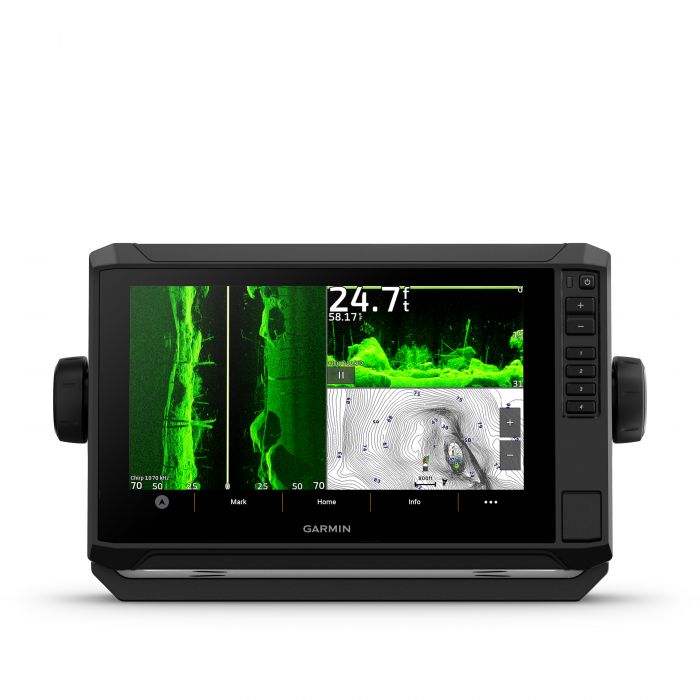
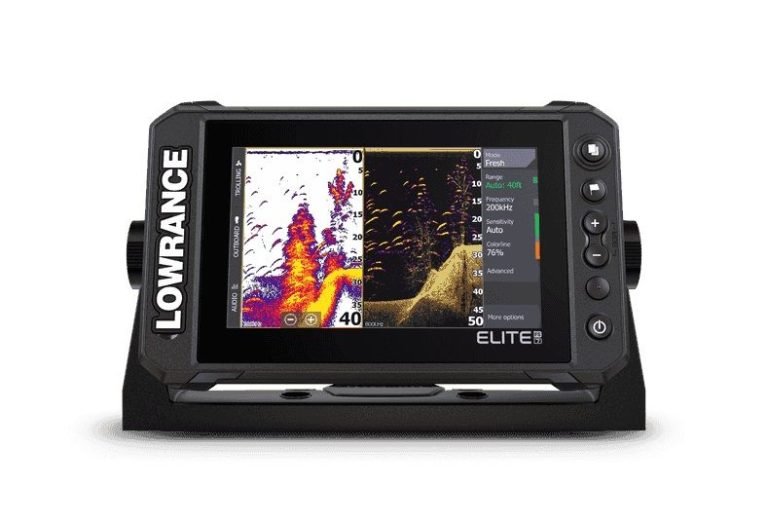
Not by itself. Some fish finders provide supported motor-control interfaces, but an inadequate propeller depth, weak supply, or a calibration error will still be present. Confirm what component actually controls position in your system.
When should I call support instead of testing again?
Immediately if the motor steers unpredictably near hazards, shows a persistent fault code, has visibly damaged cables, loses power, or needs wiring/calibration work beyond the manufacturer’s approved user procedure. Preserve the exact error, photos and serial/model information.
Keep the boat where you want it—without buying the wrong fix
The crucial distinction is not Garmin versus Lowrance versus Minn Kota. It is pivot, hunting, or drift. Identify that pattern, validate GPS and heading, confirm real propeller authority, and assess power before spending money. When an upgrade really is justified, use Trolling Motors Direct’s trolling motor selection and send your boat model, mounting height, battery voltage, motor model, and diagnostic observations to sales@trollingmotorsdirect.org for a fit discussion. We can help narrow products; manufacturer support should diagnose suspected internal failures.