An electric trolling motor is a small, quiet battery-powered motor that moves and holds your boat at slow speed while you fish. It doesn’t replace your outboard. You run the big motor to get to the spot, then drop the trolling motor in the water to creep along a bank, hold on a brush pile or follow a contour without spooking fish. They range from a $120 clamp-on motor for a jon boat to bow-mount units with GPS and built-in sonar that cost $4,000 and up.
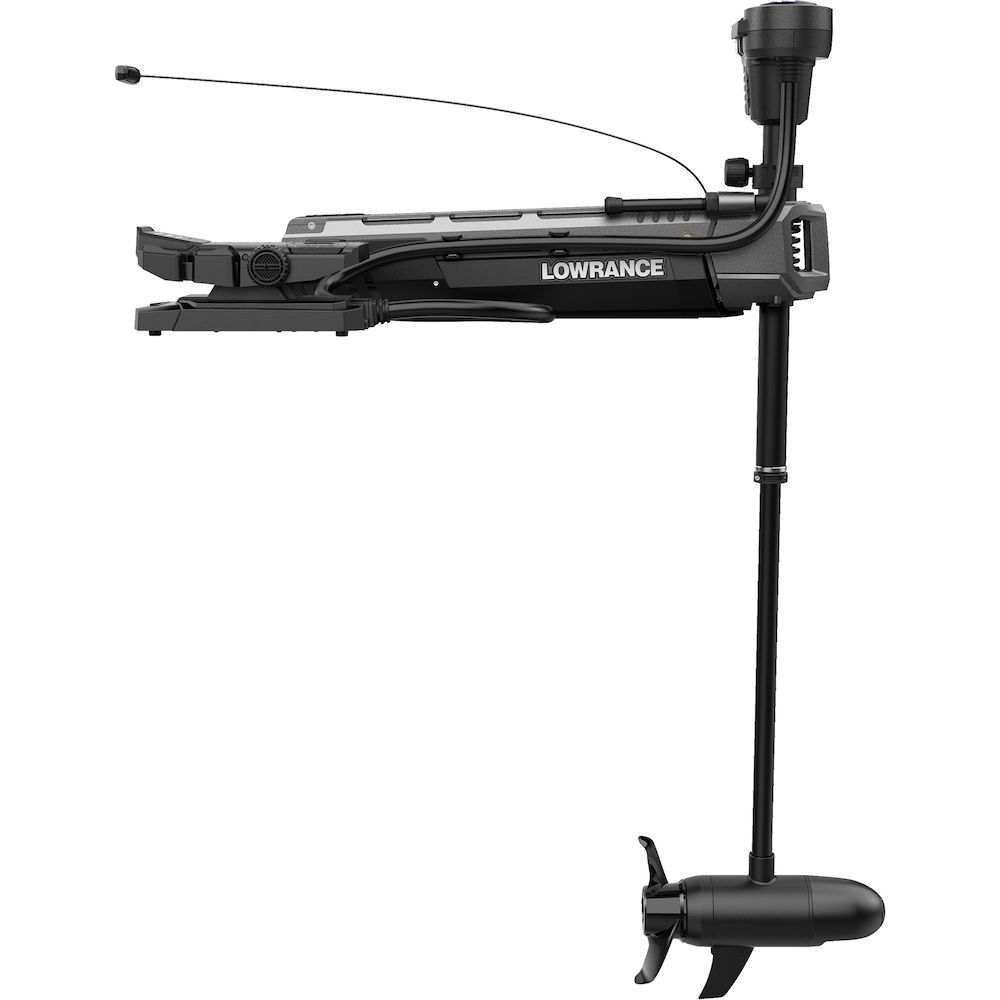
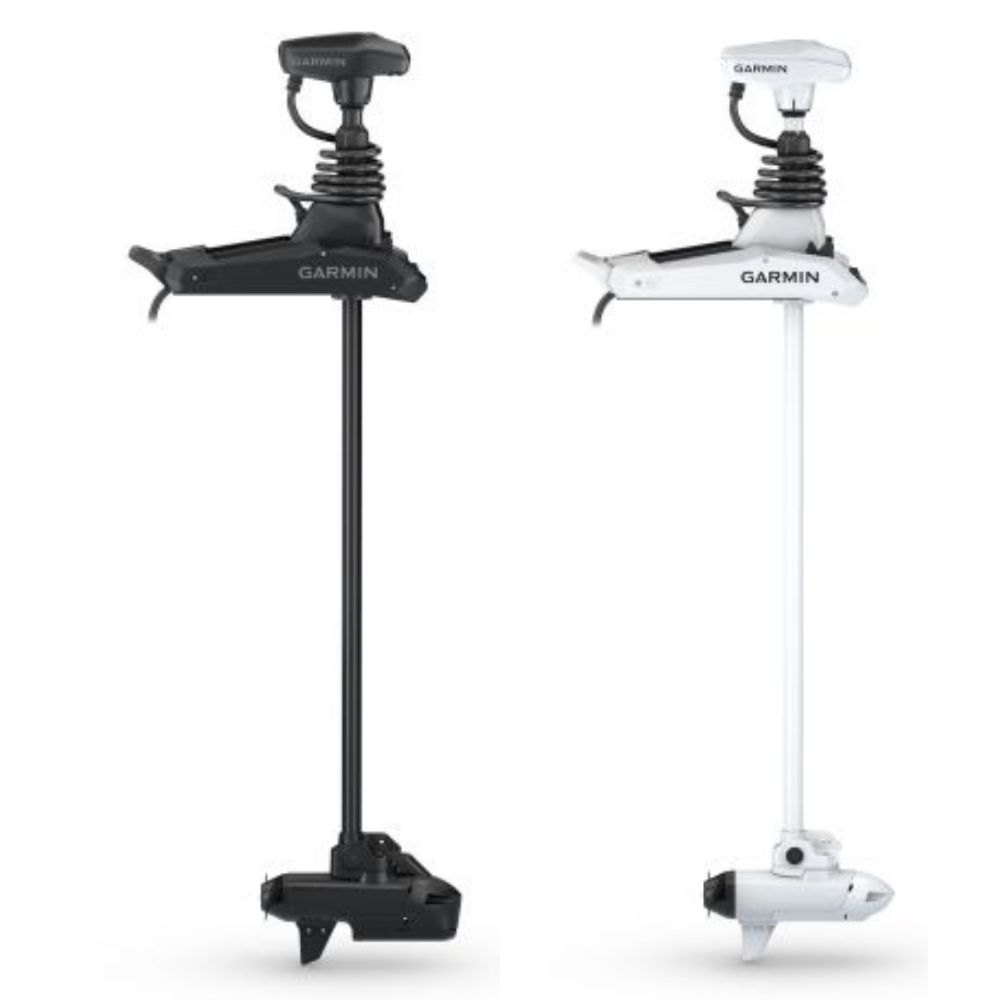
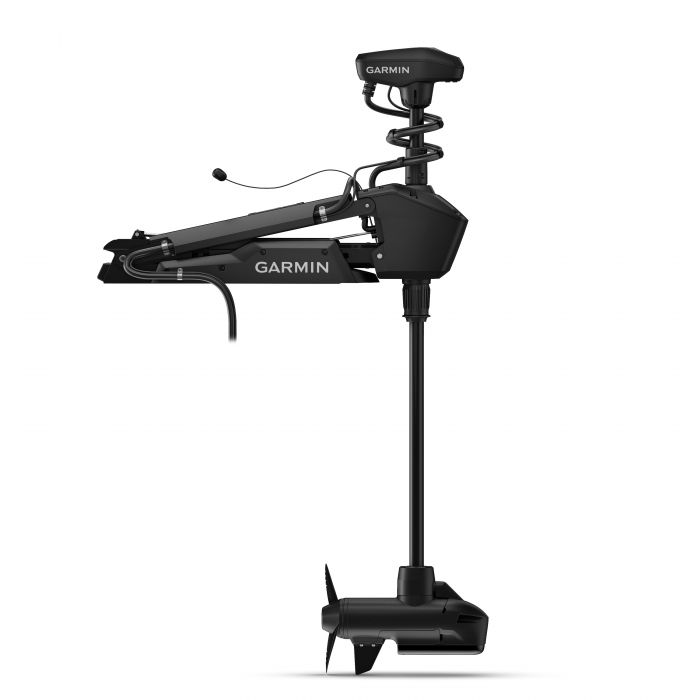
We sell four of the high-end ones: the Garmin Force Pro, Garmin Force Kraken, Lowrance Ghost and Lowrance Recon. Plenty of boats don’t need that much motor, and we’ll say so below.
What an electric trolling motor does
A trolling motor gives you control at speeds an outboard can’t hold. It runs off deep-cycle batteries, makes almost no noise, and lets you steer the boat while your hands are on a rod.
- Slow, steady movement: Working a shoreline, a weed edge or a dock row at walking pace or slower.
- Boat positioning: Keeping the bow pointed where you want to cast, even in a light wind.
- Holding a spot: On GPS models, the motor holds the boat on one point so you don’t have to drop an anchor.
- Quiet: No engine noise or exhaust, which matters in shallow water.
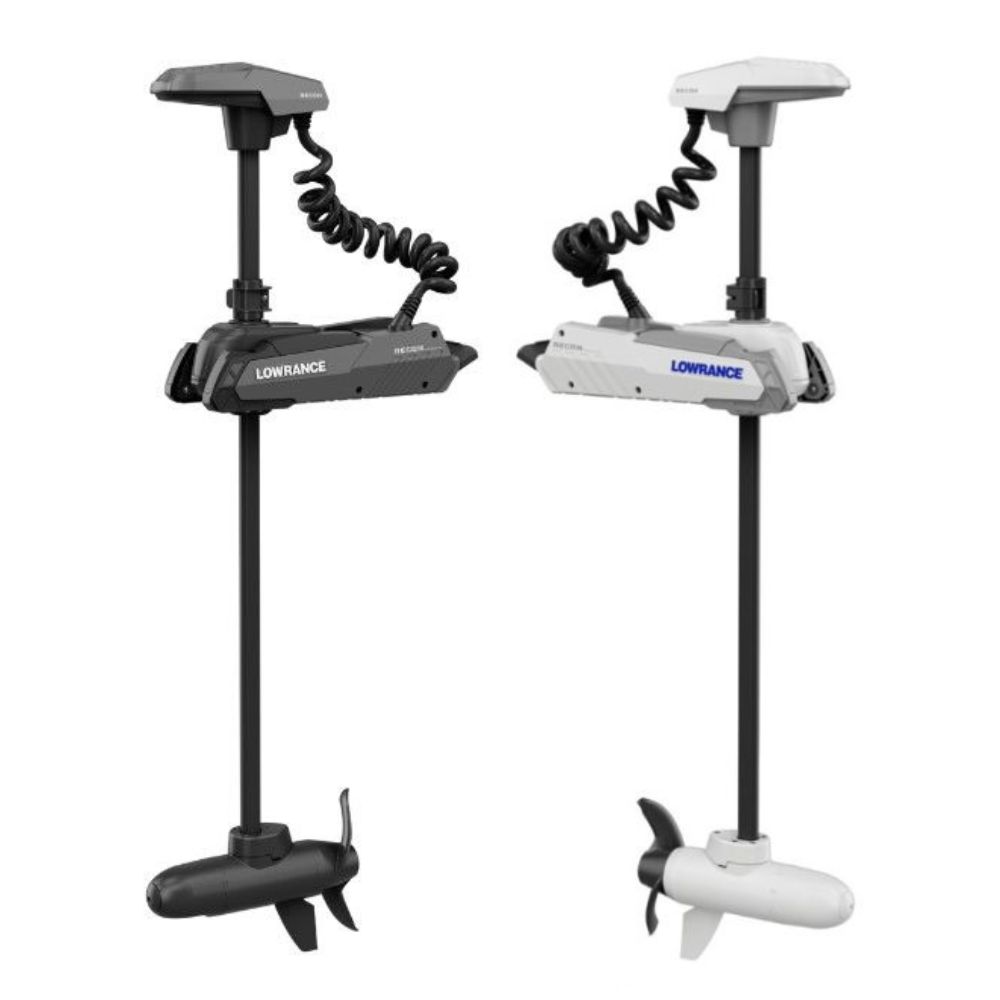
The basic parts are the same on every model: a motor and prop at the bottom (the lower unit), a shaft, a mount, a head with the controls, and power leads to the battery.
How an electric trolling motor is powered
Every electric trolling motor runs off deep-cycle batteries, separate from the battery that starts your outboard. A 12 volt trolling motor uses one battery. A 24 V motor uses two 12 V batteries wired in series, and a 36 V motor uses three, or a single 24 V or 36 V lithium pack.
Run time is amp hours divided by amps. A 100 Ah bank drawing 10 A lasts about 10 hours. At full throttle on a big motor, close to 60 A, the same bank lasts well under two hours. Dealer run-time charts treat 5 A or less as trolling speed, and at 5 A the same trolling motor bank lasts about 20 hours.
- Breaker: Put a breaker between the battery and the motor. Garmin calls for one that handles 60 A continuous on its Force motors.
- Plug: A bow plug lets you disconnect the motor for storage or charging.
- Charger: An onboard charger with one bank per battery is the simplest way to keep them topped up.
- Battery type: Lithium weighs less and holds its voltage longer. Lead-acid costs less up front. Garmin notes its battery gauges are tuned for lead-acid, so set the battery type in the menu if you run lithium.
We don’t sell batteries. Our trolling motor battery guide and plug guide cover the wiring side.
Mount types: bow, transom and engine mount
Where the motor attaches to the boat changes how it handles and what it can do.
Bow mount
A bow mount sits on the front deck and pulls the boat. Pulling from the front gives you the best control, especially into the wind, and it puts you at the front of the boat where you’re casting.
Bow mounts fold up onto the deck when you run. Almost every GPS anchor and built-in sonar feature lives on bow-mount motors. All four motors we sell are bow mounts, and our bow-mount trolling motor guide covers them in more depth.
Transom mount
A transom mount clamps onto the back of the boat. Most have a tiller handle you hold to steer, with the speed control on the handle. They cost less and move easily from boat to boat. Minn Kota’s Endura line, for example, is a transom-mount, hand-steer motor with a telescoping tiller, 30 to 50 lb of thrust on 12 V, and 30, 36 or 42 inch shafts.
Pushing from the back works fine on a small boat in calm water. In wind, a transom motor has a harder time keeping the bow where you want it, and you’re sitting at the back instead of fishing from the front.
Engine mount
An engine-mount motor bolts to the outboard’s anti-ventilation plate and steers with the outboard. It keeps the deck clear but ties the trolling motor to the outboard’s steering. It’s a niche option and we don’t sell it.
What installing a bow-mount electric trolling motor involves
- Find the spot: As close to the centerline as the deck allows, with room to stow clear of cleats and hatches. GPS motors have a bow offset setting if the motor can’t sit dead center.
- Bolt it down: Through-bolt with backing plates and seal the holes. Some mounts need access under the deck.
- Run the power: Use the wire size the motor’s manual gives for your cable run, with a breaker and a plug.
- Set it up: On GPS motors, calibrate the compass on calm open water and set the battery type and voltage.
Our trolling motor mount post covers mounting in more detail.
Sizing an electric trolling motor: thrust, voltage and shaft
Three numbers decide whether an electric trolling motor fits your boat: pounds of thrust, battery voltage and shaft length.
Thrust
The usual guide is about 2 lb of thrust for every 100 lb of loaded boat. Loaded means the hull, motor, fuel, batteries, gear and people.
A boat that weighs 2,500 lb loaded needs at least 50 lb of thrust. A 5,000 lb boat needs about 100 lb. Wind, current and big water all push that number up.
Voltage
Thrust and voltage go together. More voltage lets a motor make more thrust without drawing as many amps. Minn Kota’s Riptide Terrova shows the steps clearly: 55 lb on 12 V, 80 lb on 24 V and 112 lb on 36 V.
| System | Batteries | Typical thrust range | Typical boat |
|---|---|---|---|
| 12 V | One 12 V battery | 30 to 55 lb | Jon boats, small aluminum boats, canoes |
| 24 V | Two 12 V in series, or one 24 V | About 80 to 97 lb | Mid-size bass and multispecies boats |
| 36 V | Three 12 V in series, or one 36 V | About 100 to 120 lb | Larger bass boats, bay boats, center consoles |
All four motors we sell run on either 24 V or 36 V. None of them run on 12 V.
Garmin rates the Force Kraken at 80 lb on 24 V and 100 lb on 36 V, and the Force Pro at up to 100 lb. The Ghost is rated 97 lb on 24 V and 120 lb on 36 V. Lowrance’s installation manual lists the Recon at 90 lb on 24 V and 110 lb on 36 V. Our 24 volt trolling motor post covers the 24 V versus 36 V choice.
Shaft length
The shaft has to be long enough to keep the prop under the surface when the bow rises. Lowrance’s Ghost manual says the motor unit should sit at least 12 in (300 mm) below the surface.
Measure from where the mount sits down to the waterline, then use the maker’s guide for that motor. Too short and the prop sucks air in a chop. Too long and you’re dragging a lot of shaft in shallow water, though a depth collar lets you raise it.
Props
Most motors take more than one prop. A high-efficiency prop is the efficient choice in open water, and a weedless prop sheds grass and pads better. Garmin includes both with the Force Pro and sells each for $99.99. Lowrance sells a 2-blade weedless prop for the Recon ($64) and a replacement prop for the Ghost ($62).
Steering types: hand, cable, electric, pedal and remote
How you steer is the biggest day-to-day difference between a cheap motor and an expensive one.
- Hand (tiller): You hold the handle and point it. Simple and reliable, but one hand is always on the motor.
- Cable steer: A foot pedal turns the motor through a steering cable. You feel the motor directly through your foot.
- Electric steer: A steering motor in the head turns the shaft. The pedal or remote sends a signal instead of pulling a cable. GPS anchoring and autopilot need the motor to turn itself, and electric steering does that.
- Corded pedal: An electric-steer pedal on a cable. The Lowrance Ghost works this way, with fly-by-wire steering.
- Wireless pedal: No cable on the deck. The Garmin Force Pro comes with one, and the freshwater Lowrance Recon does too.
- Handheld remote: Steer, set speed and hold position from anywhere in the boat. Garmin’s remote does gesture steering, where you point the remote where you want to go. The Recon’s FreeSteer joystick gives 360 degree steering with your thumb.
A pedal on the front deck plus a remote for the rest of the boat covers most situations. Every motor we sell can work with both, though some need an add-on: the Kraken’s pedal is $449.99, the saltwater Recon’s wireless pedal is $560.99, and the Ghost’s TMR-1 remote is $153.
Features worth paying for on an electric trolling motor
Once you move past a basic electric trolling motor, these are the features that add most of the cost.
GPS anchoring and autopilot
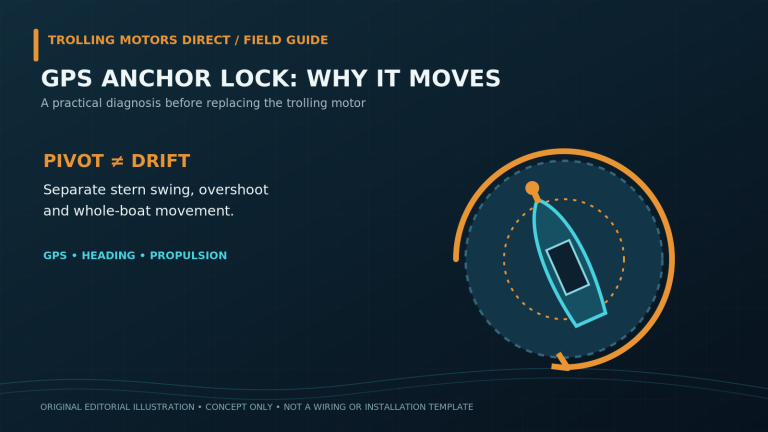
A GPS motor holds the boat on a spot by itself. Minn Kota calls this Spot-Lock, Garmin calls it anchor lock, and Lowrance uses Anchor on the Ghost and Anchor lock on the Recon. The same hardware also runs heading modes that keep the boat on a line, cruise control that holds your speed over ground, and route following. Our spot lock post explains how it all works.
Built-in sonar
Some motors put a transducer in the nose of the lower unit, so there’s nothing strapped to the outside of the motor. The Force Pro has a Garmin GT56UHD-TR built in, and select Kraken models do too. The Ghost and freshwater Recon come with a Lowrance HDI sonar nosecone, and Lowrance sells Active Imaging 3-in-1 nosecones as upgrades.
Networking with your graph
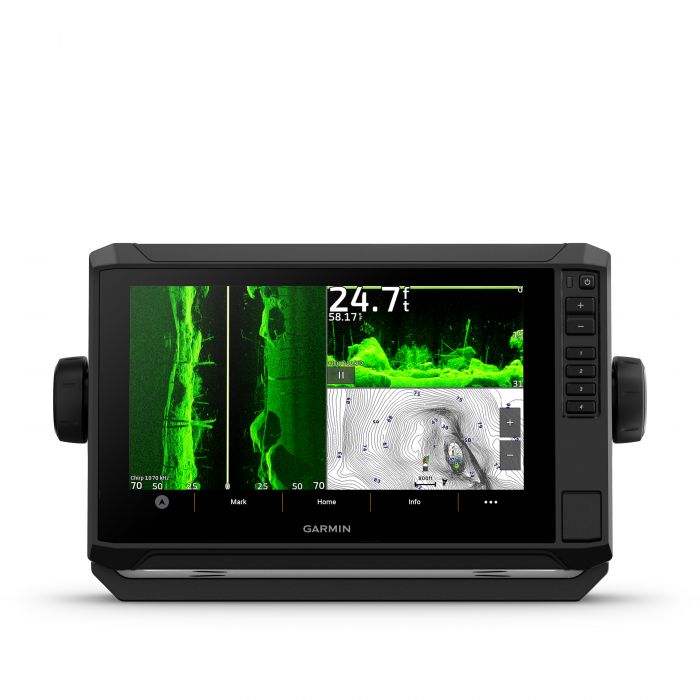
Garmin motors connect wirelessly to compatible Garmin chartplotters. Lowrance motors connect to Lowrance displays over NMEA 2000. Once connected you can run the motor from the screen, save anchor spots as waypoints, and follow routes. If your graph is a different brand, the motor still works from its own pedal and remote.
Brushless motors
All four motors we sell are brushless. Garmin and Lowrance both point to quieter running and better battery efficiency. Many basic motors use brushed motors, which cost less and work fine for lighter use.
Price ranges across the market, and where ours fit
Trolling motor prices span a huge range. Here’s what Minn Kota, the brand behind Spot-Lock, lists on its own site for its freshwater lines in October 2026. We don’t sell Minn Kota, but these numbers show where each tier sits.
| Minn Kota freshwater line | Price range on Minn Kota’s site |
|---|---|
| Endura (12 V transom, hand steer) | About $120 to $290 |
| Traxxis | $439.99 to $659.99 |
| PowerDrive | $1,399.99 to $1,849.99 |
| Terrova | $2,099.99 to $2,999.99 |
| Ulterra | $3,199.99 to $4,999.99 |
| Ultrex | $3,299.99 to $4,499.99 |
Roughly, you can think of three tiers. A basic 12 volt trolling motor on the transom costs a few hundred dollars. Minn Kota’s middle lines run from about $1,400 to $3,000. The top lines run from about $3,000 to $5,000, which is where our four motors sit.
Where our four motors fit
All four sit in that top tier. They’re 24 V or 36 V bow mounts with GPS anchoring, brushless motors, remote control and graph networking.
| Motor | Our price | Shaft lengths | Sonar | Water |
|---|---|---|---|---|
| Lowrance Ghost | $3,199.00 | 47, 52, 60 in | HDI nosecone | Freshwater only |
| Lowrance Recon | $3,669.99 | 48 to 72 in | HDI nosecone on freshwater version | Freshwater and saltwater versions |
| Garmin Force Kraken | $3,999.99 | 48, 63, 75, 90, 110 in | GT56UHD-TR on select models | Salt, brackish and fresh |
| Garmin Force Pro | $4,199.99 | 50, 57 in | GT56UHD-TR built in | Freshwater boats |
- Lowrance Ghost: The lowest price of the four, set up around a corded pedal, and a good match for a freshwater boat with a Lowrance HDS.
- Lowrance Recon: Built around the FreeSteer joystick remote, with freshwater and saltwater versions. Pairs with Lowrance displays over NMEA 2000.
- Garmin Force Kraken: Pivot mount and shafts up to 110 inches for bay boats and center consoles. Built for salt.
- Garmin Force Pro: Scissor mount for bass boats, with the remote and wireless pedal both in the box and sonar built in.

Gear in this guide
When a basic 12 volt trolling motor is enough
If you fish from a jon boat, a small aluminum boat or a canoe on small lakes, a 12 volt trolling motor on the transom may be all you need. One battery, a tiller, 30 to 55 lb of thrust, and a price in the low hundreds. We don’t sell those, and we’d rather tell you that than sell you a $3,000 motor your boat doesn’t need.
If you go that way, check the thrust against your boat’s loaded weight, pick a shaft long enough for your transom height, and buy a saltwater model if you fish the coast. Minn Kota’s Endura, for example, has five forward and three reverse speeds and is listed for freshwater. Minn Kota sells its saltwater transom motors as the Riptide Transom line, from $349.99 on its site.
A premium motor starts to make sense when one or more of these is true:
- Your boat is big or heavy enough to need 80 lb of thrust or more.
- You fish from the front deck and want your hands free.
- You fish docks, brush piles or offshore spots where holding position matters.
- Your boat already has a Garmin or Lowrance graph and you want the motor on the same screen.
- The boat is a bay boat or center console with a tall bow that sees salt.
Picking the best trolling motor for your boat
There isn’t one best trolling motor. The best trolling motor for you is the one that fits your boat’s weight, bow height, battery system and graph. Work through it in this order.
- Weigh the boat loaded: Use the 2 lb per 100 lb guide to set a minimum thrust.
- Pick the voltage: 12 V for small boats, 24 V for most mid-size boats, 36 V for heavy boats and rough water.
- Measure the bow: Mount to waterline, then pick a shaft that keeps the prop at least a foot under.
- Choose the mount: Transom for small boats on a budget, bow mount for everything else.
- Match your graph: Garmin motor for a Garmin chartplotter, Lowrance motor for a Lowrance display.
- Plan the batteries: Budget for batteries, a charger, a breaker and a plug on top of the motor price.
Electronics are final sale here, so check compatibility before you order and email us your boat and graph if you’re not sure. You can browse everything on our shop page.
Questions about electric trolling motors
What size electric trolling motor do I need?
Plan on about 2 lb of thrust for every 100 lb of loaded boat, then add more for wind and current. A 2,500 lb boat needs at least 50 lb. A 5,000 lb boat needs about 100 lb.
Is a 12 volt trolling motor enough?
For a jon boat, canoe or small aluminum boat on calm water, usually yes. For a bass boat or anything heavy, you’ll want 24 V or 36 V. None of the motors we sell run on 12 V.
What is the best trolling motor for a bass boat?
For a bass boat with a Garmin graph, we’d look at the Garmin Force Pro first. With a Lowrance graph, the Ghost or the freshwater Recon. Match the motor to your graph so you can run it from the screen.
Should I get a bow mount or a transom mount?
Transom mounts are cheaper and fine for small boats in calm water. Bow mounts pull the boat, handle wind better, and let you fish from the front. All GPS and built-in sonar features we sell are on bow mounts.
Can I use an electric trolling motor in saltwater?
Only if it’s built for it. Lowrance says saltwater use voids the Ghost’s warranty. The Garmin Force Kraken and the saltwater Recon are made for salt. Our saltwater trolling motor guide covers the rest.
Want a second opinion before you buy?
Email sales@trollingmotorsdirect.org with your boat make, length, loaded weight and the graph you run. We’re around Monday to Friday, 9am to 6pm.