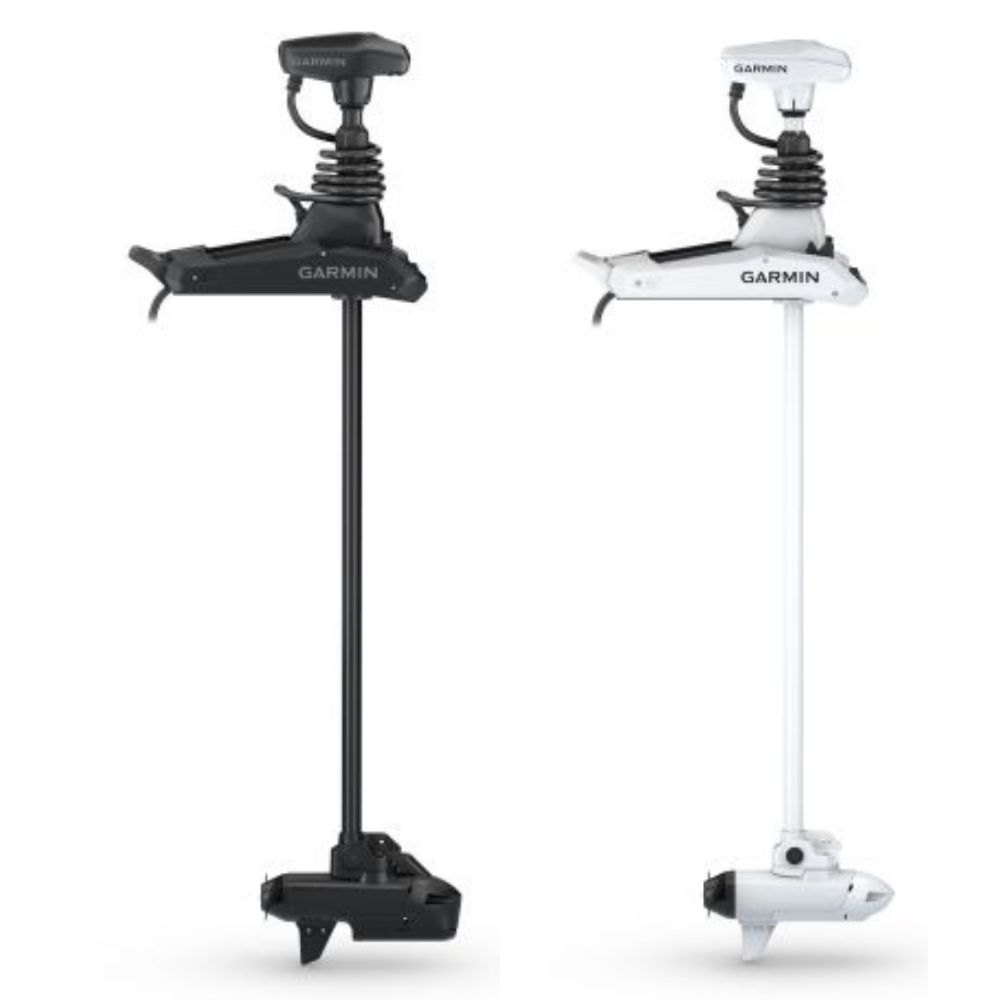
A saltwater trolling motor is built to survive salt with sacrificial anodes, protective coatings on the metal parts, sealed electronics and a shaft that won’t rust. It still needs a freshwater rinse after every trip. Of the four motors we sell, the Garmin Force Kraken and the saltwater version of the Lowrance Recon are made for salt. The Lowrance Ghost is freshwater only, and the Garmin Force Pro sits in between.
Salt doesn’t kill a motor in one trip. It works slowly on the prop shaft, the mount hardware, the battery terminals and every spot where two different metals touch. A saltwater trolling motor and a simple routine after each trip keep that in check.
What makes a saltwater trolling motor different
Saltwater is conductive and it dries into crystals that hold moisture against metal. In salt, unprotected metal corrodes fast. Every saltwater trolling motor deals with that in a few ways.
Sacrificial anodes
An anode is a small piece of more reactive metal fitted near the prop. In salt, it corrodes first so the motor housing and prop shaft don’t. That’s why anodes wear away and need replacing.
Garmin fits the Kraken with a propeller anode and a second anode at the nose cone. Lowrance ships the saltwater Recon with a prop shaft anode in the box.
Coatings
Bare aluminum and steel don’t last in salt. Minn Kota says the lower units on its Riptide Terrova saltwater motors are grit-blasted, coated in aluminum and then powder coated. Dealer listings for the saltwater Recon say it gets a chromate coating that the freshwater Recon doesn’t have. A chip in the coating lets salt reach the metal underneath, so touch-ups matter.
Sealed electronics
A modern GPS trolling motor has electronics in the head, the steering housing and the drive motor. Garmin publishes a separate water rating for each part of its motors, and the shaft cap has the lowest one. That’s why Garmin tells you not to spray a jet of water at it. Lowrance warns that high-pressure washing can dislodge pins and plugs on the Recon.
Shafts and hardware
The Force Pro and Recon use composite shafts, and Minn Kota’s Riptide Terrova uses a carbon-fiber-infused composite shaft. Composite doesn’t rust.
The fasteners are a common trouble spot. Stainless bolts threaded into aluminum can seize, and plain steel hardware rusts fast. That’s where anti-seize and threadlocker come in, which we cover in the care routine below.
Which motors we sell are rated for saltwater
Here’s what each manufacturer says about salt. Check this before you buy, because a freshwater trolling motor used in salt can lose its warranty.
| Motor | Salt rating | Shaft lengths | Anode |
|---|---|---|---|
| Garmin Force Kraken | Built for saltwater, brackish and freshwater | 48, 63, 75, 90, 110 in | Prop anode and nose cone anode |
| Lowrance Recon, saltwater version | Saltwater model with chromate coating | 54, 60, 72 in | Prop shaft anode in the box |
| Lowrance Recon, freshwater version | Freshwater model, no saltwater coating or anode | 48, 54, 60, 72 in | Not included |
| Garmin Force Pro | Garmin cites corrosion and saltwater protection | 50, 57 in | Prop anode |
| Lowrance Ghost | Freshwater only | 47, 52, 60 in | Sold separately, required for brackish water |
Garmin Force Kraken
Garmin describes the Kraken’s shaft and components as having advanced corrosion and saltwater protection, and markets it for saltwater, brackish and fresh water. It’s the Garmin trolling motor we’d put on a boat that lives in salt.
Lowrance Recon
The Recon trolling motor comes in two versions. The saltwater model has the chromate coating and prop shaft anode. The freshwater model doesn’t, and it’s the one that comes with the wireless foot pedal. If you fish salt, make sure you’re getting the saltwater version.
Dealer listings show it shipping with the FreeSteer joystick remote, a 2-blade weedless prop, an NMEA 2000 T-connector and the prop shaft anode. It uses a pivot-style bow mount that you stow and deploy with a foot lever. Email us to check availability in your shaft length.
Garmin Force Pro
Garmin’s launch release says Force Pro parts have advanced corrosion and saltwater protection, and the manual includes the same rinse routine for salt and brackish water as the Kraken. But it only comes in 50 and 57 inch shafts with a scissor mount, which suits the flat front deck of a bass boat. For a bay boat or center console, the Kraken fits better.
Lowrance Ghost
Lowrance is clear about the Ghost. The manual says it’s intended for freshwater only, that brackish water needs a sacrificial anode (sold separately), and that use in brackish water without the anode, or in saltwater at all, voids the warranty.
Brackish water
Brackish water at a river mouth or in a tidal creek still carries salt. Treat it like salt. Garmin’s rinse instructions cover salt and brackish water the same way, Lowrance tells Recon owners to rinse after both, and the Ghost needs its anode fitted before it goes anywhere brackish.
The Garmin Force Kraken trolling motor as a saltwater pick
The Garmin Force Kraken trolling motor ($3,999.99) has the widest range of shafts of the four, from 48 to 110 inches. Garmin added the 110 inch shaft in July 2025 for large center consoles. It’s the only trolling motor we sell that reaches that far.
The pivot-style mount is the other reason. Garmin built it for boats where bow space is limited, which describes a lot of center consoles and bay boats once you count the anchor locker, cleats and bow rail. A scissor mount needs a long flat deck to fold onto.
- Thrust: 100 lb on 36 V or 80 lb on 24 V, rated to ISO 13342.
- Position holding: Multi-band GPS and a built-in AHRS heading sensor for anchor lock and heading hold. Garmin says it uses more aggressive motor speed in rough conditions, which helps a heavier boat.
- Controls: Wireless remote in the box. The Garmin foot pedal is $449.99 if you want one.
- Colors: Black or white.
- Sonar: Select models have the GT56UHD-TR transducer built in, and the shaft has internal cable routing for a LiveScope transducer.

Run it on 36 V on a big boat. By the usual guide of about 2 lb of thrust per 100 lb of loaded boat, a center console that weighs 5,000 lb with fuel, ice and people already needs the full 100 lb, and wind and current push that number up. On 24 V the Kraken makes 80 lb, which suits lighter skiffs and bay boats.
Our Garmin motor guide compares the Kraken and the Force Pro spec by spec.
Picking the shaft length for a taller bow
Shaft length matters more on a saltwater trolling motor than on a bass boat motor. Bay boats and center consoles have higher bows, and the water is rougher. If the prop comes out of the water every time the bow lifts, it sucks air, loses grip and lets the boat slide off the spot.
- Measure the bow: Measure from the deck where the mount will sit straight down to the waterline, with the boat loaded the way you fish it.
- Allow for depth: Lowrance says the motor unit should be at least 12 in (300 mm) under the surface. In a chop you want more.
- Check the maker’s guide: Mount heights differ between brands, so use the shaft numbers for the motor you’re buying, or email us your measurement.
- Go longer if in doubt: A depth collar lets you raise a long shaft. You can’t make a short one reach deeper.
On the Kraken, Garmin aims the 110 inch shaft at large center consoles and the 48 inch at boats with less freeboard. The 63, 75 and 90 fall in between, so measure your own boat. The saltwater Recon tops out at 72 inches. Minn Kota’s Riptide Terrova goes to 100 inches if you need to compare, though we don’t sell Minn Kota.
Mounting a saltwater trolling motor on a center console or bay boat
A bow that was never planned for a trolling motor takes some thought. Lay the trolling motor out on the deck before you drill anything.
- Clearance: Check that the motor stows clear of the anchor roller, cleats, hatch lids and bow rail, and deploys outside the rub rail. Dealer install notes for the Recon call for at least 1.5 in between the shaft and the rub rail when deployed.
- Bolting: Through-bolt with backing plates where you can reach underneath. The Recon mount takes 4 to 6 bolts, and dealers list a no-access bolt option for decks you can’t get under.
- Sealing: Bed every bolt hole in marine sealant so water can’t get into the deck core.
- Quick release: Dealers list a Garmin quick release plate system for the Kraken, and show the Recon as compatible with the MotorGuide Xi quick-release bracket. Handy if you pull the motor for long offshore runs or winter storage.
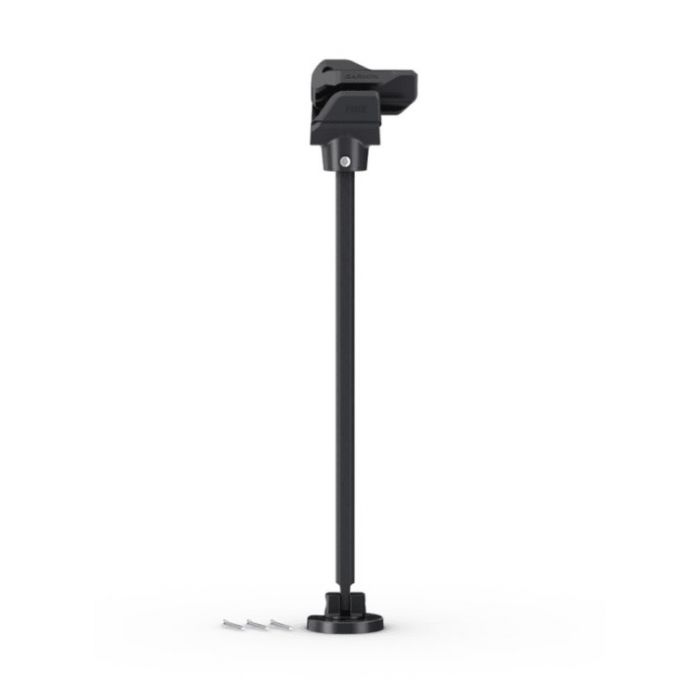
- Stabilizer: A stowed motor takes a beating in a head sea. The Garmin deck mount stabilizer for Kraken ($109.99) steadies it.
- Wiring: On a lot of center consoles the batteries sit at the console or stern, so the leads run a long way. Use a breaker, a proper bow plug, and dielectric grease on every connection. Our trolling motor plug post and mount post cover both jobs.
Garmin rates the Kraken for 60 A continuous and calls for a breaker rated 42 V DC or higher. The Garmin 60A breaker is $89.99.
Rinse and maintenance routine for a saltwater trolling motor
This routine for a saltwater trolling motor comes from the Force Kraken owner’s manual and the Lowrance Recon manual. Garmin notes that its warranty requires routine maintenance, so keep doing it even when the motor looks fine.
After every trip in salt or brackish water
- Rinse the whole motor: Garmin says you must rinse the entire motor with fresh water after salt or brackish use. Use a low-pressure hose, not a pressure washer, and don’t aim a jet at the shaft cap.
- Wipe it down: Garmin suggests a water-based silicone spray applied with a soft cloth after rinsing.
- Clear the prop: Pull off any line or weed and check that the prop nut is still tight. Lowrance says to check it before and after each use.
- Rinse the mount: Flush salt out of the hinge, pivot and latch. Salt crystals left there make the mount stiff.
- Skip harsh cleaners: Lowrance says never to use abrasive products, solvents, acids, ammonia or alcohol on the Recon. Clean pins and plugs with a dry brush.
Every month or so in salt
- Pull the prop and check the anode: Disconnect the battery first. Garmin says to replace an anode once it’s smaller than half its original size. Clean it with a wire brush or sandpaper only after it’s off the motor.
- Refit the prop to spec: Garmin’s spec is 16.27 N-m (12 lbf-ft) on the prop nut.
- Grease the mount: Garmin calls for synthetic or marine-grade grease on the latch. Lowrance calls for Quicksilver 2-4-C with PTFE on the Recon’s mount every 100 hours or once a year.
- Clean the terminals: Wire brush any corrosion off the battery terminals, tighten them (Garmin’s spec is 4 N-m, or 36 lbf-in), and coat them with dielectric grease.
- Check the cables: Look over the coil cable and power leads for chafe and green corrosion.
- Touch up paint chips: Garmin’s Force Pro manual says to clean the area with isopropyl alcohol and use liquid polyurethane touch-up paint.
Storing a saltwater trolling motor for the off season
- Last rinse: Do the full rinse and grease routine one more time before the boat sits.
- Power: Disconnect the leads, clean the terminals and coat them with dielectric grease.
- Prop: Pull it, clear the shaft, check the anode and refit it to spec.
- Cold: Lowrance says to store the Recon where it won’t drop below -29 C (-20 F).
Anodes, anti-seize and threadlocker
Three small parts do a lot of the work, and we sell all three.
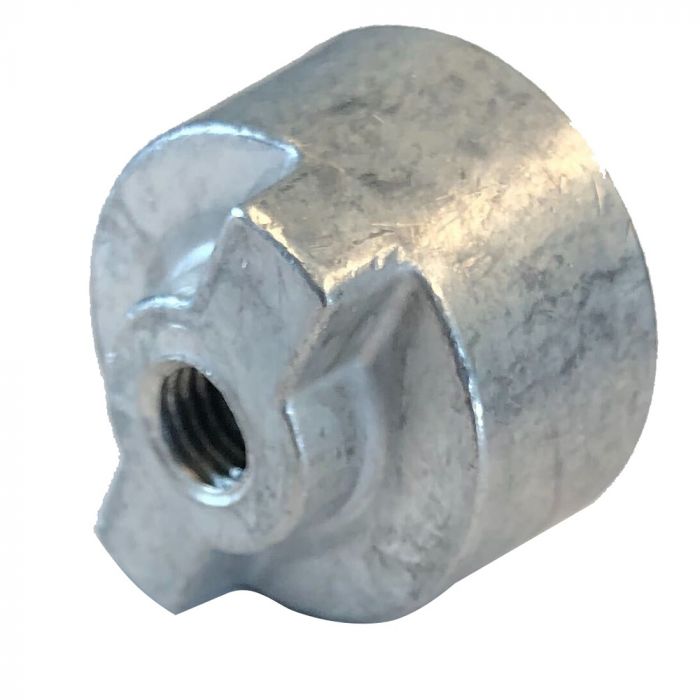
- Anode: The Lowrance prop shaft anode is $27. Email us your motor model so we can confirm fit before you order.
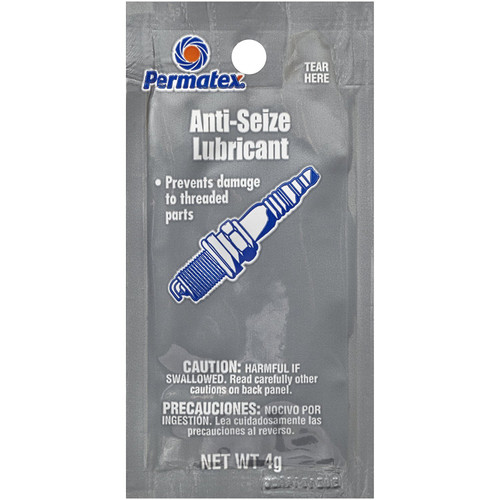
- Anti-seize: Our anti-seize lubricant for salt water ($4) goes on stainless bolts that thread into aluminum, like mount and bracket bolts, so they come out next season. Follow the manual on the prop nut. Lowrance, for example, says the Ghost’s brass prop nut doesn’t need anti-seize.
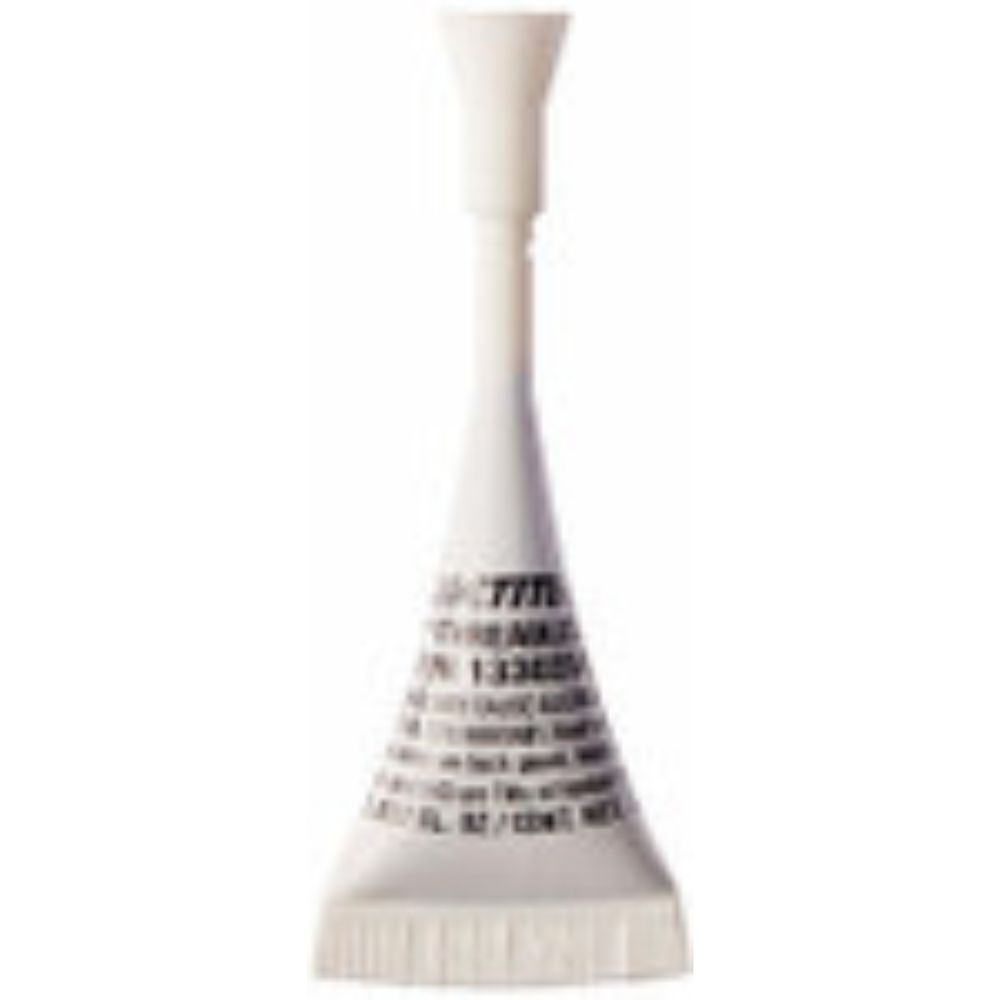
- Threadlocker: Blue Loctite medium strength threadlocker ($4) is for bolts that shake loose from pounding, like stabilizer and accessory brackets. Medium strength comes apart with hand tools. Don’t put anti-seize and threadlocker on the same threads.
Other saltwater trolling motors on the market
We only sell Garmin and Lowrance, but it helps to know what else is out there, especially if you run a small boat. Minn Kota sells its saltwater line under the Riptide name. These prices are from Minn Kota’s own site in October 2026 and change with sales.
| Minn Kota model | Shaft length options | Price range |
|---|---|---|
| Riptide Transom | 3 | $349.99 to $1,249.99 |
| Riptide Maxxum | 2 | $899.99 to $1,399.99 |
| Riptide Fortrex | 2 | $1,599.99 to $1,749.99 |
| Riptide Terrova | 5 (54 to 100 in) | $2,649.99 to $5,799.99 |
| Riptide Instinct QUEST | 4 | $4,899.99 to $6,599.99 |
The Riptide Terrova is the closest match to the Garmin Force Kraken trolling motor. Minn Kota lists brushed versions at 55 lb on 12 V, 80 lb on 24 V and 112 lb on 36 V, plus a brushless QUEST version at 90 lb on 24 V and 115 lb on 36 V. It has Spot-Lock GPS anchoring.
For a small skiff that mostly drifts flats or creeks, a basic transom-mount saltwater trolling motor may be all you need. A GPS trolling motor at around $4,000 earns its keep when you fish structure from the bow and want the boat to stay put.
Gear in this guide
Which saltwater trolling motor we’d pick
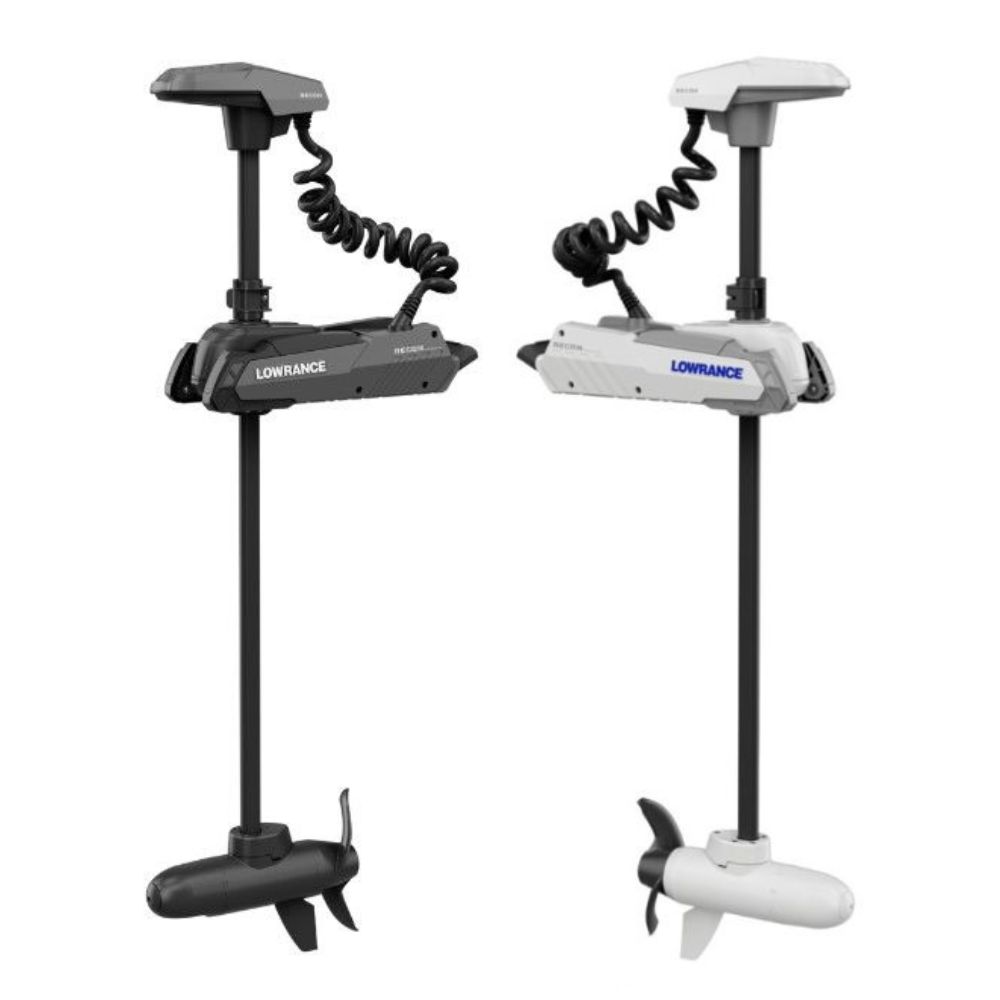
For most saltwater boats, we’d start with the Garmin Force Kraken trolling motor and look at the Recon if you run Lowrance electronics.
- Center console or bay boat with a Garmin chartplotter: The Garmin Force Kraken ($3,999.99). Five shaft lengths up to 110 inches, a pivot mount and a saltwater build.
- Bay boat or skiff with a Lowrance display: The Lowrance Recon ($3,669.99) in the saltwater version, with the FreeSteer joystick and NMEA 2000 link to Lowrance displays. Shafts top out at 72 inches.
- Mostly fresh, sometimes brackish, low bow: The Garmin Force Pro ($4,199.99), with a careful rinse after every brackish trip.
- Not for salt: The Lowrance Ghost. It’s a good freshwater motor, but Lowrance voids the warranty for saltwater use.
Electronics are final sale here, so confirm the version, shaft length and chartplotter compatibility before you order. All four motors are on our motor category page.
Questions about saltwater trolling motors
Can I use a freshwater trolling motor in saltwater?
You can, but it’s a gamble. The Ghost manual says saltwater use voids the warranty, and a freshwater trolling motor lacks the coatings and anodes a saltwater model has. If you fish salt even a few times a year, buy a saltwater trolling motor.
What trolling motor shaft length do I need for a center console?
Measure from the mount to the waterline and use the maker’s chart. On the Kraken, Garmin aims the 110 inch shaft at large center consoles. Go longer if you’re between sizes.
How often should I replace the anode on a saltwater trolling motor?
When it’s worn to less than half its original size, per Garmin. Check it every time the prop comes off.
Does the Lowrance Recon come in a saltwater version?
Yes. The saltwater Recon comes in 54, 60 and 72 inch shafts with a chromate coating and a prop shaft anode. The wireless foot pedal is sold separately for that version. Email us to check availability.
Is the Garmin Force Kraken trolling motor good in saltwater?
Garmin built it for saltwater, brackish and fresh water, with corrosion and saltwater protection on the shaft and parts. It still needs a freshwater rinse after every trip and regular anode checks.
Do I need to rinse a saltwater trolling motor after every trip?
Yes. Garmin’s manual says you must rinse the entire motor with fresh water after salt or brackish use. Use low pressure and keep the spray off the shaft cap.
Fishing salt and not sure which one fits?
Email sales@trollingmotorsdirect.org with your boat model, bow height and chartplotter, and we’ll help you pick a trolling motor and shaft length. We’re in Monday to Friday, 9am to 6pm.