A spot lock trolling motor holds your boat on one GPS point without a rope or an anchor. You press a button, the motor saves where the boat is, and then it steers and runs the prop on its own to stay there.
Spot-Lock is Minn Kota’s name for it. Garmin calls it anchor lock, and Lowrance calls it Anchor on the Ghost and Anchor lock on the Recon. All four motors we sell can do it.
The term spot lock trolling motor gets used for every brand’s GPS anchor, so we use it that way here too. On a Garmin or Lowrance trolling motor, the button and the manual say anchor.
How a spot lock trolling motor holds position
Three parts do the work: a GPS receiver, a heading sensor, and the steering and drive motors. GPS tells the trolling motor where the boat is. The heading sensor tells it which way the lower unit points. When you set the anchor, the motor saves that position and keeps comparing it with where the boat is now.
When wind or current push the boat off the point, the trolling motor turns toward the saved spot and adds thrust. Once the boat is back, it eases off. Garmin’s manual for the original Force describes anchor lock as a function that “uses GPS to set and maintain your position using the trolling motor, acting as if you deployed a physical anchor.”
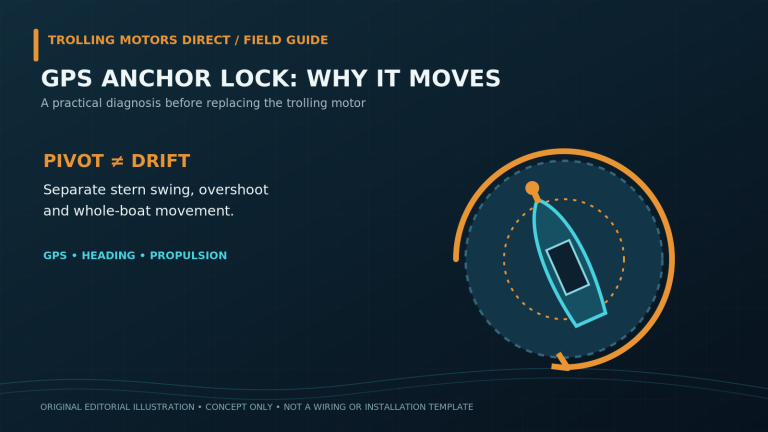
The boat never sits perfectly still. It wanders a few feet and gets pushed back, over and over. The bow can swing too. Lowrance’s Ghost manual says that in Anchor mode the heading can be affected by wind or current, so the boat may point a different way while it stays on the spot.
How close it holds
Each maker describes accuracy its own way, and none of them publish numbers you can line up side by side. Garmin says the Force Kraken slows down within about one meter of the selected spot in calm conditions and uses more aggressive motor speed when it’s rough. Lowrance’s Recon launch material talks about holding within roughly a 3 ft radius. Minn Kota says its Enhanced Spot-Lock holds up to 50% tighter than its own earlier motors.
On the water, how tight a spot lock trolling motor holds depends more on your setup and the conditions than on the brochure. We cover that further down.
What each brand calls a GPS trolling motor anchor
The names differ, but the idea is the same. Here’s what to look for on each brand’s remote, pedal and display.
| Brand | GPS anchor | Heading modes | Other GPS modes |
|---|---|---|---|
| Minn Kota | Spot-Lock, with Spot-Lock Jog | AutoPilot | Drift Mode, Cruise Control, Follow Mode, Circle Mode and routes, depending on model |
| Garmin Force Pro and Force Kraken | Anchor lock | Heading Hold (Go To or Vessel Align) | Cruise Control, waypoint, route and track following |
| Lowrance Ghost | Anchor | Heading lock, Course lock | NAV mode, turn patterns and cruise control from a Lowrance display |
| Lowrance Recon | Anchor lock | Heading lock, Course lock | Navigation mode, Cruise Control |
We don’t sell Minn Kota motors. They’re in the table because Spot-Lock is the name most people know, and it helps to see what the same button is called on Garmin and Lowrance. Minn Kota lists its full set of modes on its Advanced GPS page.
Heading hold, jog, drift and route modes
GPS anchoring is one mode out of several. The others use the same GPS and heading sensor.
Heading hold and heading lock
Heading modes keep the boat moving one direction while the trolling motor does the steering. The big difference between brands is how they treat drift.
- Garmin Heading Hold: In the default Go To mode, the motor corrects for drift and tracks toward where you pointed it. In Vessel Align mode it only keeps the bow pointed the same way and ignores drift.
- Lowrance Heading lock: Holds the compass heading the motor had when you turned it on. It does not correct for drift from wind or current. On the Recon it works without a GPS fix.
- Lowrance Course lock: Steers a straight-line course and corrects for drift. In a crosswind the boat may crab, which means the bow points a little off the line you’re actually traveling.
Jog
Jog moves the anchor point a short distance, and the trolling motor never lets go of the spot while it does. It’s handy when you’re one cast short of a dock or brush pile.
- Garmin: Each press of an arrow key on the remote, or a gesture with the remote, moves the held position about 1.5 m (5 ft).
- Lowrance Recon: Tap the FreeSteer joystick in any of eight directions (every 45 degrees) to jog 1.5 m (5 ft). Hold it to move continuously, with less thrust when the stick is only partly pushed. The steer keys on the pedal’s lower key module jog 5 ft left or right.
- Lowrance Ghost: With the motor connected to a Lowrance display, the arrow buttons shift the anchor point 1.5 m (5 ft) per press.
- Minn Kota: Spot-Lock Jog moves the spot 5 ft forward, back, left or right.
Drift and cruise control
Minn Kota has a Drift Mode that it says works like a GPS drift sock, holding a set speed and path against wind and current. Garmin and Lowrance don’t have a mode by that name. You get close to the same thing with cruise control plus a heading mode.
On both Garmin motors, Cruise Control holds a set speed over ground, adjusts for wind and current, and can run along with the other autopilot modes. Set a slow speed, turn on Heading Hold in Go To mode, and the boat works down a bank at a steady pace. On a Lowrance display, Heading lock, NAV mode and turn patterns can run at a set power percentage or a cruise control speed. The Recon also has its own Cruise Control that holds speed over ground.
Routes, tracks and patterns
Garmin motors can drive to a waypoint, follow a saved route or track, or backtrack the track you just ran. By default a Garmin motor drops into anchor lock at the end of a route. Change the Nav. Arrival setting to Manual and the prop just turns off instead.
The Recon’s Navigation mode follows waypoints and routes, and the manual says waypoints need to be within 400 m (0.25 mile). The Ghost runs routes and turn patterns from a Lowrance display: U-turn, C-turn, spiral, zigzag, square and S-turn.
What affects how well a spot lock trolling motor holds
Two boats with the same trolling motor can hold very differently. These are the things that make the difference, roughly in the order we’d check them.
Heading sensor calibration
When a spot lock trolling motor circles or hunts around the spot, Garmin’s first advice is to redo the compass calibration. Garmin says to calibrate in an open area of calm water with room to turn the boat in a circle, and warns that calibrating in rough water and wind can hurt autopilot performance.
- Garmin: Calibrate the motor compass on calm, open water. Calibrate the remote outdoors, away from vehicles, buildings and power lines, so gesture steering points the right way.
- Lowrance Ghost: The Ghost uses a separate TMC-1 compass. Lowrance asks for a slow, steady 390 degree turn at about 2 to 3 degrees per second in calm open water. Recalibrate if you’ve trailered a long way from where you last did it.
- Lowrance Recon: The deployed motor rotates itself 400 degrees during calibration. Lowrance says you can do this off the water if the lower unit can spin freely.
Magnetic interference and bow offset
Steel and electrical gear near the sensor throw the compass off. Garmin says to keep large metal objects such as a toolbox away from the display panel on the motor head. Lowrance says to mount the TMC-1 where it’s free of magnetic interference, and the Recon manual warns that magnetic fields near the head can make steering erratic.
Both brands also have a bow offset setting. If the trolling motor isn’t mounted exactly on the boat’s centerline, set the offset so the motor knows which way the bow points.
Thrust, boat size and the gain setting
The trolling motor needs enough push to bring the boat back against the wind. The usual guide is about 2 lb of thrust for every 100 lb of loaded boat, and more for big water. A bay boat with a high bow catches more wind than a low bass boat of the same weight.
Garmin motors have an Anchor Gain setting. Higher gain makes the motor react faster and hold tighter, but Garmin notes it can stir up more turbulence, and bigger, heavier boats usually need a higher value. If the motor overreacts, turn it down. The Recon has a Boat scale setting from -5 to +5 (default 0) that changes how hard the motor applies GPS corrections.
Wind, current and prop depth
Strong wind and chop make every trolling motor work harder and swing the boat more. Keep the prop deep enough that it doesn’t suck air when the bow rises. Lowrance says the motor unit should sit at least 12 in (300 mm) below the surface, and in big waves you may want it deeper.
GPS needs a clear view of the sky. Garmin says to move to open sky and allow 30 to 60 seconds for the motor to find satellites.
Remote and pedal control for GPS anchoring
With a remote control trolling motor, you can set and cancel the anchor from the bow, the console or the back deck. How you do it depends on the motor.
Garmin Force Pro and Force Kraken
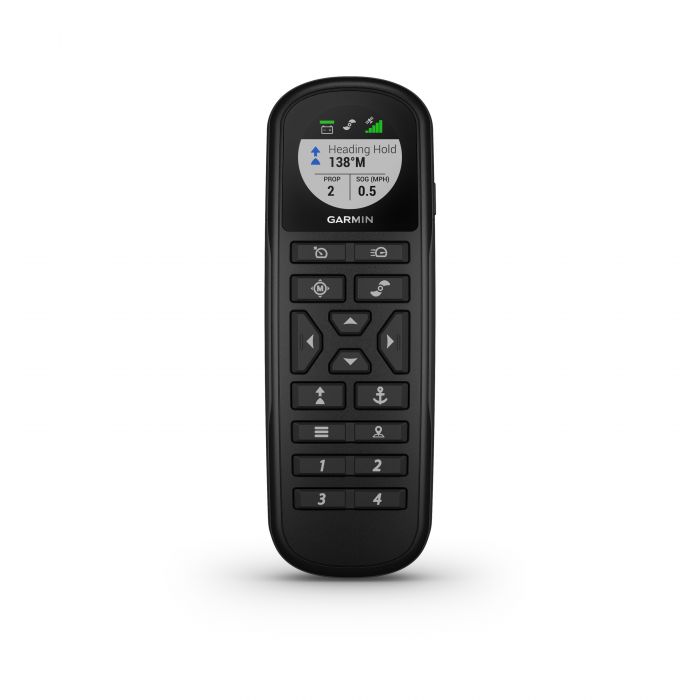
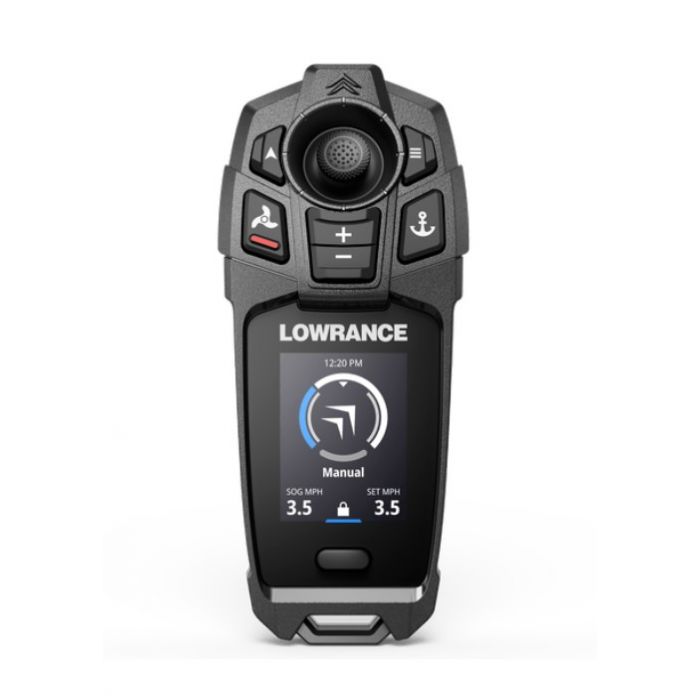
The Garmin remote has an anchor lock key. Press it once to hold and again to release. It also turns on heading hold, sets cruise control, marks waypoints, and has four keys you can assign to chartplotter screens. With gesture control you hold a button and point the remote to steer or nudge the held spot.
Garmin’s foot pedal has its own anchor lock and heading hold buttons. If you keep bumping one by accident, pressing it six times quickly disables it. The speed wheel doesn’t work while anchor lock is on.
You get both the remote and the pedal with the Force Pro. The Kraken comes with the remote, and the Garmin foot pedal ($449.99) is an add-on. A spare Garmin handheld remote is $329.99.
Lowrance Ghost
The Ghost is a pedal-first trolling motor. Its corded foot pedal has an Anchor key, a momentary switch, a speed knob, and three keys you can assign from a Lowrance display. The FlipSwitch moves the momentary switch to the left or right side to suit your foot. The TMR-1 remote ($153) lets you set the anchor, change speed and steer from the back of the boat.
Lowrance Recon
Lowrance built the Recon around the FreeSteer joystick remote, which comes in the box. It has Anchor lock and autopilot keys, speed keys, and 360 degree joystick steering. Press and hold the prop key to stop everything and exit the current mode. The wireless foot pedal is included with the freshwater Recon and sold separately for the saltwater version.
Battery use when you hold on a spot
A spot lock trolling motor uses battery in bursts. In flat calm the motor barely ticks over. In a stiff wind it can run near full power for hours, and that’s what drains a bank.
Garmin’s thrust table for the Force Kraken shows the range. At speed setting 1 on 25.6 volts it draws 0.6 A for 3.7 lb of thrust. At full speed on 38.4 volts it draws 55.9 A for 114.7 lb. Garmin rates the Force motors for 60 A continuous.
Run time is amp hours divided by amps. A 100 Ah bank at a steady 60 A lasts well under two hours. The same bank averaging 10 A lasts about 10 hours. Most days land somewhere between, and you can’t pull every amp hour out of a lead-acid battery without shortening its life.
- Set the battery type: Garmin says its battery indicators are tuned for lead-acid and can read wrong on lithium, so set Battery Setup to match what you run.
- Set the voltage on Lowrance motors: The Ghost and Recon default to 24 V. If you run 36 V, change it in the settings. Lowrance says a wrong setting won’t damage the motor, but the battery gauge needs the right setting to read correctly.
- Use only as much gain as you need: More gain means more corrections, and every correction costs amps.
- Drop a real anchor for long sits in strong wind: If you plan to sit on one spot all afternoon in 20 mph wind, a physical or shallow water anchor saves a lot of battery.
We don’t sell batteries, but our trolling motor battery guide covers sizing a bank, and the lithium battery post covers the lithium side.
Which motors we sell have GPS anchoring, and how
All four are GPS trolling motors with anchoring built in. The table shows how each one handles it.
| Feature | Force Pro | Force Kraken | Ghost | Recon |
|---|---|---|---|---|
| Our price | $4,199.99 | $3,999.99 | $3,199.00 | $3,669.99 |
| Anchor name | Anchor lock | Anchor lock | Anchor | Anchor lock |
| Position and heading | Multi-band GPS, built-in heading sensor | Multi-band GPS, built-in AHRS | Internal GPS, TMC-1 compass (included) | GPS, internal compass |
| Heading modes | Heading Hold | Heading Hold | Heading lock, Course lock | Heading lock, Course lock |
| Jog | 5 ft, remote or gesture | 5 ft, remote or gesture | 5 ft, from a Lowrance display | 5 ft in 8 directions, or continuous |
| Control in the box | Remote and wireless pedal | Remote | Corded pedal | FreeSteer remote, plus pedal on freshwater version |
| Response setting | Anchor Gain | Anchor Gain | None listed in the owner’s manual | Boat scale, -5 to +5 |
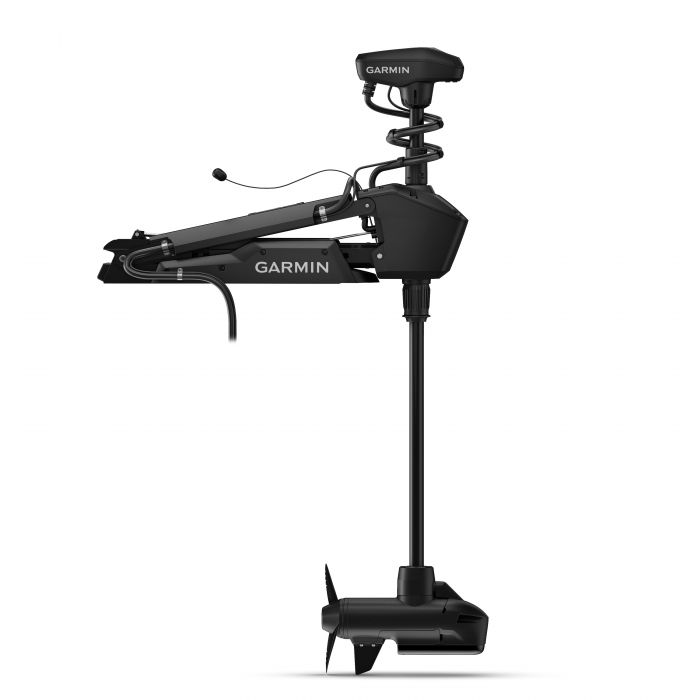
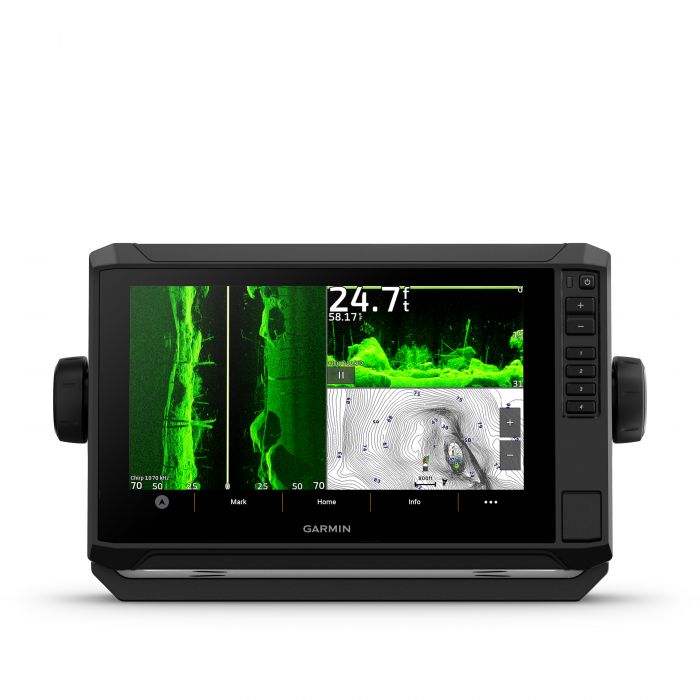
A few notes the table can’t show. The Garmin motors connect wirelessly to compatible Garmin chartplotters, and the full anchor and route details are in the Force Pro owner’s manual. The Lowrance motors plug into a Lowrance display over NMEA 2000.
The Ghost is freshwater only, and the Recon comes in separate freshwater and saltwater versions. Of the two Garmins, the Kraken is the one built for salt and taller bows.
Gear in this guide
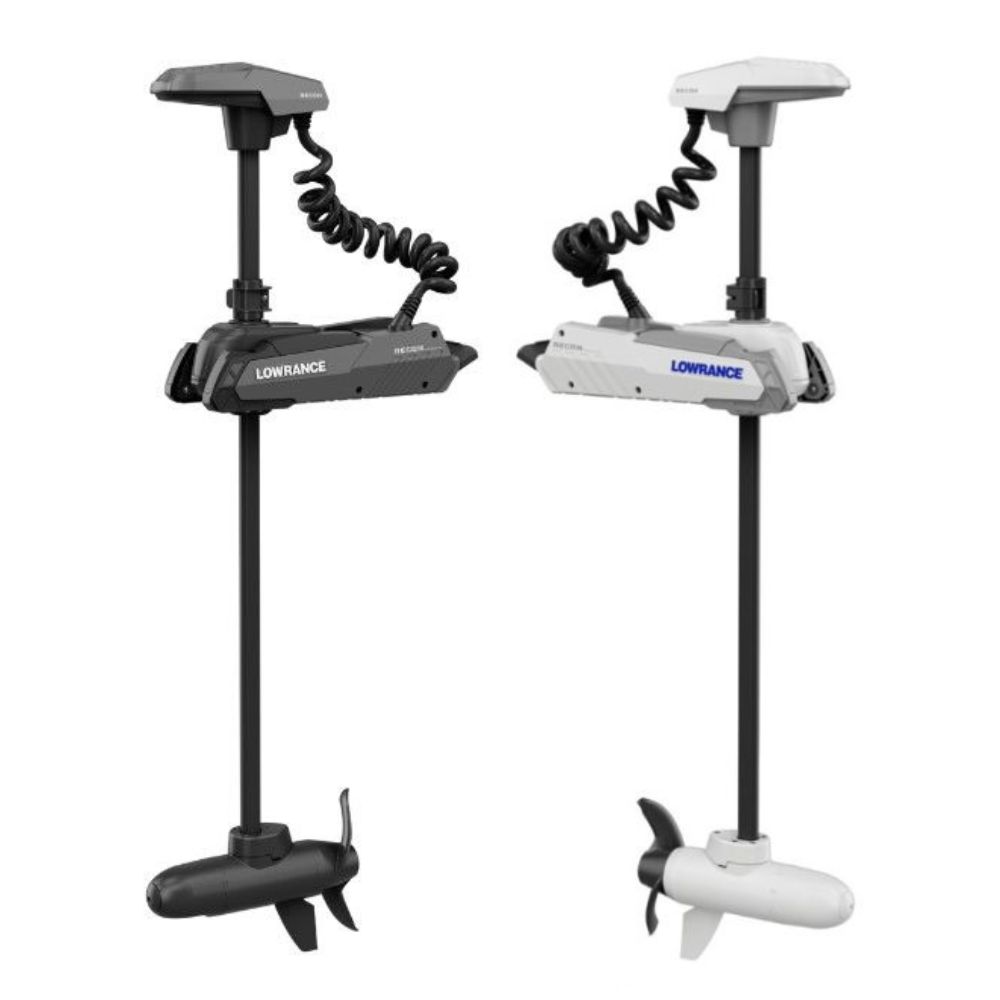

Which spot lock trolling motor we’d pick
Any of the four makes a good spot lock trolling motor when it’s set up right. The choice comes down to your boat, your graph and how you like to steer.
- Bass boat, all freshwater, Garmin graph: The Garmin Force Pro ($4,199.99). The remote and pedal are both in the box, it has multi-band GPS, and the GT56UHD-TR transducer is built in.
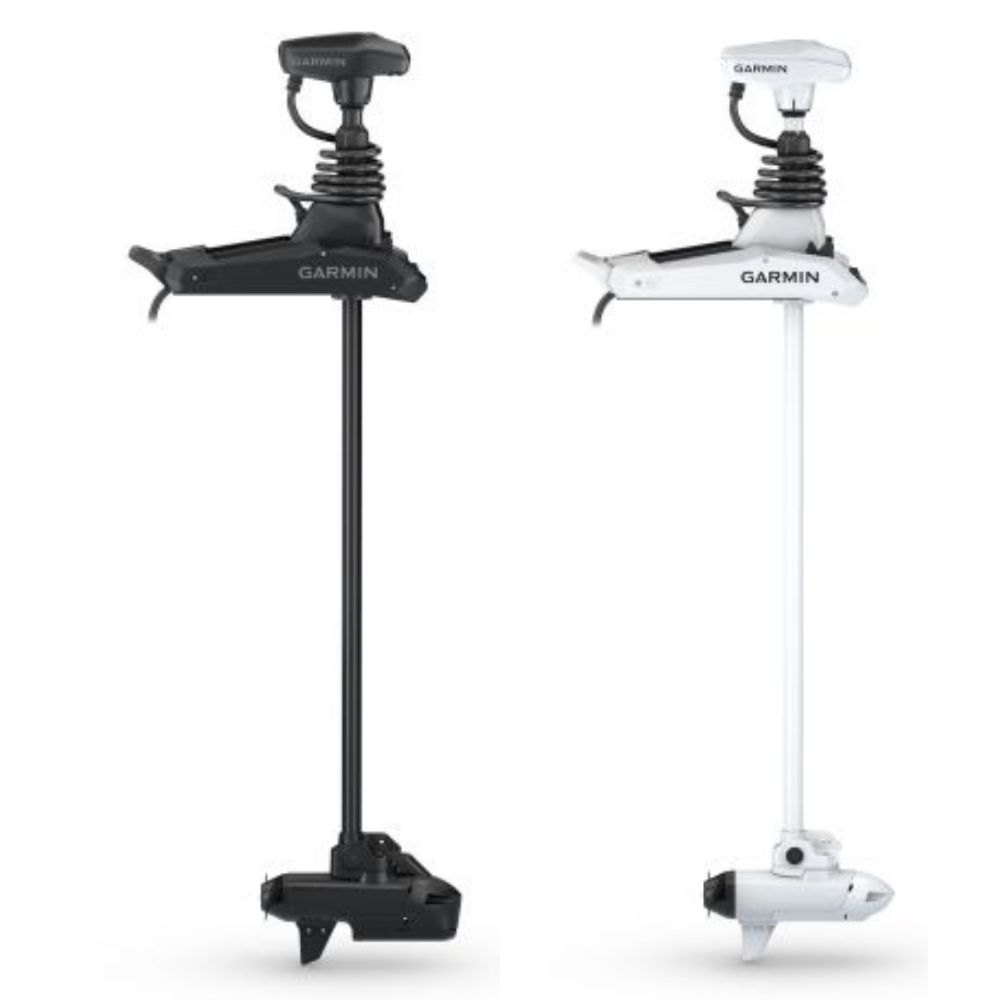
- Bay boat, center console or salt: The Garmin Force Kraken ($3,999.99). It has a pivot mount for tight bows, shafts up to 110 inches, and Garmin built it for saltwater. Budget for the pedal if you want one.
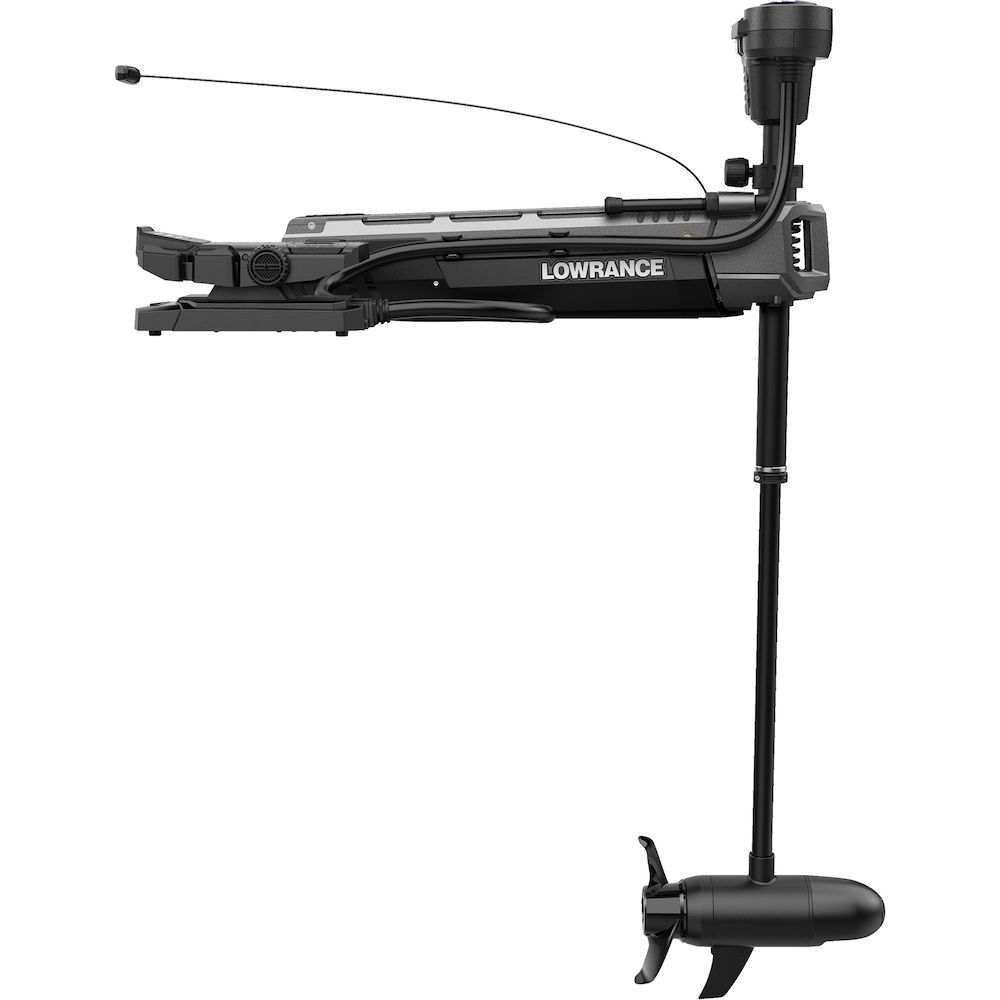
- Freshwater boat with a Lowrance HDS: The Lowrance Ghost ($3,199.00) is the lowest-priced motor of the four and is set up around the pedal. It’s freshwater only.
- Lowrance boat where you fish from all over the deck: The Lowrance Recon ($3,669.99). The FreeSteer joystick and 8-direction jog make it the most remote-friendly trolling motor of the four, and it comes in a saltwater version.
Match the motor to your graph if you can. Garmin motors talk to Garmin chartplotters, and Lowrance motors talk to Lowrance displays. Electronics are final sale here, so check compatibility first, and email us your boat and graph if you’re not sure. Our Garmin motor guide and Recon post go deeper on each brand.
Questions about spot lock trolling motors
Is spot lock the same as anchor lock?
In practice, yes. Spot-Lock is Minn Kota’s trademark. Garmin’s version is anchor lock, and Lowrance uses Anchor on the Ghost and Anchor lock on the Recon. All of them use GPS and a heading sensor to hold the boat on a point.
Does a spot lock trolling motor need a fish finder?
No. Each spot lock trolling motor we sell can anchor from its own remote or pedal. A connected graph adds extras, like saving anchor points as waypoints and running routes from the screen.
Is a GPS trolling motor worth it on a small boat?
It depends on how you fish. If you mostly troll open water, a basic motor and a drift sock may be all you need. If you fish docks, brush piles and humps all day, a GPS trolling motor saves you from pulling an anchor rope dozens of times. Our electric trolling motor guide covers the cheaper options we don’t sell.
Can a remote control trolling motor hold position without the pedal?
Yes. The Garmin remote and the Recon’s FreeSteer joystick both set, cancel and jog the anchor. On the Ghost, the TMR-1 remote can set the anchor too.
Why does my trolling motor circle around the spot?
Start with the compass. Redo the calibration on calm open water, move metal and electronics away from the sensor, and set the bow offset. If it still hunts, lower the gain a step at a time.
Need help picking one?
Email sales@trollingmotorsdirect.org with your boat length, loaded weight, bow height and the graph you run. We answer Monday to Friday, 9am to 6pm.