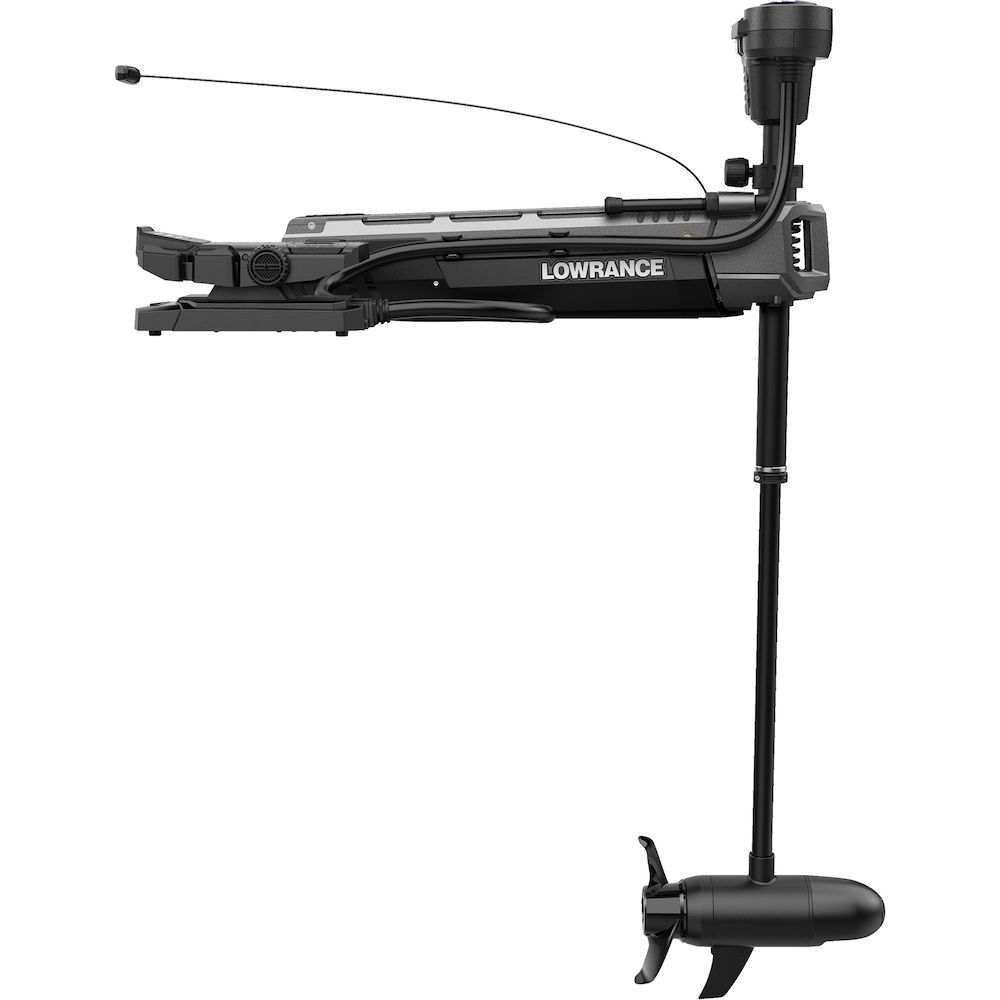
The Lowrance Ghost trolling motor is a brushless bow mount that runs on 24V or 36V and puts out 97 lb of thrust at 24V or 120 lb at 36V. It comes in 47, 52 and 60 inch shafts, ships with an HDI sonar nosecone and a corded foot pedal, and doesn’t need a Lowrance display to run. Ours start at $3,199.00 for the 47-inch.
Lowrance builds it as a freshwater trolling motor. If you fish salt or brackish water most of the time, skip ahead to the Recon section near the end before you order.

Lowrance Ghost trolling motor specs
These numbers come from Lowrance’s Ghost product page, its spec sheets and the install guide. Where Lowrance doesn’t publish a figure, like motor weight or amp draw, we’ve left it out rather than guess.
| Spec | Lowrance Ghost |
|---|---|
| Shaft lengths | 47, 52 or 60 inches |
| Voltage | 24V or 36V, set in the trolling motor’s configuration mode |
| Max thrust | 97 lb at 24V, 120 lb at 36V |
| Motor | Brushless |
| Steering | Fly-by-wire, no steering cables |
| Mount | Scissor style, 360-degree breakaway, integrated stabilizer bar |
| Compass | External TMC-1, included |
| Sonar in the box | HDI nosecone: CHIRP, DownScan Imaging, water temperature |
| Foot pedal | Corded, IPX7, about 11 3/4 in long and 7 1/4 in wide |
| Circuit breaker | 50A at 24V or 36V (per the install guide) |
| Water | Freshwater |
| Warranty | 3 years on the motor, lifetime on the shaft |
| Our price | From $3,199.00 (47-inch) |
For sizing, the usual guide is about 2 lb of thrust for every 100 lb of loaded boat. A boat that weighs 3,500 lb with fuel, gear and people needs about 70 lb. Even the 24V setup clears that, and wind or current is where the extra from 36V helps.
What comes in the box
Lowrance lists these items with the 47 and 52 inch Ghost, on top of the trolling motor and the pedal:
- HDI nosecone transducer
- TMC-1 trolling motor compass
- Mini 9-pin to 9-pin sonar adapter cable
- N2K-T-RD network T-connector for your NMEA 2000 backbone
The standard box has no remote, no breaker and no pedal screws. Budget for those, plus extension wire if your batteries sit well back from the bow.
Picking a shaft length
The usual advice is that 47 inches suits a typical bass boat. The 52 and 60 give more reach for higher bows and rougher water, where a short shaft can let the prop break the surface as the bow rises. If you’re replacing a trolling motor whose length worked, matching it is a safe place to start.
Motor, steering and mount
The motor is brushless. Lowrance says it runs quieter than common brushed motors and puts out zero electromagnetic interference. That matters on this trolling motor because the sonar sits in the nosecone, inches from the windings.
Steering is fly-by-wire. There are no mechanical steering cables to stretch or fray, and Lowrance tuned it to feel like a cable-steer motor. The 360-degree breakaway mount lets the shaft kick back off a stump and then realign. An integrated stabilizer bar cuts bounce in rough water, and dual-action gas springs help lift the motor to stow and lower it to deploy.
Lowrance also claims 60 percent better run-time efficiency and up to 25 percent more thrust than competing models. Those are Lowrance’s comparisons, not ours. Lowrance doesn’t publish an amp draw, so we can’t give you a run time for your battery bank.
Anchor mode, heading lock and the TMC-1 compass
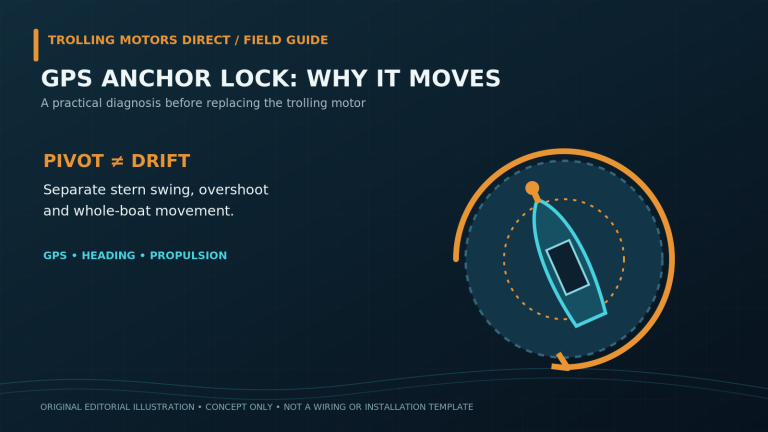
Anchor mode holds the boat on a spot using GPS. You can anchor where you are, on a saved waypoint, or on any point you pick on the map. The waypoint and map options need a display. Heading lock holds a compass course so you can work a bank without steering.
Lowrance’s spec sheet lists five autopilot modes for the Lowrance Ghost trolling motor: anchor lock, heading lock, custom routes, constant on and turn patterns. Our spot lock trolling motor guide explains how GPS anchoring works across brands.
Mounting the TMC-1
Heading lock depends on the TMC-1, a separate compass puck that plugs into the pedal. Put it in the wrong place and the trolling motor gets bad heading data. The install guide says:
- Mount it flat, arrow pointing forward and parallel to the keel.
- Keep it at least 3 ft from engines, ignition wiring and large steel or iron objects.
- Keep it at least 2 ft from the trolling motor head and mount.
- If the cable won’t reach, Lowrance sells a TMC-1 extension cable (000-15582-001).
If yours gets cracked or stops reading, we stock the TMC-1 replacement for Ghost at $163.00. Lowrance says the Ghost X uses the same TMC-1.
The foot pedal and the TMR-1 remote
The pedal
The Ghost pedal is corded, and it’s the hub of the system. Per Lowrance’s install guide, the trolling motor cable, battery leads, TMC-1, sonar cable and NMEA 2000 drop all connect at the pedal. Plan your cable runs around where it sits.
- Flip Switch: drive from either side of the pedal.
- Anchor and Heading keys: lit keys that turn those modes on and off, with a beep.
- Shortcut keys: programmable, for jobs like dropping a waypoint or raising and lowering a Power-Pole anchor.
- Battery indicator: shows charge level on the pedal itself.
- Rating: IPX7 waterproof.
Screws for the pedal aren’t supplied. Lowrance calls for 1/8 to 3/16 in screws through the three mounting holes, tightened just enough to slightly squash the bumper pads.
The TMR-1 remote
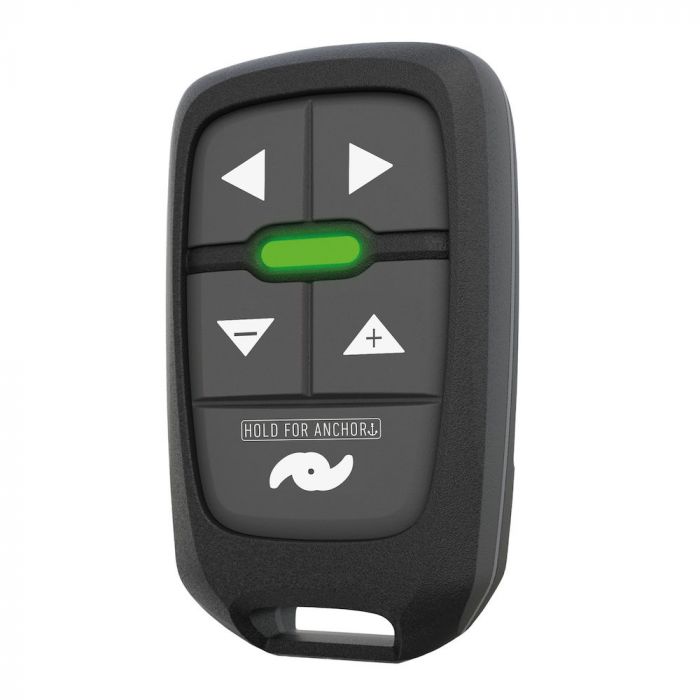
The TMR-1 remote ($153.00) is the small handheld for the Ghost. It adjusts speed, changes direction and sets anchor from anywhere on the boat. It fits in a pocket and comes with a lanyard for your neck or wrist. It doesn’t replace the pedal. The pedal is where the wiring lands, so it stays on the deck either way.
Some dealers have sold 60-inch Ghost packages with the TMR-1 included, so ask us what ships with the length you pick before you buy a second one. Lowrance lists the FreeSteer joystick as a Recon accessory, so it isn’t the remote for this motor.
Does a Lowrance Ghost trolling motor need an HDS?
No. The pedal on its own handles steering, speed, anchor and heading lock. The TMR-1 adds anchor and speed control from the console or the back deck.
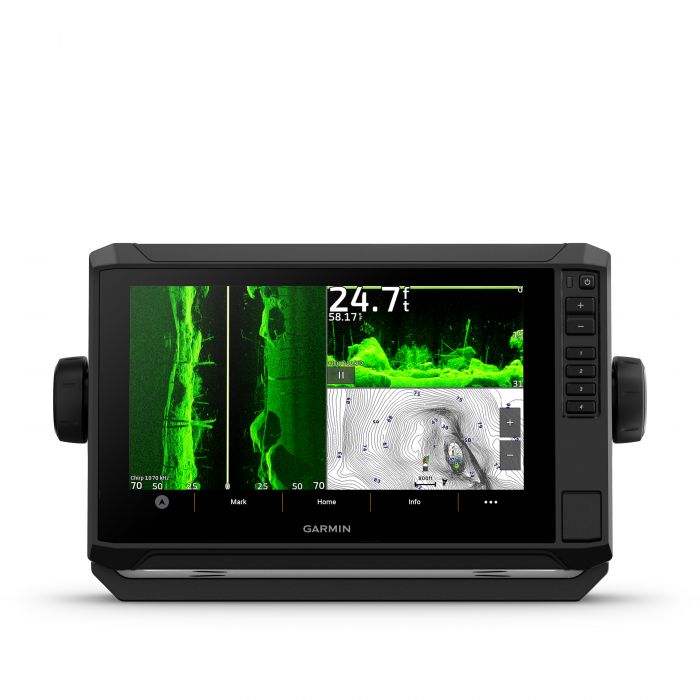
A display adds a lot, though. Lowrance lists full touchscreen control from HDS PRO, HDS LIVE, HDS Carbon and Elite FS units. From the screen you can steer, set speed, run routes and anchor on a waypoint or a spot on the map. You also need a display to see anything from the sonar nosecone.
Two setup points from the install guide:
- The Ghost talks to the display over NMEA 2000. The pedal has a Micro-C connector, and a network T-connector comes in the box.
- To program the pedal’s shortcut keys, the display has to be on the same network.
At the bow you don’t need a graph bundled with a transducer, because the nosecone is the transducer. The Elite FS 9 without a transducer is $969.99. For the full feature set, the HDS PRO 9 without a transducer is $1,834.99. Our Lowrance fish finder guide compares the lineup.
Sonar nosecone options
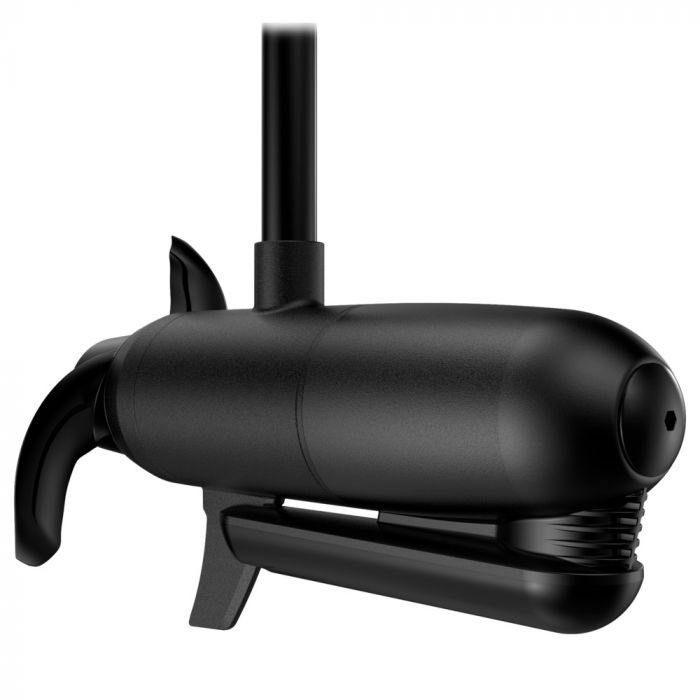
The sonar lives in the nosecone on the front of the lower unit, so there’s no transducer bracket on the shaft. The sonar signal comes out of the pedal on a mini 9-pin plug, and the included adapter turns that into a standard 9-pin for a Lowrance display.
| Nosecone | What you see | Our price |
|---|---|---|
| HDI nosecone (000-15275-001), comes with the motor | CHIRP sonar, DownScan Imaging, water temperature | $199.00 as a replacement |
| Active Imaging 3-in-1 for Ghost (000-14900-001) | CHIRP, DownScan Imaging and SideScan | $392.99 |
The HDI nosecone comes standard, and Lowrance calls the nosecones plug-and-play. The Active Imaging 3-in-1 for Ghost swaps on in its place and adds SideScan, which helps when you’re scanning a bank or a flat from the bow. To view SideScan you need a display that reads Active Imaging, such as an Elite FS or HDS PRO.
Both are Ghost-only. Lowrance lists the Ghost nosecone as not compatible with the Recon, which has its own 3-in-1. If you lose the adapter, our Lowrance sonar adapter cable (mini 9-pin to 9-pin, 000-15327-001) is $64.00. Displays with a 7-pin sonar port need Lowrance’s 9-pin to 7-pin adapter (000-13977-001), which we don’t carry.
For live sonar, Lowrance says every Ghost model works with ActiveTarget 2. The ActiveTarget 2 system is $1,399.99. The mounts that put it on the shaft are covered below.
Install, wiring and Ghost parts we stock
Lowrance Ghost trolling motor install checklist
This is the order we’d follow, pulled from Lowrance’s install guide. Read the full guide before you drill.
- Pick the spot. Lowrance says to mount it on the port side, with the shaft as close to the keel line as you can get it and at least 1.5 in from the gunwale.
- Check underneath. You need to reach under the deck to fit nuts and washers.
- Bolt the mount down. Use all 6 screws if you can, and never fewer than 4, in 9/32 in (7.5 mm) holes. The stow strap goes between the second and third holes from the bow.
- Cut the stabilizer rod. With the trolling motor stowed, mark 3/4 in past the top of the adapter and cut there.
- Mount the TMC-1 using the distance rules above.
- Screw the pedal down where your foot naturally lands.
- Wire the battery leads through a 50A breaker, then set 24V or 36V in configuration mode.
- Connect the pedal to your NMEA 2000 backbone and plug the sonar adapter into the display.
Wiring
The Ghost runs on a 24V or 36V bank. Lowrance says a wrong voltage setting won’t damage the trolling motor, and it works on either voltage without a charger or battery upgrade.
- Breaker: the install guide calls for a 50A circuit breaker at either voltage.
- Polarity: red to positive through the breaker or fuse, black to negative.
- Wire size: use the extension wire table in the install guide for your run length. It lists 8 AWG and 6 AWG for different distances.
We don’t sell batteries, and we don’t stock a Lowrance-specific breaker or plug. Bring your own 50A breaker and wire to suit the run.
Parts in our catalog
Electronics are final sale here, so send us your shaft length and the part you’re replacing if you’re not sure.
- Prop: Ghost prop kit, 000-15237-001, $62.00. Lowrance says the Ghost prop also fits the Ghost X. It doesn’t fit the Recon.
- Stabilizer rod: rod stabilizer kit, 000-15278-001, $51.00. It’s the rod, a 3/4-10 nylon nut, the stabilizer foot and the top cap.
- Compass: TMC-1 replacement, $163.00.
- Anode: prop shaft anode kit, 000-15723-001, $27.00. It fits over the prop nut and takes the corrosion if the trolling motor sees salt or brackish water.
- Nosecones and cable: HDI nosecone $199.00, Active Imaging 3-in-1 $392.99, sonar adapter cable $64.00.
Before you order a replacement part, check the part number on the old one or in your manual. Lowrance lists the Ghost prop, nosecone and TMR-1 as not compatible with the Recon.
Mounting live sonar and MEGA 360 on a Ghost
If you want live sonar or 360 at the bow, these machined mounts in our store list the Ghost:
- Live Sweep: the Live Sweep ($1,099.00 and up) is a 12V powered arm that turns your live sonar transducer through 320 degrees. Lowrance Ghost is one of the trolling motor choices at checkout, and Lowrance motors mount it with a dog bone mount. A wired pedal is included, wireless adds $100, and every kit has a wireless remote fob.
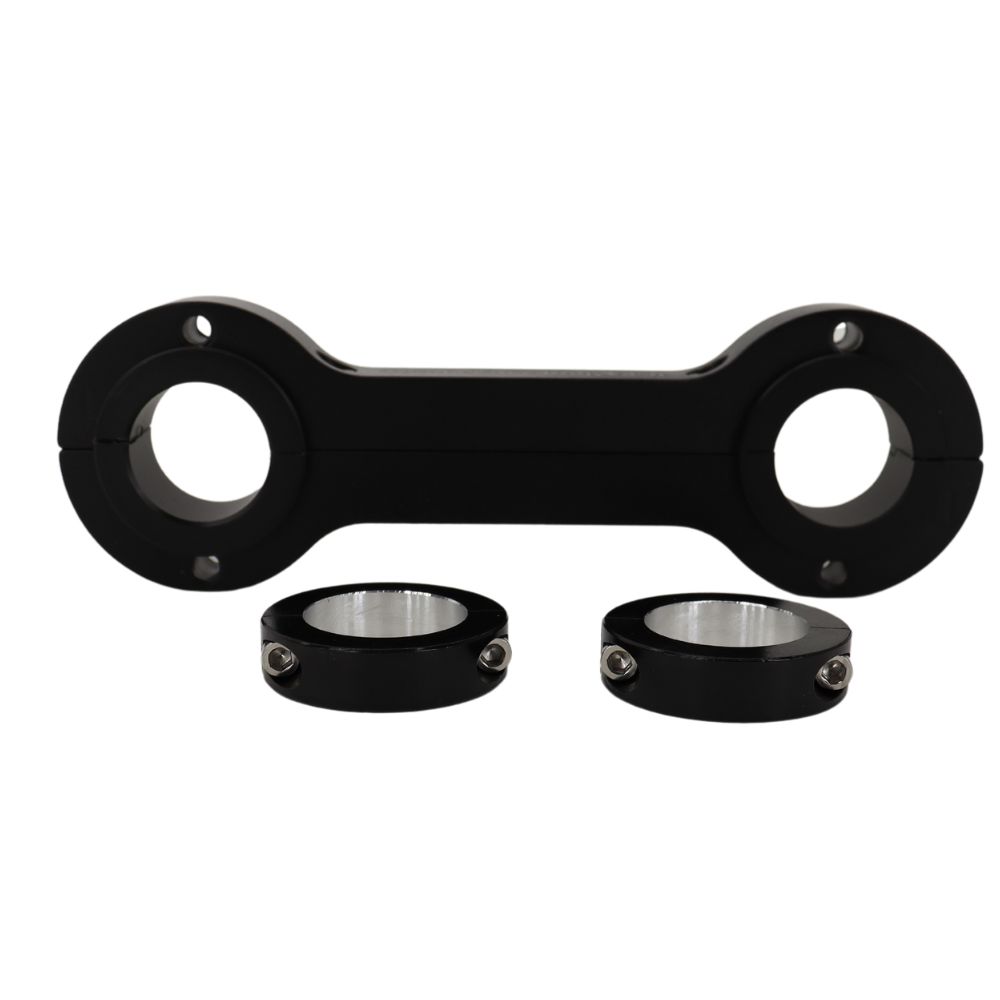
- Stabilizer: the Live Sweep Stabilizer for Lowrance Ghost ($200.00) is a dog bone clamp with plastic bushings and two split rings on the shaft. It supports the Live Sweep lower down the extension tube and still lets the trolling motor and the Live Sweep turn. It’s for Ghosts set up with a Cornfield Fishing Gear dog bone.
- MEGA 360: the MEGA 360 clamp ($153.00) is a machined aluminum clamp that mounts a Humminbird MEGA 360 to a Ghost. MEGA 360 needs a Humminbird display, such as an APEX, so this suits a boat running Humminbird at the bow.
The rest are in transducer mounts. Send us your shaft length and transducer model before ordering, since a mount that fits one setup can miss on another.
Gear in this guide
Ghost or Recon: which one we’d pick
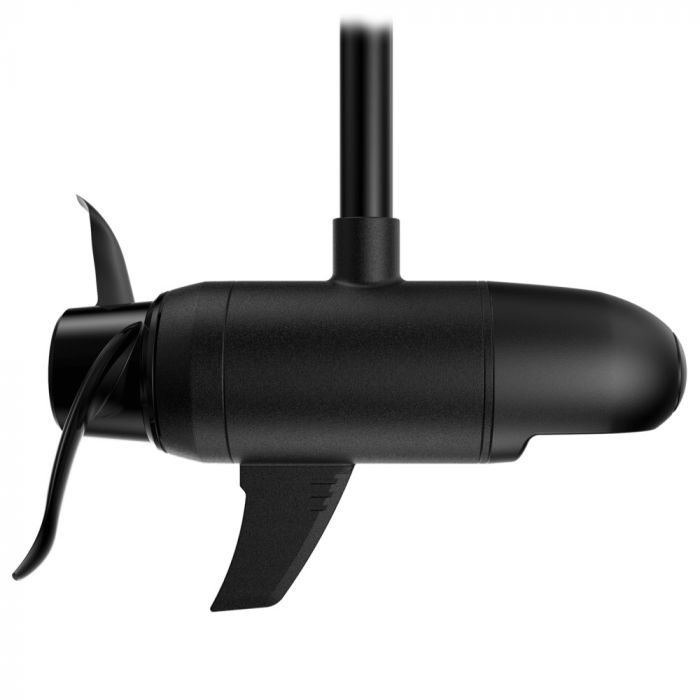
We’d pick the Lowrance Ghost trolling motor for a freshwater bass or walleye boat where you drive from the pedal. Its thrust rating is higher than the Recon’s, it costs less, and the HDI nosecone gives you bow sonar with no extra transducer.
Pick the Lowrance Recon instead if:
- You fish salt or brackish water often. Recon comes in saltwater versions, and the Ghost is freshwater only.
- You need a 72-inch shaft. The Ghost stops at 60.
- You’d rather steer from a wearable joystick than a pedal. Every Recon ships with the FreeSteer remote.
- You don’t want to mount a compass puck. The Recon’s compass is internal.
Both are in our trolling motor range alongside the Garmin Force Pro and Kraken. The Lowrance Ghost starts at $3,199.00 and the Lowrance Recon at $3,669.99.
Before you order: a quick checklist
- Water: fresh water suits the Ghost. Regular salt or brackish trips point to the Recon.
- Bank: 24V or 36V already on board, or room to add one.
- Shaft: 47, 52 or 60 inch, based on bow height and the water you fish.
- Deck: room on the port side for the mount, and access underneath for nuts.
- Display: an HDS PRO, HDS LIVE, HDS Carbon or Elite FS if you want touchscreen control and nosecone sonar.
- Extras: TMR-1 remote, 3-in-1 nosecone or a live sonar mount, priced in from the start.
What about the Ghost X?
Lowrance released the Ghost X in July 2025. It’s 47-inch only, and Lowrance says it has 20% more thrust than the original Ghost and is their quietest motor. It ships with the pedal and an Active Imaging 3-in-1 nosecone, and the launch price was $3,899. We don’t list the Ghost X.
If you already own a Ghost, the FAQ on Lowrance’s Ghost X page says the Ghost X shares its mounting hole pattern, its TMC-1 and its prop, and the Ghost X lower unit is a direct replacement. Lowrance also says there are no 52 or 60 inch Ghost X models for now, so the original Lowrance Ghost trolling motor is still the one for longer shafts.
Questions about the Lowrance Ghost trolling motor
Can a Lowrance Ghost trolling motor be used in saltwater?
Lowrance builds and sells it as a freshwater trolling motor. The prop shaft anode kit helps against corrosion if it sees salt or brackish water now and then. For regular saltwater use, the saltwater Recon is the better fit.
How much thrust does the Ghost have at 24V and 36V?
97 lb at 24V and 120 lb at 36V. It’s the same trolling motor either way. You wire it for the bank you have and set the voltage in configuration mode.
Which displays work with the Ghost?
Lowrance lists HDS PRO, HDS LIVE, HDS Carbon and Elite FS for full touchscreen control over NMEA 2000. Older Elite Ti2 units also appear on some Lowrance pages. Check with us before buying a used graph to pair with it.
Can I add ActiveTarget 2 to a Lowrance trolling motor?
Yes. Lowrance says all Ghost models and the Recon work with ActiveTarget 2. You still need a mount for the transducer on the shaft and a display to run it.
What warranty comes with a Lowrance trolling motor?
Lowrance lists 3 years on the motor and a lifetime warranty on the shaft for both the Ghost and the Recon. Warranty claims go through Lowrance.
Does the Ghost come with a remote?
No. The standard 47-inch box has the trolling motor, pedal, TMC-1, HDI nosecone, sonar adapter and network T-connector. The TMR-1 is $153.00 on its own.
Ask us before you order
Email sales@trollingmotorsdirect.org with your boat make, length and the graph you run, and we’ll tell you which Lowrance Ghost trolling motor length and parts fit. We’re in Monday to Friday, 9am to 6pm.