A 24 volt trolling motor runs on two 12V batteries wired in series, or on one 24V lithium battery. Compared with a 12 volt trolling motor, it makes more thrust for similar current, and the second battery doubles the energy you carry. All four motors we sell, the Garmin Force Pro, Garmin Force Kraken, Lowrance Ghost and Lowrance Recon, run on 24V or 36V. None of them runs on 12V.
What changes between 12V, 24V and 36V
Voltage sets how many batteries you carry and how much power the motor can make from the current it draws. Minn Kota’s buying guide uses one 12V battery for every 12 volts and puts thrust in rough bands by voltage. Its battery and wiring sheet lists the maximum draw for each motor.
| System | 12V batteries | Thrust (Minn Kota guide) | Example max draw |
|---|---|---|---|
| 12V | 1 | 55 lb or less | 50 A (55 lb motor) |
| 24V | 2 | 68 to 80 lb | 56 A (80 lb motor) |
| 36V | 3 | 101 to 115 lb | 52 A (112 lb motor) |
Those figures come from Minn Kota’s trolling motor buying guide and its battery and wiring sheet, which notes the maximum draws only happen now and then. They’re a useful reference even though we don’t sell Minn Kota.
Thrust
Watts are volts times amps. Double the voltage at the same current and you double the power available to the trolling motor. In Minn Kota’s numbers, the 80 lb 24V motor makes about 45% more thrust than the 55 lb 12V motor while drawing about 12% more current at its peak.
For sizing, Minn Kota’s rule of thumb is at least 2 lb of thrust for every 100 lb of fully loaded boat. The section below runs that math against the motors we sell.
Runtime
Batteries in series add voltage, not amp-hours. Two 100 Ah batteries in series give you 100 Ah at 24V, which is about 2,400 watt-hours on paper against 1,200 for one 12V battery. You carry twice the energy, and a 24V motor needs less current than a 12V motor to make the same power. Our trolling motor battery guide has a runtime table with the assumptions spelled out.
Wire size
At the same current and length, a wire loses the same number of volts at any system voltage. As a share of the supply, that loss is half as much at 24V as at 12V. West Marine’s wire guide makes the same point: its tables are for 12V, and on 24V it says you can use its 10% table where you’d otherwise use the 3% one.
Which of our motors run as a 24 volt trolling motor
All four do. Each one also runs on 36V, so you can choose the bank. We checked each manufacturer’s manual for the voltage and breaker numbers below.
| Motor | Voltage | Thrust, 24V / 36V | Breaker in the manual | Max current |
|---|---|---|---|---|
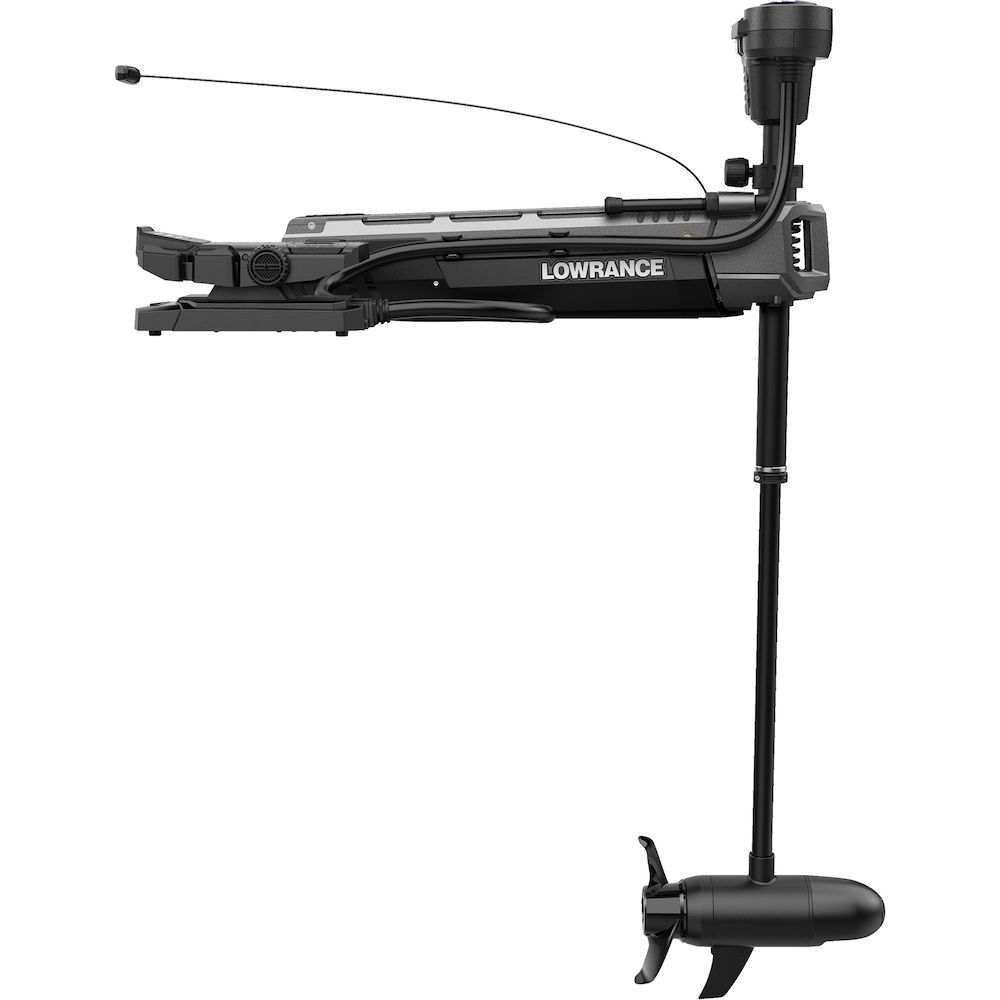
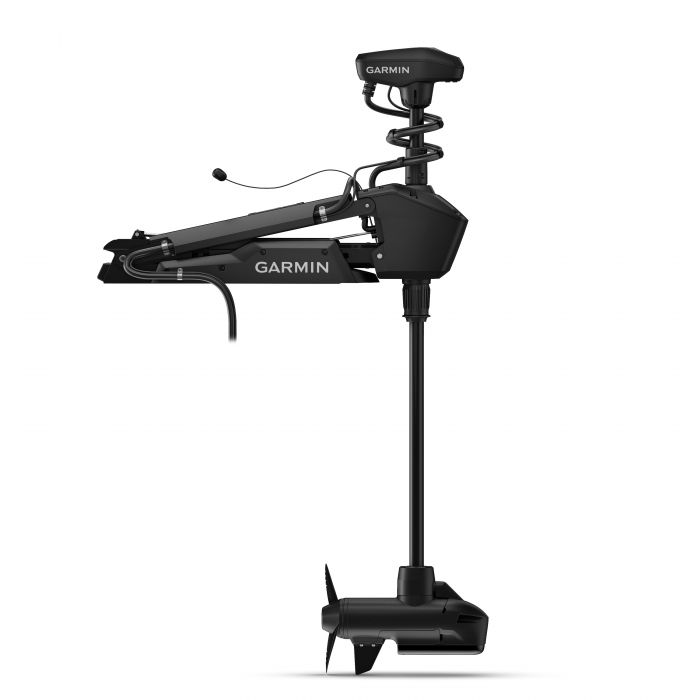
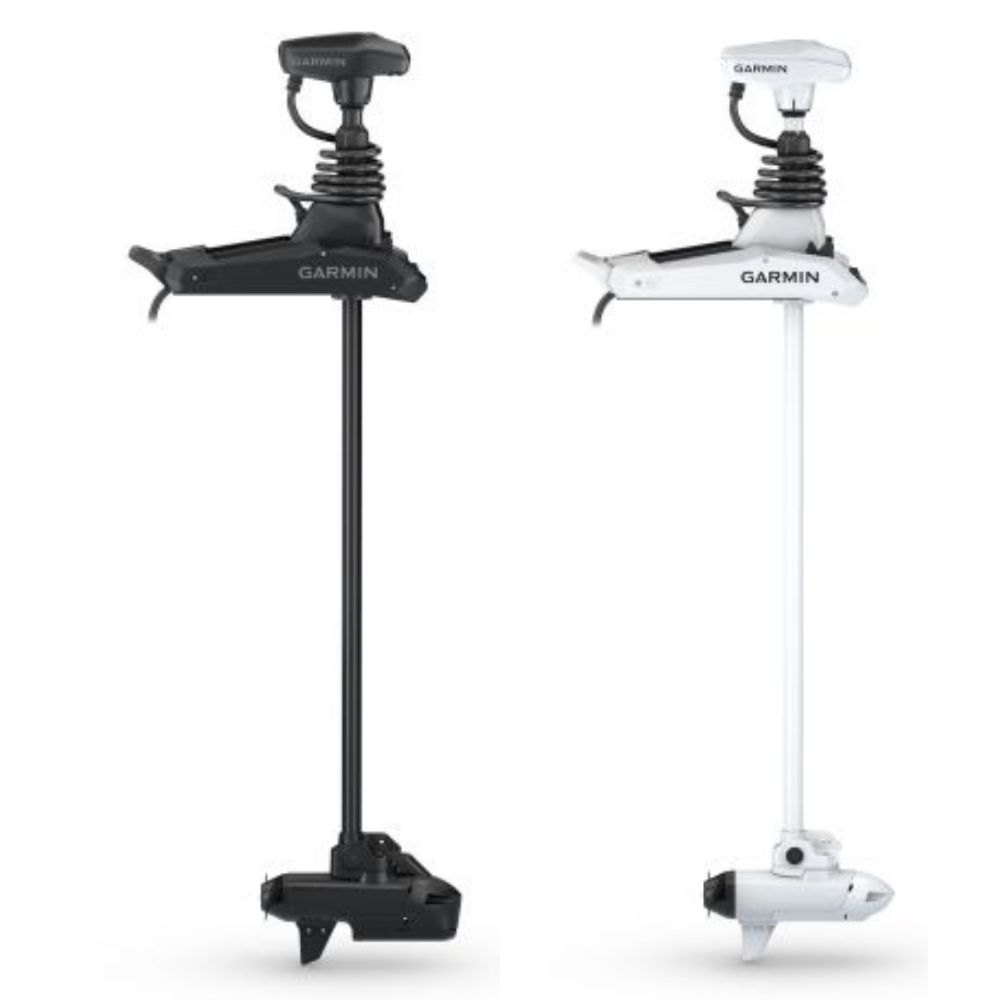
| Garmin Force Pro ($4,199.99) | 24 or 36V (20 to 45 Vdc input) | Up to 100 lb (Garmin) | 60 A continuous | 60 A continuous |
| Garmin Force Kraken ($3,999.99) | 24 or 36V (20 to 45 Vdc input) | 80 lb / 100 lb | 60 A continuous | 60 A continuous |
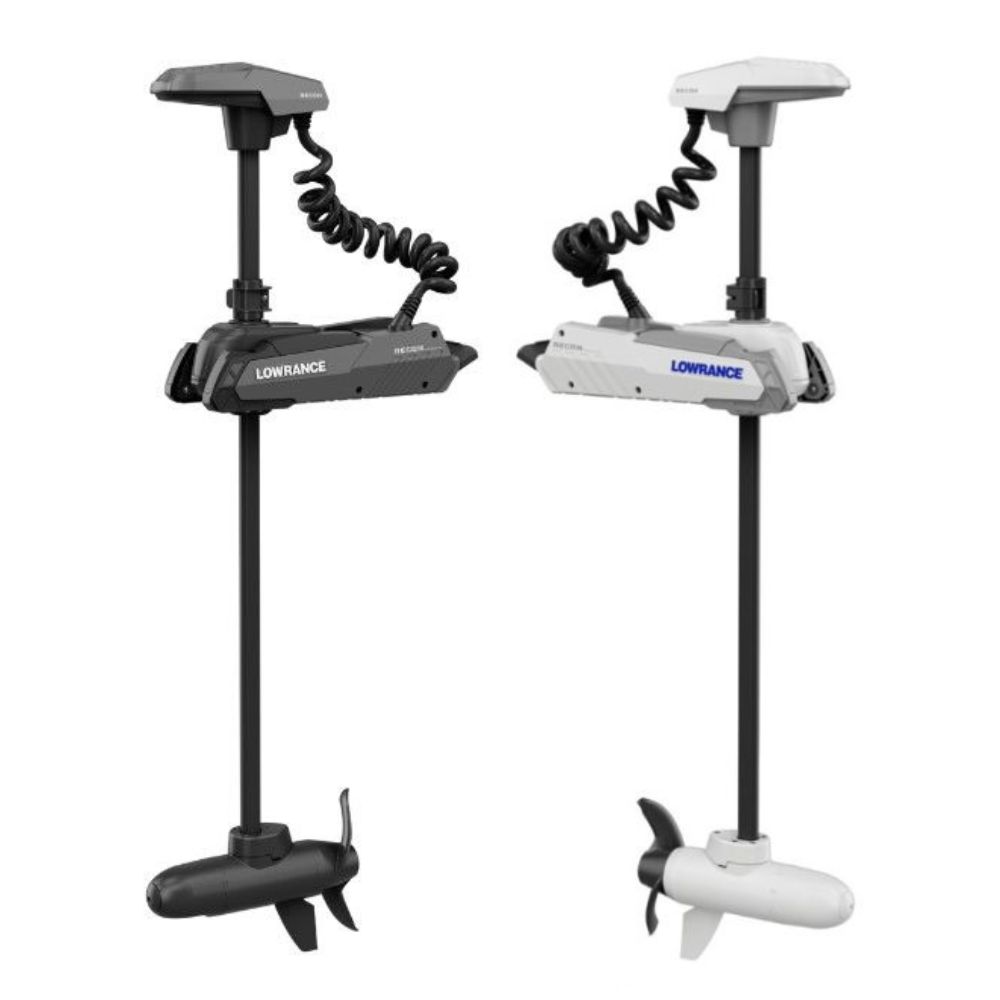
| Lowrance Ghost ($3,199.00) | 24 or 36V | 97 lb / 120 lb | 50 A (2020 manual) | Not listed in our copy |
| Lowrance Recon ($3,669.99) | 24 or 36V (16 to 46V range) | 90 lb / 110 lb | 60 A minimum | 55 A |
The Garmin numbers are from the Force Pro and Force Kraken installation manuals, which ask for a 24 or 36 Vdc bank that can supply 60 A continuously. The Recon numbers are from its installation manual. The Ghost thrust ratings are Lowrance’s published figures, and the 50 A breaker is from the Ghost manual’s 2020 edition.
24V or 36V on these motors
Lowrance’s own ratings show what the third battery buys you. The Recon goes from 90 lb on 24V to 110 lb on 36V, about 22% more, with the same 55 A maximum draw at both voltages. The Ghost goes from 97 lb to 120 lb, about 24% more.
Garmin rates the Force Kraken at 80 lb on 24V and 100 lb on 36V, and the Force Pro at up to 100 lb. The Force manuals list full power as 2,160 watts at 36V and 60 A. At the same current, a 24V bank delivers two-thirds of that power, because watts are volts times amps.
The cost of 36V is a third battery: more weight, more money, more tray space and a third charger bank. For a lighter boat on protected water, a 24 volt trolling motor is often enough. If you fish big water or a lot of wind, plan on 36V from the start.
If you start at 24V and think you’ll move up, buy three matched batteries when you switch rather than adding a new one to an older pair. Minn Kota’s guide asks for batteries of the same make, type, size and age in a bank, and an older pair will drag down a new third battery.
When a 24 volt trolling motor is enough
Run the thrust guide with your loaded weight, not the hull weight on the spec sheet. Add fuel, batteries, gear and people. Here’s how the Lowrance ratings line up against the 2 lb per 100 lb guide:
- 2,500 lb loaded: 50 lb minimum. The Ghost (97 lb on 24V) and Recon (90 lb on 24V) both clear that with plenty to spare.
- 3,500 lb loaded: 70 lb minimum. On 24V, the Ghost and Recon still have a margin of 20 lb or more.
- 4,500 lb loaded: 90 lb minimum. The Recon on 24V is right at it, and the Ghost has 7 lb to spare. That’s a 36V boat.
Those minimums assume calm water. Wind, current and big water all push the number up, so if you’re near the line on 24V, go 36V. Garmin’s Force manuals don’t list thrust in pounds, so for those motors send us your boat details and we’ll talk it through.
How to wire a 24 volt trolling motor with two 12V batteries
This is the series wiring from Minn Kota’s battery guide, with the jumper and breaker notes from the Lowrance Recon manual. Your motor’s manual has the final word.
- Start with matched batteries: two 12V deep cycle batteries of the same make, type, size and age.
- Kill the power: turn the breaker off and unplug the motor before you touch a terminal.
- Set the batteries side by side: close enough that the jumper between them can be short. The Recon manual caps jumpers at 12 in.
- Fit the jumper: run a cable from battery 1 positive to battery 2 negative. Minn Kota says to use wire one size larger than the motor lead. Lowrance says the same gauge as the power cables. Going one size heavier satisfies both.
- Connect the negative: the motor’s black lead goes to battery 1 negative.
- Connect the positive through the breaker: the motor’s red lead goes through the breaker to battery 2 positive. Lowrance puts the breaker no more than 6 ft from the batteries.
- Measure: with a meter across battery 1 negative and battery 2 positive, you should read about twice what one battery reads alone.
- Tighten and cover: tighten every terminal, put boots over the positive posts and make sure the hold-downs are secure.
- Power up: plug in the trolling motor, turn the breaker on and test it at low speed first.
Minn Kota’s guide warns that improper wiring of 24, 36 or 48 volt systems could cause a battery explosion. Never connect the positive and negative of the same battery together, and keep tools and metal jewelry away from the terminals while you work.
Series vs parallel, in plain terms
In series, current flows out of one battery and through the next, so their voltages add. Two 12V batteries make 24V, and the amp-hours stay at what one battery holds. In parallel, both batteries feed the same pair of wires side by side. Voltage stays at 12V and the amp-hours add.
The connection that makes it series is the jumper from one battery’s positive to the other battery’s negative. If you see both positives tied together, the bank is wired in parallel.
For 36V, add a third battery the same way. Jumper battery 2 positive to battery 3 negative, and the motor’s positive goes to battery 3 positive instead of battery 2.
Five wiring mistakes to avoid
- Wiring in parallel by accident: positive to positive and negative to negative gives you 12V with double the amp-hours. That’s below the input range Garmin and Lowrance list for the Force motors and the Recon, and the Ghost manual lists 24V or 36V systems only. The trolling motor won’t run.
- Mixing old and new batteries: the weaker battery drains first and pulls the pair down.
- Taking 12V from one battery: running a graph or other 12V gear from one battery of a series pair drains it faster than the other. Power electronics from a separate battery.
- A long or thin jumper: keep it short and at least as heavy as your manual asks.
- A breaker in the wrong place: put it in the positive lead close to the battery, rated for the voltage and the current in your motor manual.
Breaker and wire sizes from the manuals
On all four motors, the manuals give the same breaker rating for 24V and 36V. Moving between the two doesn’t change the breaker. Wire gauge depends on the length of the run.
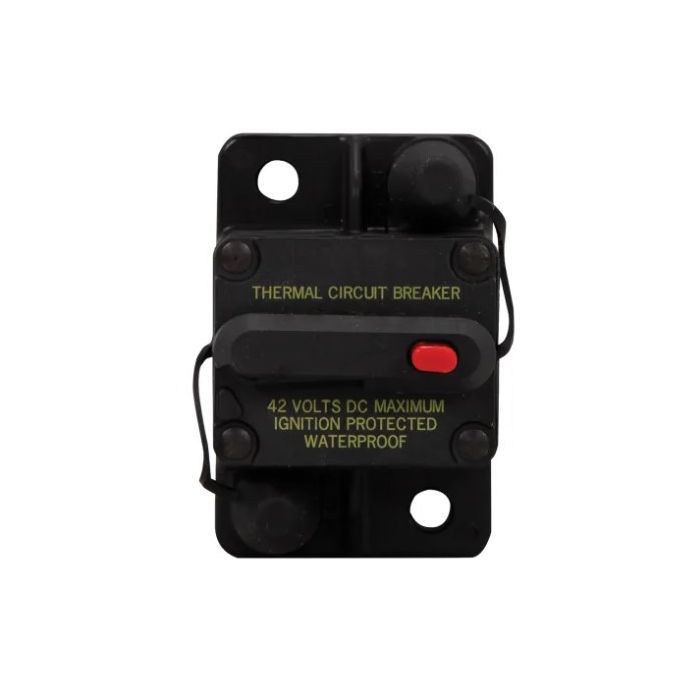
- Garmin Force Pro and Force Kraken: a 60 A continuous breaker rated 42 VDC or more. Extensions need 6 AWG minimum up to 30 ft, and Garmin prefers 4 AWG from 10 to 20 ft and 2 AWG from 20 to 30 ft.
- Lowrance Recon: a 60 A manual-reset breaker within 6 ft of the batteries. The supplied 4 ft power cable is 8 AWG, extensions up to 10 ft need 8 AWG, and longer ones need 6 AWG.
- Lowrance Ghost: the 2020 manual lists a 50 A breaker at 24V or 36V and extension wire from 8 AWG on short runs to 6 AWG at 20 to 25 ft.
Check the DC voltage rating on any breaker you buy, not just the amps. Garmin asks for 42 VDC or more. For Force motors we sell the Garmin 60A Circuit Breaker ($89.99). The full wire tables, breaker placement rules and plug install are in our trolling motor plug guide.
Choosing a 24V trolling motor battery bank
You have two ways to build the bank. Both are fine. Pick based on weight, budget and how long you fish.
- Two 12V batteries in series: the standard setup. Flooded, AGM or lithium all work, as long as both batteries match. Minn Kota’s guide recommends deep cycle marine batteries of at least 110 Ah.
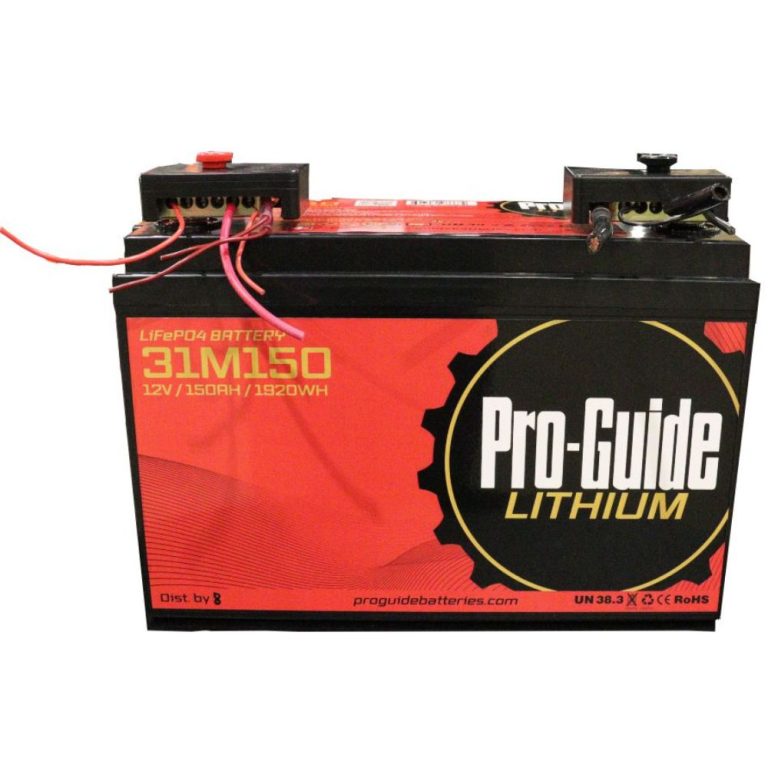
- One 24V trolling motor battery: a single 24V lithium battery means one box and no jumper. The Lowrance Recon manual allows it if the maker confirms it’s rated for trolling motors drawing up to 60 A. Garmin’s 60 A continuous requirement applies to the Force motors too.
How many batteries the boat carries
With a gas outboard and a 24 volt trolling motor, the usual setup is three batteries: one cranking battery for the outboard and two for the trolling motor. Some owners add a fourth as a house battery for graphs and live sonar, so the electronics don’t depend on either the trolling bank or the starting battery.
Whichever bank you build, keep the outboard’s cranking battery separate. Minn Kota recommends separate deep cycle batteries for the trolling motor when a crank battery starts a gas outboard. Lithium trade-offs, including cold-weather charging and cost per cycle, are in our lithium trolling motor battery guide.
Charging the batteries for a 24 volt trolling motor
The simple answer is a two-bank onboard charger. Each bank charges one 12V battery on its own, so both finish full even if one was drawn down a bit more. Set each bank to the battery’s chemistry.
- Lead-acid pair: a two-bank charger with flooded or AGM settings to match the batteries. Recharge after every trip, as Minn Kota’s guide asks.
- Lithium pair: a two-bank charger with a lithium profile on both banks, or a charger the battery maker approves.
- Single 24V lithium: a 24V charger made for lithium, since a 12V multi-bank charger won’t fit it.
- While charging: Minn Kota’s guide says to disconnect the motor while the batteries charge.
- Before a layup: charge both batteries fully, then disconnect the bank. Minn Kota’s guide says to store batteries at full charge.
Upgrading from a 12 volt trolling motor
Moving from a 12 volt trolling motor to a 24 volt trolling motor means more than a new motor on the bow. Work through this list before you order.
- Room for a second battery: check the tray, the hold-down and the weight in that part of the boat.
- The old battery: if your current 12V battery isn’t new, replace it along with the second one so the pair matches.
- Charger: you’ll need a second bank, or a new charger.
- Wire: check your existing wire against the new motor’s table. Garmin’s minimum extension wire for Force motors is 6 AWG.
- Breaker: size it from the new motor’s manual, with a DC rating above your bank voltage.
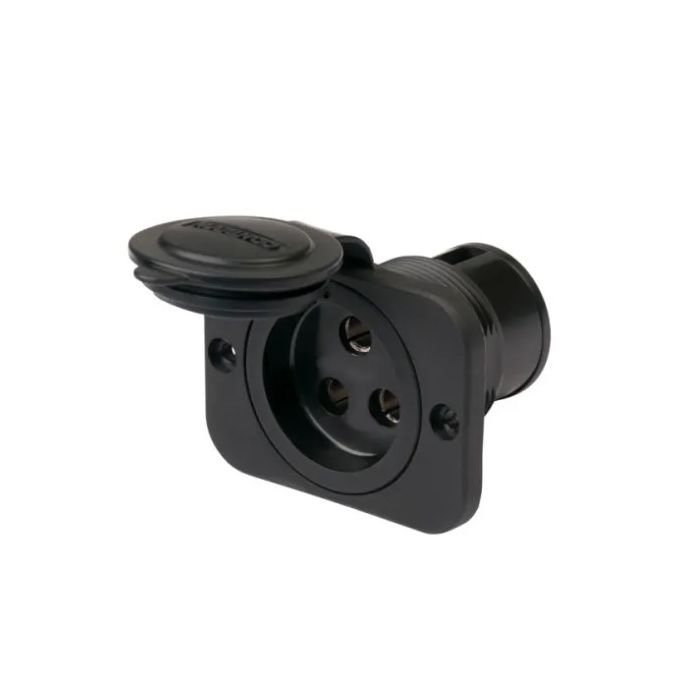
- Plug: rated at or above the breaker. For Force motors, Garmin’s 70A Power Plug ($49.99) and receptacle are rated 70 A.
- Mount and deck: the Force Pro weighs 66.7 lb with mount and cables in the 50 in. shaft, and the Recon 39 to 44 lb with the HDI transducer, depending on shaft length. Make sure the deck and mounting holes suit the new motor.
Which 24 volt trolling motor setup we’d pick
For a lighter boat on lakes and rivers, a Lowrance Ghost ($3,199.00) or Lowrance Recon ($3,669.99) on two matched 12V batteries makes sense. Lithium saves the most weight, and AGM or flooded keep the cost down.
If the boat is heavy or you fish open water, we’d skip 24V and go straight to 36V with any of the four, including the Garmin Force Pro ($4,199.99) and Garmin Force Kraken ($3,999.99). All four are on our trolling motors page.
Electronics are final sale here, so check compatibility first. If you’re unsure about shaft length, mounting or wiring, ask before you order.
Gear in this guide

Questions about 24 volt trolling motors
Can a 24 volt trolling motor run on 12 volts?
Not the ones we sell. Garmin lists a 20 to 45 Vdc input range for the Force Pro and Force Kraken, and Lowrance lists 16 to 46V for the Recon. One 12V battery is below both, and the Ghost manual lists 24V or 36V systems only.
What size 24V trolling motor battery do I need?
Two matched 12V deep cycle batteries, ideally 110 Ah or more each per Minn Kota’s guide, or one 24V lithium battery whose continuous rating covers your motor’s draw. Size for your longest day of fishing.
Is a 24 volt trolling motor better than a 12 volt trolling motor?
If your loaded boat weighs more than about 2,750 lb, yes. The 2 lb per 100 lb guide then calls for more than 55 lb, which is where Minn Kota’s 12V range tops out. Its 24V motors run 68 to 80 lb, and the Ghost and Recon are rated 97 and 90 lb on 24V. A light jon boat may only need 12V.
Can I switch my 24V motor to 36V later?
Only if the motor is rated for both. All four motors we sell are. You’ll need a third matched battery, a third charger bank and a check that your wiring and breaker meet the manual.
Do I need a special charger for a 24V trolling motor battery bank?
For two 12V batteries, a two-bank onboard charger set to their chemistry is all you need. A single 24V lithium battery needs a 24V charger made for lithium.
How long will a 24 volt trolling motor run?
It depends on your batteries and how hard you run it. Two 100 Ah lithium batteries with 90 Ah usable last about 4.5 hours at an average 20 A. Our battery guide shows the math for other setups.
Ask us before you wire it
Email sales@trollingmotorsdirect.org (Monday to Friday, 9am to 6pm) with your boat, the motor you’re looking at and the batteries you have now.